Trump to Hold Historic Meeting With Xi and Putin in China on Nuclear Arms Control
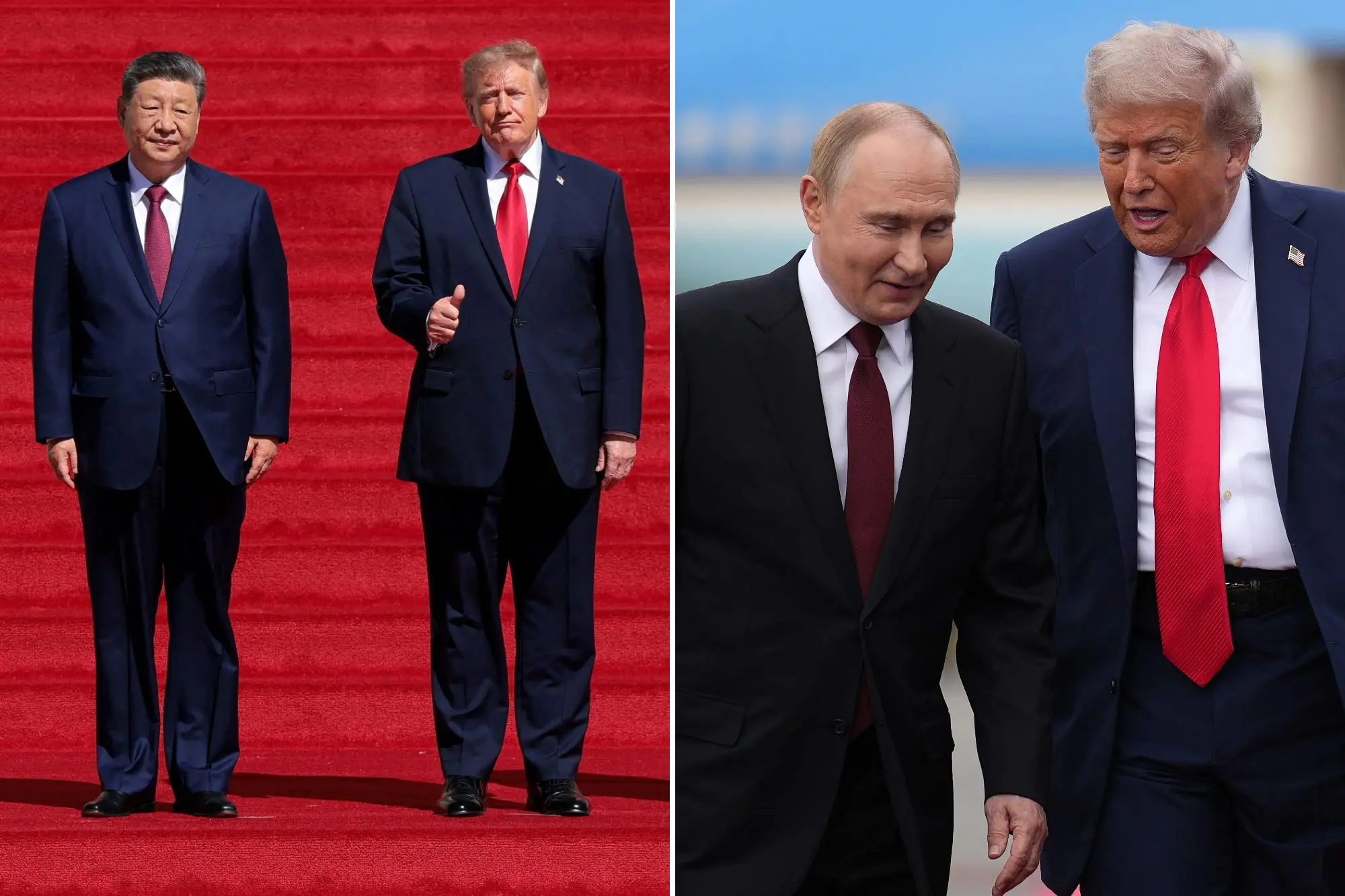
President Donald Trump is set to hold a historic trilateral meeting with Chinese President Xi Jinping and Russian President Vladimir Putin in China to initiate discussions on nuclear arms control.
In this piece
U.S. President Donald Trump is scheduled to meet Chinese President Xi Jinping and Russian President Vladimir Putin on the sidelines of an upcoming summit in…
U.S. President Donald Trump is scheduled to participate in an unprecedented trilateral meeting with Chinese President Xi Jinping and Russian President Vladimir Putin in China, according to reporting from the New York Post. The landmark gathering will bring together the leaders of the world's three major nuclear powers to address strategic stability and arms control. The prospective summit represents the first direct, three-way dialogue among these heads of state.
The encounter is planned to take place on the sidelines of the Asia-Pacific Economic Cooperation summit in Shenzhen, China. U.S. officials and regional hosts have begun coordinating logistical details ahead of the high-level international gathering. The setting provides a neutral multilateral forum for the three leaders to convene without requiring formal state visits.
At the heart of the planned agenda is the future of global nuclear arms limitations. The White House has sought a modernized arms control architecture that incorporates Beijing, aiming to construct new safeguards as historic bilateral mechanisms falter. Trump administration officials have long argued that any effective future arms pact must account for the rise of multipolar capabilities.
The talks come against the backdrop of an unraveling arms control regime, notably following the expiration and suspension of the New START treaty between Washington and Moscow. That bilateral accord had long served as the final legal constraint on the deployed strategic nuclear arsenals of the two superpowers. Its lapse has left the international community without binding inspection protocols or warhead ceilings for the first time in decades.
While the United States and Russia still possess the vast majority of the world's nuclear warheads, Beijing has steadily modernized and expanded its own strategic capabilities. China has historically resisted tripartite arms negotiations, arguing that its deterrent remains purely defensive and far smaller in size. Convincing President Xi to participate in direct discussions alongside President Putin and President Trump marks a noteworthy diplomatic development.
Beyond strategic weapons and nonproliferation, the discussions are expected to touch upon major regional security crises and geopolitical friction points. Officials anticipate exchanges on broader Middle East stability, heightened tensions surrounding Iran, and persistent security disputes across Eastern Europe. The leaders are also expected to review global trade strains that continue to complicate trilateral relations.
Significant hurdles remain, as each power enters the prospective meeting with sharply diverging priorities. While Washington is focused on curbing proliferation and securing verifiable commitments, Moscow and Beijing have frequently pushed back against Western security alignments and unilateral economic measures. These contrasting viewpoints underscore the complex atmosphere surrounding the talks.
Foreign policy analysts and administration officials have sought to temper expectations, noting that an immediate breakthrough or binding accord is highly unlikely. The meeting is primarily viewed as a foundational entry point designed to establish baseline communication among the three rival capitals. Establishing working groups or regular consultation channels would be considered a constructive outcome by participants.
As diplomatic delegations finalize arrangements in Shenzhen, global allies and adversaries will be watching the proceedings closely. The summit will test whether direct, leader-level engagement can establish durable guardrails in an increasingly fractured international order. If successful, the discussions could open a path toward structured multilateral negotiations on strategic security.
Primary source: Google News New York. Newzly rewrites and structures source reporting for clarity; verify critical details at the original.