Two Katargam children found wandering to be raised in the US
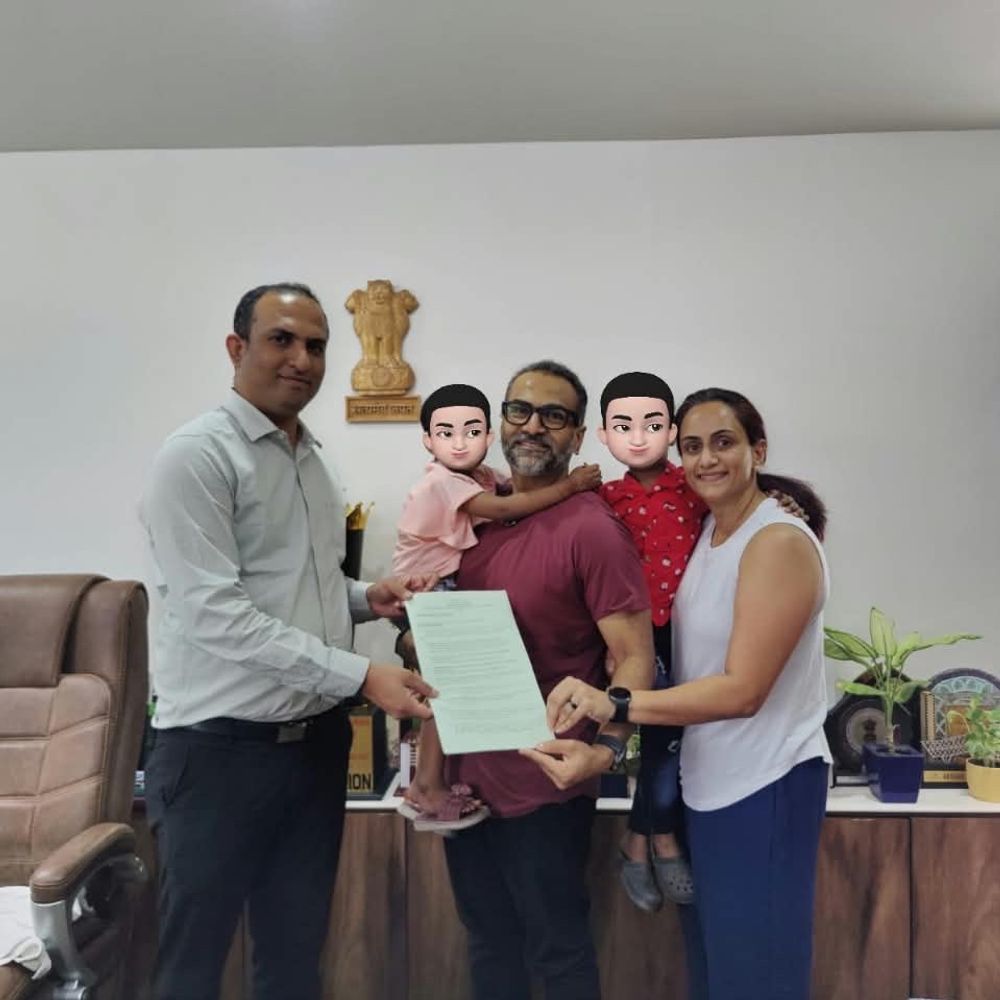
A Gujarati couple living in the United States has adopted a four-year-old and a five-year-old who had been staying at a children's home in Katargam, Surat, Divya Bhaskar reports.
In this piece
Divya Bhaskar reports that a Gujarati couple based in the United States has adopted two children, ages four and five, who were found wandering and later lived…
Two children who were found wandering on the road and later lived at a children's home in Katargam are now expected to be raised in the United States, according to Divya Bhaskar. The newspaper reports that a Gujarati family living in the US has adopted the children, who are four and five years old.
The report, from the paper's NRG edition and filed with its Surat coverage, says both children had been staying at a shishugriha, a children's home, in Katargam. The accompanying story link describes them as children from that home who were taken in by a Gujarati couple in the United States.
Divya Bhaskar frames the development as a change in where and with whom the children will grow up. Children who had been living at the Katargam home, after being found wandering, are to be brought up in America by a Gujarati family already settled there. The published account does not give the children's names or the names of the adoptive parents.
Katargam is a locality in Surat, in the western Indian state of Gujarat, and the newspaper placed the item in its local Gujarat and Surat news. The headline is the main factual record available with the story: the ages, the earlier circumstance of being found on the road, the children's home, and the adopting family's Gujarati background and US residence.
The report does not say whether the two children are related, how long they stayed at the home, or what condition they were in when they were found. It also does not describe which child-welfare agency, court, or other authority handled the case, or when any legal steps were completed.
Those omissions matter because adoption of children from India by a family living abroad is ordinarily a formal process, with checks meant to establish that a placement is lawful and in the children's interest. This account does not document that process. It states the outcome as reported by the newspaper: the couple has adopted the children, and the children will be raised in the United States.
The story is notable because it links a children's home in Surat with a Gujarati household in the diaspora. Divya Bhaskar does not explain how the family learned of the children, why this placement was chosen, or whether the couple has other children. Any reading of motive or of community ties would go beyond what the paper has stated.
The headline's wording presents a single adopting family and two children of stated ages who had shared the Katargam home. It does not give a departure date, a US city, or plans for schooling, travel, or citizenship. Those points remain unreported in the material attached to the story.
No official, staff member from the home, or family member is quoted in the text provided with the link. The account should therefore be read as the newspaper's report of an adoption, not as a record of statements from the people involved. Details that are not in that report are simply not established here.
What the paper does say about the next stage is limited to upbringing. The children, previously at the Katargam home after being found wandering, are now to be raised in America. Any further word on their move or on the status of the adoption would have to come from a later report or from authorities. Neither is part of the account as published.
Primary source: Divya Bhaskar NRG. Newzly rewrites and structures source reporting for clarity; verify critical details at the original.