Two MSF Staff Killed in Israeli Airstrike on Gaza City Clinic
An Israeli airstrike struck a Gaza City clinic, killing two Médecins Sans Frontières staff members. While Israel claimed the targets were militants posing as humanitarians, the aid agency and global health officials condemned the deadly strike.
In this piece
Two staff members from Médecins Sans Frontières were killed in an Israeli airstrike that struck a medical clinic in Gaza City. The Israeli military claimed the…
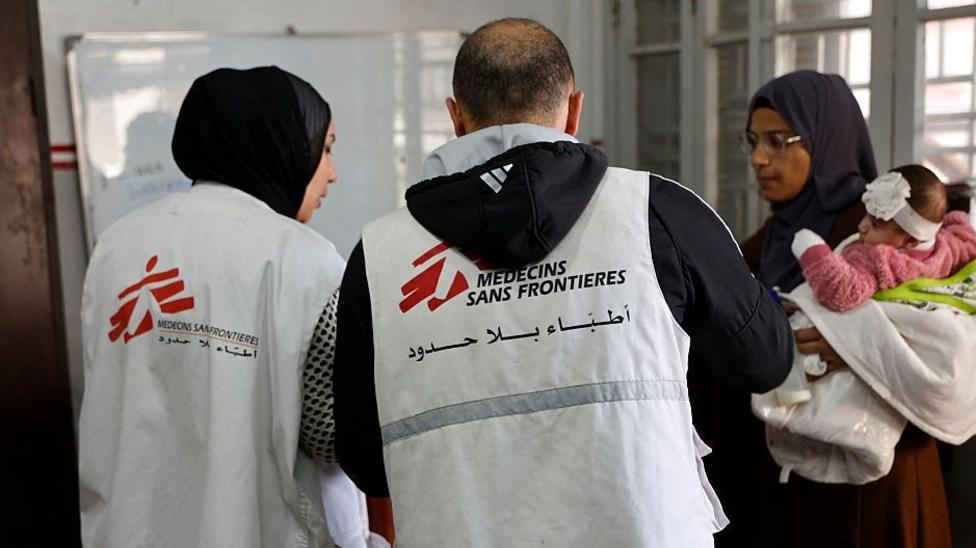
An Israeli airstrike on a medical facility in Gaza City has killed two staff members working for Médecins Sans Frontières, the international humanitarian organization announced. The victims were employed as watchmen at the clinic when the strike hit the compound. The organization expressed profound grief and anger over the loss of its personnel, demanding immediate answers from military authorities.
Médecins Sans Frontières, also known as Doctors Without Borders, described the incident as a direct strike against a clearly marked humanitarian facility. The medical charity emphasized that it had previously communicated the exact geographic coordinates of the site to Israeli defense officials under established deconfliction protocols. Despite those formal notifications, the structure sustained severe damage that claimed the lives of the two workers on site.
The Israel Defense Forces confirmed that they carried out an operation in Gaza City but denied intentionally targeting healthcare infrastructure. Military officials asserted that the strike was aimed at two operatives linked to Hamas's armed wing who were allegedly present on the premises. According to the Israeli military, the individuals were accused of using their humanitarian roles at the facility as a cover for militant activities.
The deaths mark a grim milestone for the humanitarian charity, bringing the total number of its staff members killed in the Gaza conflict to seventeen. MSF officials rejected claims that medical facilities were being misused, reiterating that aid organizations must be protected under international humanitarian law regardless of operational conditions. The group stressed that its teams operate transparently to provide vital medical care to civilians trapped in active combat zones.
The attack prompted swift international condemnation, with high-ranking United Nations and health officials speaking out against the ongoing violence directed near medical sites. World Health Organization Director-General Tedros Adhanom Ghebreyesus condemned the strike, calling the killing of humanitarian and health workers completely unacceptable. Tedros reiterated that clinics, hospitals, and their dedicated personnel must never be considered lawful military targets.
The strike occurs against the backdrop of a catastrophic collapse across the Gaza Strip's healthcare system, where dozens of medical centers have been damaged, destroyed, or forced out of service. Facilities that manage to remain open face critical shortages of clean water, electricity, basic surgical supplies, and essential medicines. Aid organizations have repeatedly warned that the relentless bombardment makes regular delivery of trauma care and preventive medicine virtually impossible.
Humanitarian leaders have increasingly raised alarms regarding the apparent failure of military deconfliction channels designed to prevent accidental strikes on aid workers. Despite sharing real-time facility coordinates and movement plans with military commanders, aid convoys, warehouses, and medical clinics have repeatedly come under fire. The inability to guarantee safe passage has forced multiple relief organizations to suspend or scale back vital operations in high-risk zones.
The recurring attacks on aid personnel have exacerbated an already desperate humanitarian crisis for millions of displaced civilians who depend on international agencies for basic survival. Beyond the immediate loss of life, each strike on a healthcare outpost deprives thousands of local residents of access to primary care, emergency stabilization, and maternal health services. Legal experts and human rights monitors emphasize that systemic disruption to civilian medical services carries lasting repercussions under international law.
Humanitarian organizations and international observers continue to call for independent investigations into strikes involving protected facilities across Gaza. Médecins Sans Frontières has urged all parties to the conflict to respect civilian infrastructure and ensure the unconditional safety of frontline medical teams. As diplomatic efforts to secure lasting ceasefires remain fraught, aid agencies warn that the operating environment in Gaza will remain exceptionally lethal without enforceable safeguards for humanitarian staff.
Primary source: BBC World. Newzly rewrites and structures source reporting for clarity; verify critical details at the original.