U.S. Army to Detonate Nearly 10,000 Pounds of Unstable Lead Azide in Iowa
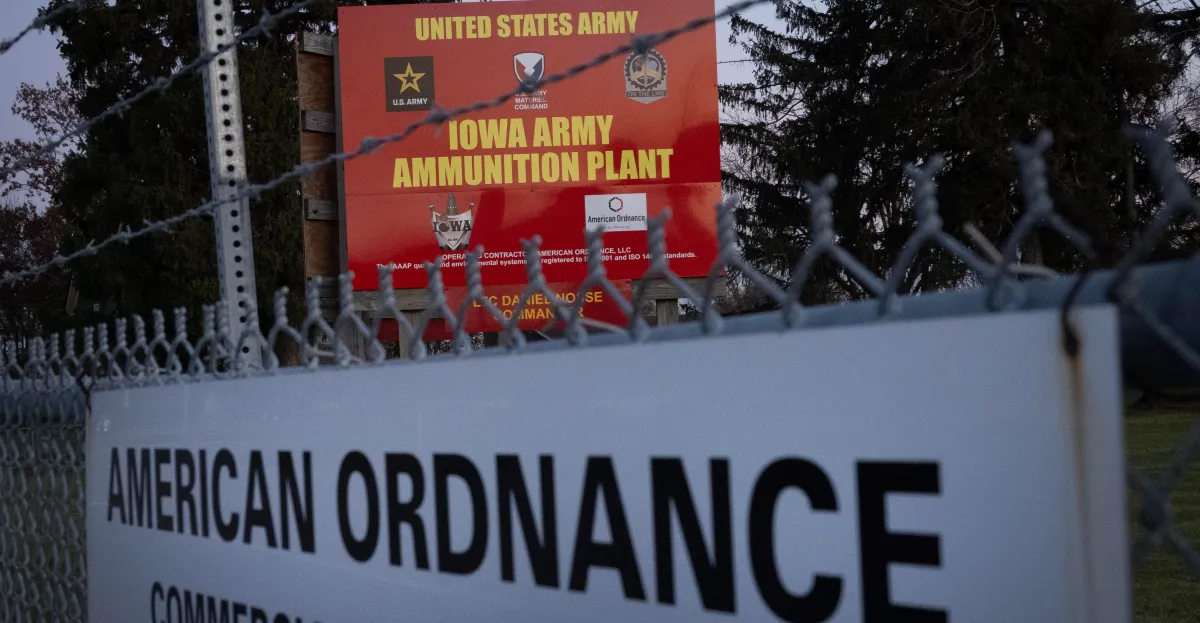
The U.S. Army plans to detonate nearly 10,000 pounds of unstable lead azide at an ammunition plant in Middletown, Iowa, on Wednesday morning to eliminate a volatile national stockpile.
In this piece
The U.S. Army is moving ahead with plans to detonate nearly 10,000 pounds of unstable lead azide at an ammunition plant in Middletown, Iowa. Scheduled for…
The U.S. Army is preparing to detonate nearly 10,000 pounds of unstable lead azide at an ammunition plant in Middletown, Iowa, on Wednesday morning. Military personnel have scheduled the controlled blast for approximately 9:00 a.m. Central Standard Time as part of an effort to eliminate the deteriorating chemical compound. The operation targets what represents a substantial national stockpile of the highly reactive material.
Lead azide is an inorganic chemical compound that has long served the military as an essential primary explosive in detonators, primers, and blasting caps. Because of its acute sensitivity to shock, friction, and heat, the compound requires rigorous storage conditions to remain stable. Over extended periods of storage, however, the chemical structure can degrade or recrystallize, rendering it exceptionally volatile and hazardous to store or relocate.
Military safety protocols dictate the destruction of energetic materials whenever long-term degradation compromises containment safety. Moving thousands of pounds of compromised lead azide over commercial highways or public rail systems presents prohibitive risks to nearby communities. Consequently, ordnance disposal teams prioritize on-site neutralization at existing military industrial installations where secure containment corridors already exist.
The ammunition plant in Middletown was selected for the disposal operation due to its specialized infrastructure and existing safety buffer zones. Munitions facilities of this type are engineered to handle high-hazard chemical procedures under controlled industrial conditions. Personnel on site have spent days preparing containment measures and establishing security perimeters to isolate the blast area.
A planned detonation of this magnitude raises critical technical and environmental questions regarding the dispersal of combustion byproducts. Because lead azide contains heavy metals, researchers and environmental specialists are tracking how the resulting airborne residues will be contained. Disposal experts typically examine weather patterns and wind currents to ensure that particulate matter remains confined within the designated military boundaries.
Specialized ordnance teams typically utilize physical barriers, earth berms, or specialized containment structures to absorb the shockwave and capture particulate matter during high-mass detonations. These precautions are intended to suppress loud acoustic signatures while significantly limiting the spread of toxic residues into the surrounding atmosphere. Technicians must also verify that ambient humidity and wind velocity fall within strict operating limits before giving the final clearance to proceed.
The event highlights the broader operational challenges facing defense officials tasked with managing legacy munitions and hazardous chemical stores across the country. As military technology evolves, obsolete or chemically unstable compounds accumulated over decades of production must eventually be decommissioned. The Iowa operation represents one of the largest single disposal actions involving unstable primary explosives in recent years.
Independent researchers and technical observers have emphasized the importance of rigorous monitoring during and immediately after the blast sequence. Scientific attention remains focused on verifying complete chemical consumption to prevent unreacted residues from settling into local soil or water tables. Public health advocates and regional stakeholders have also expressed interest in post-blast atmospheric readings around the Middletown complex.
The scheduled Wednesday morning detonation will be followed by extensive site evaluations by military ordnance specialists and safety inspectors. Teams will survey the blast perimeter to confirm the complete neutralization of the stockpile and evaluate structural containment performance. Further official updates and technical assessments are expected to clarify the outcome of the disposal effort once safety clearances are granted.
Primary source: The Verge. Newzly rewrites and structures source reporting for clarity; verify critical details at the original.