Uganda Begins Withdrawing Troops From Somalia After Nearly 20 Years
Uganda has begun withdrawing its military forces from Somalia nearly two decades after becoming the first nation to join the African Union peacekeeping mission in 2007, marking a critical transition for regional security.
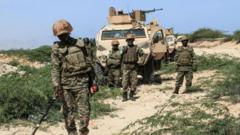
Uganda has commenced the withdrawal of its armed forces from Somalia, initiating the conclusion of an overseas military deployment that has spanned nearly two decades. The phased drawdown represents a defining transition for one of the African continent's most enduring and significant multinational peacekeeping missions.
Uganda occupies a historic position in the intervention, having become the first country to deploy troops to Somalia under the African Union mission when it was established in 2007. Over the subsequent years, Ugandan soldiers served as a central pillar of international efforts to restore order and support state institutions in the Horn of Africa.
The original deployment in 2007 came at a pivotal moment, aiming to stabilize a nation grappling with prolonged political fragmentation, state collapse, and violent insurgent activity. By providing the initial contingent of peacekeepers, Uganda helped establish an operational foothold that eventually enabled other regional nations to contribute personnel to the collective stabilization effort.
Across the span of nearly twenty years, multinational contingents operated under rigorous and hazardous conditions to secure key administrative districts, critical transportation links, and government installations. The long-term deployment gave national institutions the necessary time and space to gradually re-establish governance structures amid ongoing security threats.
The commencement of Uganda's pullout highlights a broader strategic shift toward transitioning primary defense and security responsibilities directly to Somali national forces. Continental leadership and global stakeholders have maintained that foreign military missions must eventually give way to sovereign security arrangements that are locally led and fully sustainable.
This military drawdown carries profound operational consequences for the regional security landscape and the future posture of Somali defense forces. As seasoned international contingents depart, domestic security personnel must assume full operational command over fortified bases, regional forward operating posts, and contested rural supply lines.
The transition arrives with considerable logistical complexities, requiring careful handovers of military installations, communications networks, and strategic territorial positions. Defense planners face the delicate challenge of executing troop redeployments without opening temporary security vacuums that hostile insurgent factions could seek to exploit.
Specific timelines regarding the rate of departure and the final phases of the withdrawal remain subject to broader operational agreements and evolving field assessments. The ongoing coordination among defense leaders in Kampala, federal authorities in Mogadishu, and African Union officials will determine how subsequent contingents are demobilized.
The eventual departure of Ugandan forces marks the closing chapter of a historic military contribution that helped shape contemporary Somalia. Moving forward, the ultimate measure of the two-decade mission will rest on whether Somali national forces can independently safeguard their territory and preserve hard-won institutional progress.
Primary source: BBC World. Newzly rewrites and structures source reporting for clarity; verify critical details at the original.