Ukraine launches largest drone assault on Russian oil sites, Moscow says all downed
Ukraine launched more than 1,300 drones at Russian oil refineries and other key sites in what reports described as its largest such strike, while Russia said every drone was intercepted.
In this piece
Ukraine directed more than 1,300 drones at Russian oil refineries and other important locations, according to reporting on the overnight assault. Moscow said it…
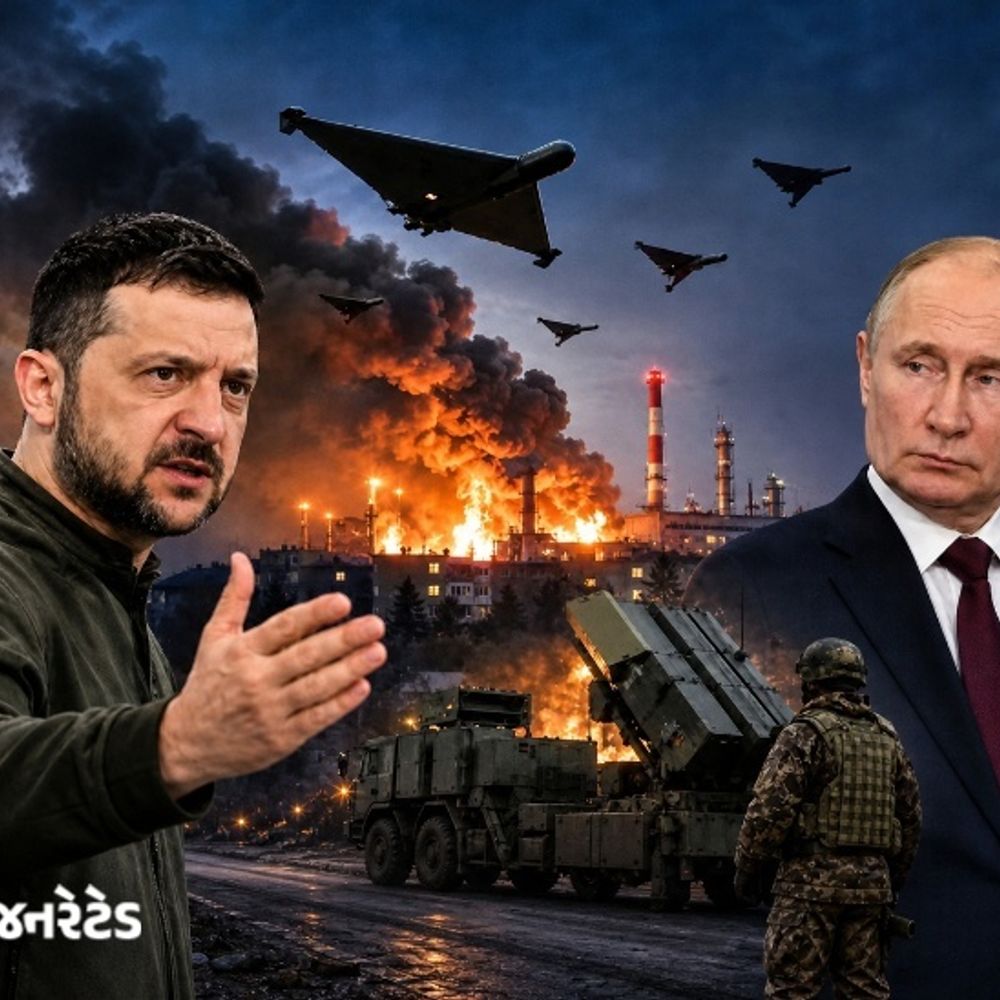
Ukraine launched more than 1,300 drones at oil refineries and other important sites inside Russia in what was described as its largest drone attack of the war, according to Divya Bhaskar International. Russian officials said they shot down every incoming drone.
The Gujarati-language report, citing the scale of the operation, framed the raid as aimed at energy infrastructure as well as other strategic locations. It did not name specific refineries, regions, or the exact timing of the launches beyond presenting the episode as a mass strike.
Moscow’s response, as relayed in the same account, was categorical: all of the drones were intercepted or destroyed. The source did not publish independent verification of that claim, nor did it list wreckage sites, casualties, or fires.
The two statements sit in tension that has become familiar in the wider conflict. Kyiv has repeatedly sought to hit Russia’s wartime energy and logistics network with long-range drones. The Kremlin routinely reports high intercept rates. Neither side’s figures can be treated as settled without corroboration that this dispatch did not provide.
Oil refineries matter because they convert crude into fuels used by the military, industry, and civilian transport. Strikes on that sector, even when intercepts are claimed, can force temporary shutdowns, extra air-defense deployments, and higher insurance and logistics costs. The article did not specify whether any plant halted operations.
Calling the raid Ukraine’s largest drone attack underscores how both countries have scaled uncrewed systems. Mass launches are intended to overwhelm radars and missile batteries so that some aircraft reach their targets. Russia’s assertion that none got through, if accurate, would mark a successful defensive night; if overstated, the true picture would only emerge from satellite imagery, local reporting, or later official admissions.
The source did not quote Ukrainian or Russian officials by name, did not give a death or injury toll, and did not describe damage to civilian areas. Those gaps mean the public record, on this report alone, is limited to the claimed number of drones, the types of targets, and Moscow’s all-clear on intercepts.
Why the episode matters is less the single night than the pattern. Energy infrastructure has become a central pressure point as the war continues. Large drone waves test Russia’s ability to protect a vast industrial map and Ukraine’s ability to produce, stage, and coordinate long-range systems.
What happens next was not forecast in the original article. Typical follow-through after such claims includes competing tallies, possible video from either side, and market attention to any confirmed outage at refineries. Until those details appear, the established facts from this report remain the 1,300-plus drone figure, the focus on oil and other key sites, and Russia’s statement that every aircraft was brought down.
Primary source: Divya Bhaskar International. Newzly rewrites and structures source reporting for clarity; verify critical details at the original.