culture·Maharashtra·Pune District
UNESCO Inscribes Three Historic Indian Manuscripts to Asia-Pacific Heritage Register
UNESCO has added rare manuscripts of the Mahabharata, Arthashastra, and Rajatarangini to its regional documentary register, honoring India's classical traditions in philosophy, statecraft, and historiography.
In this piece
UNESCO has inducted rare manuscripts of the Mahabharata, Kautilya's Arthashastra, and Kalhana's Rajatarangini into the Memory of the World Asia-Pacific Regional…
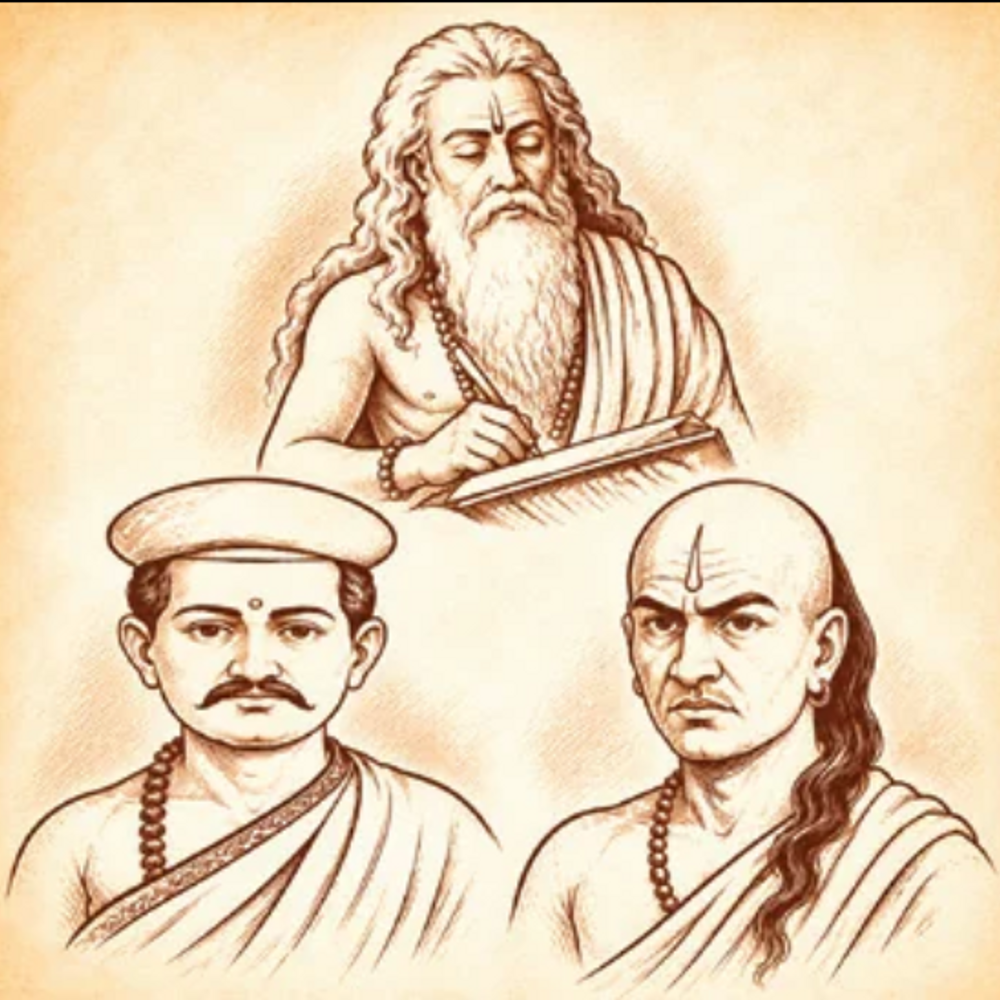
The United Nations Educational, Scientific and Cultural Organization has formally inscribed rare manuscripts of three foundational Indian classical works—the Mahabharata, Kautilya's Arthashastra, and Kalhana's Rajatarangini—into the Memory of the World Asia-Pacific Regional Register. The decision was confirmed during the eleventh General Meeting of the regional committee held in Jakarta, Indonesia. Cultural authorities welcomed the inscription as a significant global milestone recognizing India's vast documentary heritage and intellectual traditions.
The nomination dossiers were coordinated and submitted through the collaborative efforts of the Indira Gandhi National Centre for the Arts, operating under India's Ministry of Culture. This milestone elevates India's footprint on the Asia-Pacific documentary register, reinforcing the historical authority of its ancient scientific, philosophical, and literary corpus. The recognition highlights the crucial role played by public repositories and scholarly archives across the country in safeguarding fragile historical records.
Among the honored records is a rare four-century-old birch-bark manuscript of the Mahabharata written in the ancient Sarada script. Currently conserved at the Bhandarkar Oriental Research Institute in Pune, Maharashtra, the text was historically acquired from Kashmir in the nineteenth century. It provides invaluable physical evidence documenting how the foundational epic circulated across the northern reaches of the Indian subcontinent.
As one of humanity's most comprehensive epic narratives, the Mahabharata weaves complex inquiries into moral duty, statecraft, cosmic law, and personal ethics. The inclusion of this specific Pune manuscript acknowledges its vital role in scholarly textual criticism, which allowed modern editors to construct authoritative editions of the epic. Scholars emphasize that preserving such rare physical codices is essential for reconstructing ancient philological lineages.
The second inscription recognizes an ancient palm-leaf manuscript of Kautilya's Arthashastra preserved at the Oriental Research Institute in Mysuru, Karnataka. The modern recovery of this comprehensive Sanskrit work in the early twentieth century revolutionized global understanding of ancient governance and political philosophy. It proved that classical India possessed a sophisticated, secular framework for economic management and administrative theory.
Attributed to the royal adviser Chanakya, the Arthashastra details internal security, judicial systems, revenue collection, foreign diplomacy, and defense preparedness. Its regional inscription underscores the enduring historical weight of these governance principles, which continue to attract comparative analysis from modern geopolitical theorists. The preserved palm leaves remain among the institution's most prized historical treasures.
The third inscribed treasure is Kalhana's Rajatarangini, preserved at the Oriental Research Library within the Sri Pratap Singh Library Complex in Srinagar, Jammu and Kashmir. Authored in the twelfth century, the Sanskrit verse chronicle documents the successive dynasties and political history of the Kashmir Valley. It remains celebrated as one of the few classical Indian texts to follow an explicit, chronological historiographical method.
Unlike many ancient literary works that blended myth with royal eulogy, Kalhana utilized available royal charters, copper plates, coin inscriptions, and antecedent chronicles to cross-examine his sources. This critical approach established a benchmark for evidence-based historical inquiry in South Asia. UNESCO's recognition acknowledges the chronicle's unique place at the crossroads of literary craft and scholarly historical documentation.
The inclusion of these three landmark manuscripts comes amid escalating international awareness regarding the fragility of documentary archives across the Global South. Biological degradation, climatic extremes, and inadequate conservation facilities continue to pose severe risks to vulnerable organic materials like birch bark and palm leaf. Inclusion in the Memory of the World register helps mobilize institutional support and international technical expertise to preserve these endangered records.
Moving forward, Indian cultural bodies and the custodian libraries plan to expand digitization programs to ensure broader global access to high-resolution scans of the manuscripts. Curators and researchers expect the UNESCO recognition will facilitate cross-border academic exchanges and unlock new funding for preventative archival care. Through these combined measures, custodians aim to ensure that these indispensable primary records remain protected for scholars and generations to come.
Primary source: Divya Bhaskar Magazine. Newzly rewrites and structures source reporting for clarity; verify critical details at the original.