US Army to Detonate Unstable Explosives in Iowa After Court Lifts Stay
A federal appeals court has cleared the U.S. Army to detonate nearly five tons of unstable lead azide in Iowa, dismissing environmental challenges over toxic dust concerns.
In this piece
The U.S. Army is moving forward with a controlled detonation of degraded lead azide at the Iowa Army Ammunition Plant on Wednesday following a federal appeals…
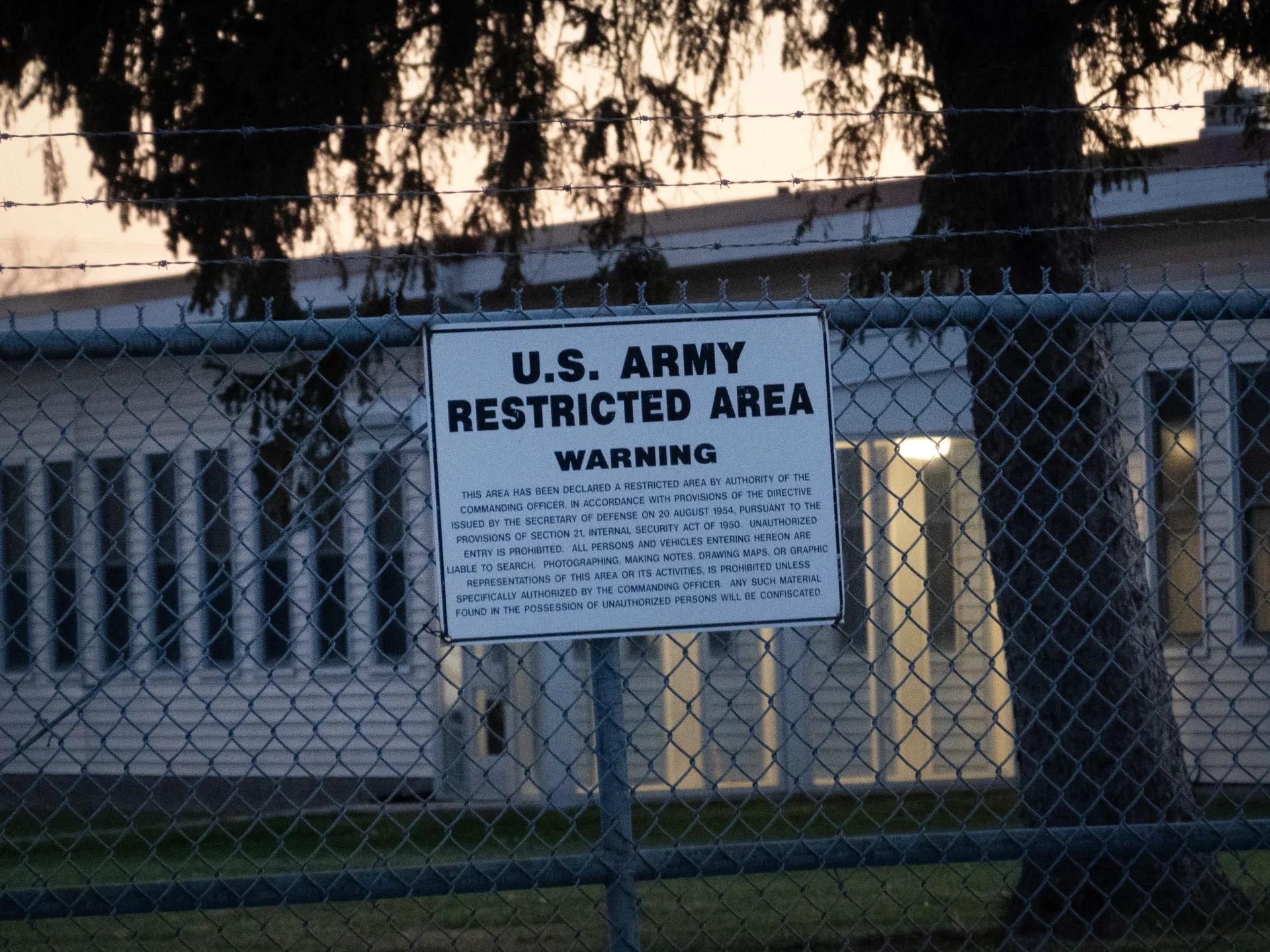
The U.S. Army confirmed that it will move forward on Wednesday with the controlled detonation of nearly five tons of degraded lead azide at the Iowa Army Ammunition Plant. The decision follows a federal appellate ruling that cleared the military disposal plan after days of legal challenges and heightened public scrutiny across southeastern Iowa. Officials emphasized that destroying the volatile compounds remains essential to prevent an accidental disaster at the munitions facility.
The U.S. Court of Appeals for the Eighth Circuit cleared the path for the operation by lifting a temporary stay that had briefly halted the military's preparations. Environmental organizations, including the Iowa Environmental Council and the Sierra Club, had petitioned the court to intervene, arguing that an emergency permit granted by environmental regulators bypassed necessary health and environmental safeguards. The appellate panel, however, declined to block the demolition, allowing military personnel to resume their operational timeline.
At the heart of the standoff is an aging stockpile of lead azide, a sensitive primary explosive widely utilized in military detonators and artillery fuses. Decades of storage inside containers have allowed the chemical compound to degrade and undergo crystallization, creating extreme sensitivity to friction, shock, and thermal changes. Military ordnance specialists concluded that the material is far too unstable to be safely relocated or processed through standard closed-facility incineration.
Army leadership stressed that advancing winter conditions created an urgent operational deadline for the detonation. Falling temperatures increase the likelihood of crystal formation within the storage drums, sharply elevating the hazard of spontaneous detonation during routine handling or freezing weather. Officials argued that executing a planned, open-air blast on the plant grounds represents the lowest-risk path to neutralizing the hazard before winter weather sets in.
Despite military assurances, the impending detonation has drawn sharp criticism from local residents and regional environmental advocates. Opponents warn that open detonation will release toxic airborne lead particulates into the atmosphere, creating potential health risks for communities surrounding the facility and downwind along the Mississippi River. Advocates argued that the military should have deployed alternative containment technologies rather than conducting an open detonation.
Public health authorities across Iowa, Illinois, and Missouri have coordinated preventative advisories for communities within the potential drift zone. Residents living downwind have been advised to stay indoors during the detonation window, keep windows and doors securely closed, and temporarily shut off central air and ventilation systems that draw outdoor air. Officials also recommended washing outdoor furniture, vegetables, and play equipment following the operation to prevent skin contact or ingestion of lead residues.
The Iowa Army Ammunition Plant, located in Middletown just west of Burlington, encompasses thousands of acres and has supported American military ordnance manufacturing since World War II. Like many legacy defense installations across the country, the complex has contended with substantial historical contamination and longstanding remediation efforts overseen by state and federal regulators. The presence of decaying munitions stockpiles has renewed debates over military waste disposal practices and civilian oversight.
Operational execution on Wednesday will depend heavily on real-time atmospheric conditions and local wind patterns. Environmental engineers and Army specialists noted that weather factors such as wind velocity and atmospheric inversions will dictate the dispersal path of the resulting dust plume. Army representatives stated that technical teams will continuously monitor wind direction and atmospheric stability, holding the detonation if weather patterns threaten to funnel particulate plumes toward populated settlements.
With legal obstacles cleared, attention now shifts to independent air quality monitoring and environmental fallout in the wake of the explosion. Community coalitions and regional watchdogs have pledged to scrutinize post-detonation air sampling to verify whether lead concentrations remain within acceptable public health thresholds. The outcome in Iowa is likely to set a precedent for how the Pentagon addresses deteriorating chemical and explosive stockpiles at other military installations across the United States.
Primary source: Google News U.S.. Newzly rewrites and structures source reporting for clarity; verify critical details at the original.