US-Based Gujarati Couple Adopts Two Children From Surat Shelter Home
A Gujarati-origin couple residing in New York has legally adopted two young siblings from the Katargam Shishu Gruh in Surat, concluding a multi-year intercountry adoption procedure overseen by district child welfare authorities.
In this piece
Two young children raised at the Katargam Shishu Gruh in Surat, Gujarat, are heading to the United States after being legally adopted by an NRI couple based in…
A Gujarati-American couple based in New York has formally adopted two young children from a state-supported children's home in Surat, Gujarat. The official handover marks the culmination of a rigorous multi-year adoption process, offering both children a permanent family environment abroad. District administration and child welfare officials finalized the formal procedures this week before handing over custody to the adoptive parents.
The children, a five-year-old boy and his younger sister aged around three and a half, had been living at the Katargam Shishu Gruh in Surat. Local child welfare authorities had originally placed them in the facility after they were found wandering and abandoned on the streets without adult supervision. Since their admission, the shelter home served as their primary sanctuary, providing routine supervision and care.
During their stay at the Katargam institution, dedicated caregivers and local healthcare personnel provided the siblings with medical evaluations, nutritional support, and early childhood learning. Staff members monitored their emotional and physical development while statutory protocols were observed to determine their legal status. In accordance with state guidelines, official search mechanisms confirmed that no biological guardians could be located to claim custody.
The adoptive parents, an Indian-origin couple established in the United States, initiated the adoption journey nearly three years ago through the Central Adoption Resource Authority, known as CARA. The statutory body coordinates domestic and overseas adoptions under stringent regulatory standards. The prospective parents underwent comprehensive socio-economic assessments, background verifications, and cross-border home study investigations conducted by accredited international welfare agencies.
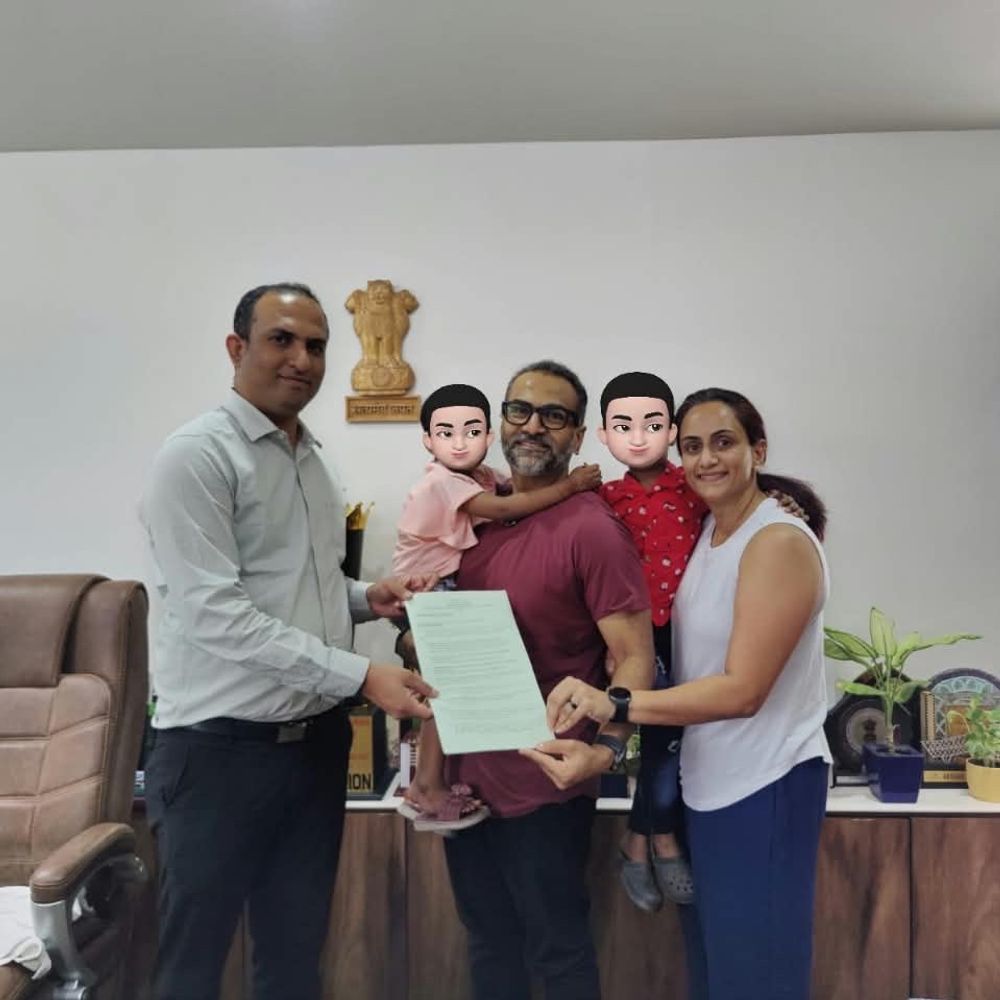
Surat District Collector Tejas Parmar presided over the administrative transfer at the district administrative headquarters, formally presenting the pre-adoption letters and authorization documents to the couple. The collector commended the welfare committees and shelter administrators for diligently adhering to juvenile protection guidelines throughout the review. The formal presentation concluded the legal transfer of parental authority required under Indian law before the children depart the country.
Under India's Juvenile Justice Act and international conventions governing intercountry adoption, foreign placements require exhaustive multi-tiered vetting to protect minors from exploitation. Child protection committees in Surat reviewed institutional reports, psychological evaluations, and medical records before sanctioning the adoption petition. Authorities emphasized that prioritizing the safety, legal rights, and emotional security of orphaned minors remains the central mandate of the entire process.
The placement is particularly significant because it ensures that both siblings will remain together as they build their lives in a new country. Child welfare experts frequently highlight that preserving sibling bonds substantially eases the emotional transition from institutional care to a family household. For the two young children, having each other offers emotional continuity as they adapt to a new language, climate, and social setting in the United States.
With the district clearances finalized, the adoptive parents will proceed to complete the necessary consular documentation, Indian passports, and American immigration visas. Standard intercountry adoption regulations also require accredited agencies in the United States to conduct periodic post-placement welfare assessments over the next several years. These regular monitoring reports will be submitted back to Indian adoption authorities to confirm the children's health, education, and long-term integration.
District officials and Katargam Shishu Gruh staff expressed gratitude for the positive outcome, viewing the adoption as a hopeful turning point for two children who faced adversity early in life. The successful placement highlights the ongoing role of structured legal frameworks in connecting vulnerable minors with stable, loving families worldwide. As the family prepares for travel to New York, local authorities noted that the case illustrates the vital impact of institutional vigilance and compassionate care.
Primary source: Divya Bhaskar NRG. Newzly rewrites and structures source reporting for clarity; verify critical details at the original.