US Treasury Secretary Scott Bessent Relocated to Military Base Amid Iranian Threats
U.S. Treasury Secretary Scott Bessent has relocated to a military base following credible threats from Iran. The measure highlights escalating security challenges facing top economic and national security officials.
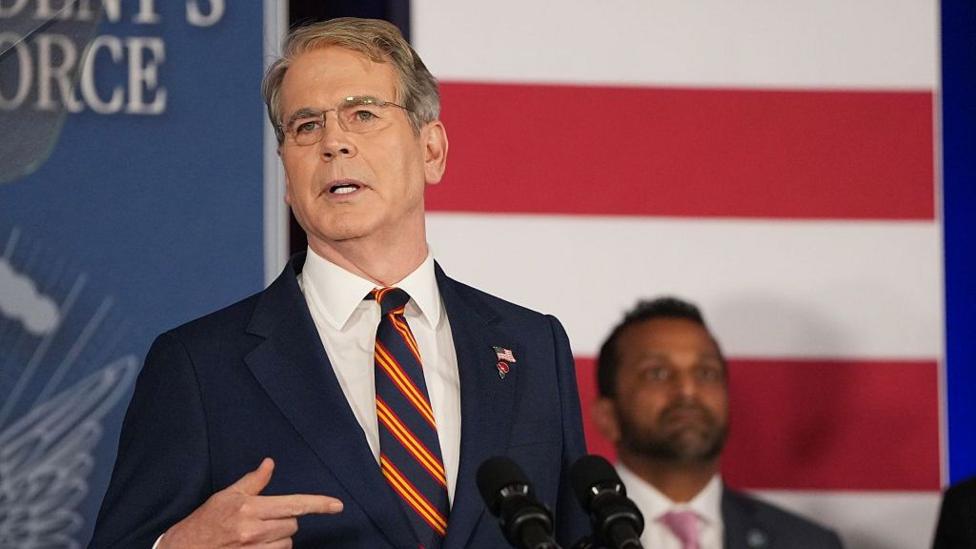
U.S. Treasury Secretary Scott Bessent and his family have relocated from their private residence to secure housing on a military installation following credible intelligence pointing to Iranian threats against his life. The move was coordinated by federal security agencies after threat assessments indicated that plotting linked to Tehran had entered an advanced phase.
Officials confirmed that the precautionary measure was enacted to safeguard the cabinet member while ensuring continuity in government operations. A spokesperson for the Department of the Treasury stated that Bessent remains undeterred by foreign intimidation and will continue leading the department's aggressive economic strategy without interruption.
Bessent is not the only senior administration official pushed into fortified quarters amid escalating geopolitical hostility. Several high-profile members of President Donald Trump's cabinet and inner circle, including Secretary of State Marco Rubio and White House Chief of Staff Stephen Miller, have also taken up residence on military installations or within hardened government complexes.
U.S. intelligence agencies have monitored heightened Iranian retaliation plans targeting current and former American officials for several years. Tensions escalated sharply following the 2020 targeted strike that killed Qasem Soleimani, the commander of Iran's Islamic Revolutionary Guard Corps Quds Force, triggering persistent warnings of reciprocal violence against prominent U.S. leaders.
Bessent has emerged as a central architect in Washington's renewed maximum-pressure campaign against the Iranian regime. Under his leadership, the Treasury Department has intensified economic sanctions designed to strangle Tehran's illicit oil exports, sever its banking ties, and restrict financing for regional proxy forces across the Middle East.
The decision to house multiple cabinet secretaries on active military grounds reflects an exceptional security posture for civilian leadership in the capital. While military bases have historically provided emergency refuge during acute crises, using them as routine residential quarters for executive branch heads underscores the severity of ongoing intelligence warnings.
Federal security details, including the U.S. Secret Service, the Federal Bureau of Investigation, and the Treasury Department's internal protective units, have expanded their collaborative efforts. Law enforcement officials have consistently warned that foreign adversaries are actively exploring asymmetric retaliation tactics, ranging from digital surveillance and harassment to direct physical plots against public figures.
Diplomatic analysts note that the heightened threat environment complicates diplomatic channels and reinforces the administration's hardline posture toward Tehran. Rather than softening enforcement, the Treasury Department has signaled an intention to expand secondary sanctions against global networks facilitating Iranian energy sales.
Federal authorities are expected to maintain the elevated protective measures as interagency assessments evaluate the evolving threat landscape. For now, administration officials emphasize that civilian economic policymaking will continue unaffected, even as top cabinet leaders operate under unprecedented military-grade protection.
Primary source: BBC World. Newzly rewrites and structures source reporting for clarity; verify critical details at the original.