Video Shows Backcountry Skier Triggering Avalanche in Colorado
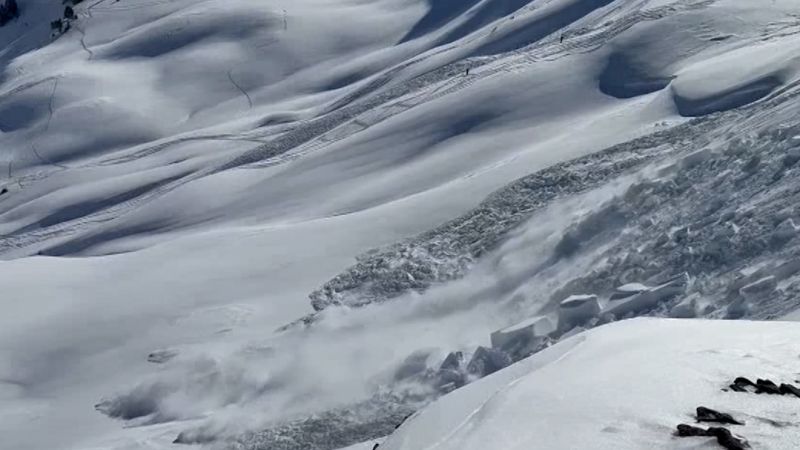
Dramatic video captured in Colorado's Rocky Mountain National Park shows a backcountry skier triggering a wind-slab avalanche in a steep couloir, underscoring the persistent danger of volatile snow conditions in alpine terrain.
In this piece
Dramatic footage from Rocky Mountain National Park captured a backcountry skier accidentally triggering an avalanche in a narrow couloir. Although swept…
Dramatic footage captured the moment a backcountry skier triggered an avalanche in Colorado's Rocky Mountain National Park, sending a cascading slab of snow rushing down a steep alpine chute. The harrowing video, broadcast by CNN and shared widely across social media, shows the snowpack fracturing instantly beneath the rider. The incident has drawn renewed attention to the volatile conditions that backcountry recreationists face across the high country.
The slide occurred in the Haiyaha Couloir, a narrow, technical descent situated above Lake Haiyaha near Hallett Peak in Larimer County. As members of the party evaluated the slope, the upper snow layer failed, unleashing a slide that quickly gained speed through the tight gully. One member of the group was caught in the moving snowpack and carried several hundred feet downhill.
According to field reports filed with the Colorado Avalanche Information Center, the fracture was determined to be a wind-slab avalanche with a crown measuring between 9 and 14 inches deep. The skier caught in the torrent was swept through sparse trees and partially buried by debris before the snow came to a halt. Remarkably, the rider avoided fatal trauma, sustaining a dislocated shoulder that was treated on site before the group descended safely.
The incident highlighted the inherent unpredictability of Colorado's continental snowpack, which is notoriously prone to structural weaknesses beneath surface layers. Forecasters explain that high winds frequently transport snow across ridgelines, depositing dense, cohesive slabs directly over fragile, faceted grains. Even small disruptions on steep, unsupported slopes can trigger widespread releases that propagate across entire gullies.
Backcountry skiing and alpine touring have grown rapidly in popularity throughout the Southern Rockies over the past decade, bringing larger numbers of enthusiasts into unmanaged terrain. Unlike commercial ski resorts, where professional ski patrols conduct active avalanche mitigation and monitor slope safety, backcountry areas are entirely uncontrolled. Every descent requires independent hazard evaluation, route planning, and rigorous self-reliance.
Safety advocates and regional forecasters commended the touring party for their decision to document the event and voluntarily submit their findings to the state avalanche center. Transparent incident reporting provides critical, ground-level data that helps researchers understand human decision-making under real backcountry pressure. By detailing their observations and mistakes, the skiers turned a near-catastrophic accident into a valuable instructional tool for the wider outdoor community.
The footage also reinforces the critical importance of carrying avalanche rescue gear, including digital beacons, collapsible probes, and shovels. Emergency responders emphasize, however, that safety gear cannot replace disciplined terrain management and conservative decision-making. In narrow couloirs with terrain traps like trees and boulders, surviving a slide often depends as much on fortune as on rescue preparedness.
The Colorado Avalanche Information Center continues to issue daily hazard ratings and snowpack summaries for backcountry travelers across the state. Forecasters urge recreationists to study regional forecasts meticulously, recognize signs of unstable snow like cracking or collapsing, and remain willing to alter their itineraries when danger levels rise. As the winter season continues, mountain safety organizations maintain that vigilance and continuous education remain the most effective defenses against mountain hazards.
Primary source: Google News Colorado. Newzly rewrites and structures source reporting for clarity; verify critical details at the original.