Voyager 1 reaches one-light-day distance, report says
Divya Bhaskar reports that NASA’s Voyager 1 has reached a distance from Earth that signals take 24 hours to cross, although the supplied material does not include confirmation from NASA.
In this piece
NASA’s Voyager 1 has reached one light-day from Earth, according to a Divya Bhaskar headline describing a record distance for a human-made object. The supplied…
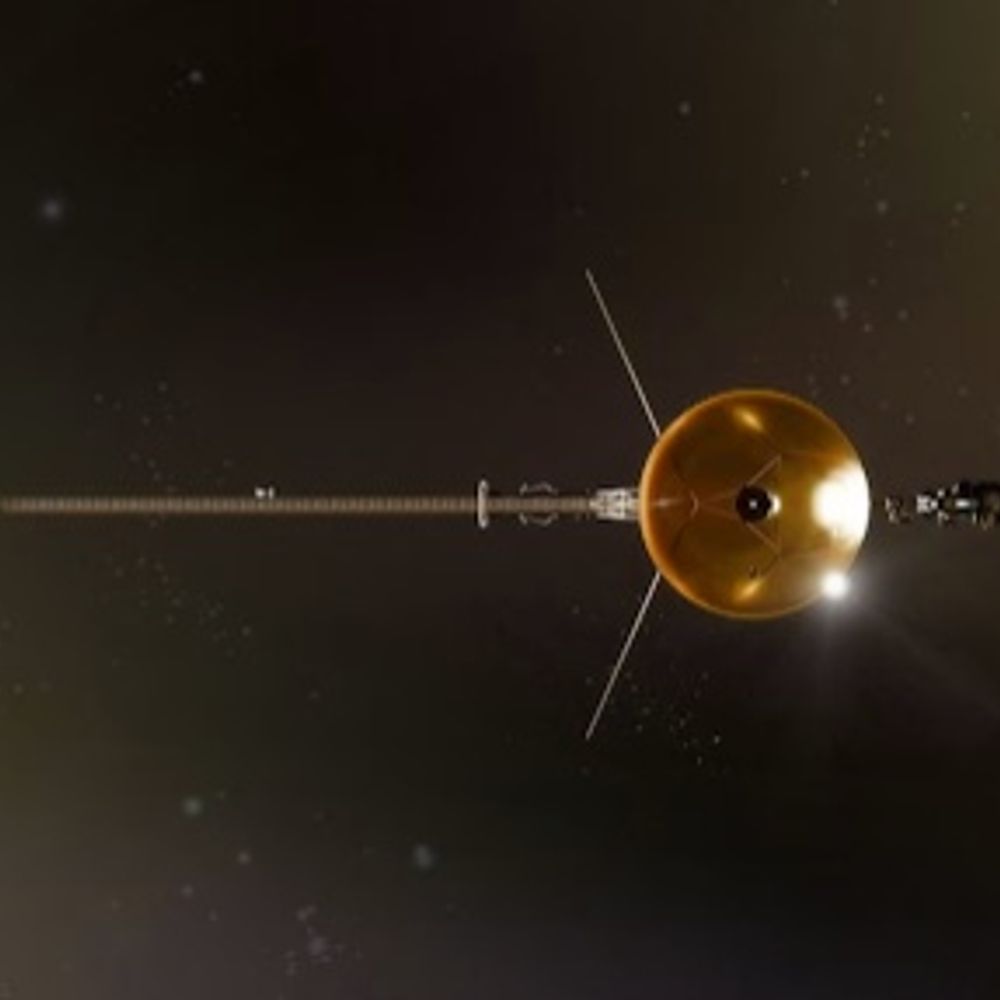
NASA’s Voyager 1 spacecraft has reached one light-day from Earth, according to a report headline from Divya Bhaskar International. The headline says signals take 24 hours to travel that distance and describes the spacecraft as farther away than any other human-made object.
The supplied source material consists of the headline and a link, without accompanying article text or a publication date. It does not include a NASA statement, distance measurement or calculation supporting the milestone, so the claim that Voyager 1 has already crossed that threshold cannot be independently established from the material provided.
A light-day is a measure of distance rather than the age or duration of a mission. It describes how far light travels in 24 hours, making the reported milestone a way of expressing Voyager 1’s separation from Earth through the travel time of a signal rather than a conventional distance measurement.
That distinction is important when interpreting the headline’s reference to a 24-hour delay. At a separation of one light-day, a signal traveling at light speed would take approximately 24 hours to make the journey in one direction; the phrase does not mean a complete exchange between Earth and the spacecraft takes only one day.
A command sent from Earth would therefore require roughly a day to arrive at that distance. A response transmitted immediately afterward would need approximately another day to return, producing a minimum round-trip communication time of about 48 hours before allowing for any additional processing or operational delays.
Such a separation makes the communication delay consequential, not merely a way to describe an unusually large distance. Any exchange involving an instruction and a subsequent response would unfold over days rather than seconds, although the supplied headline does not describe a particular command, response or change in mission operations.
The report also presents the distance as a record for a human-made object. That claim is distinct from the specific one-light-day threshold: being the most distant object and crossing a particular distance marker are related descriptions, but neither establishes the date or measurement behind the other.
The available material offers no account of how the reported threshold was determined or whether the figure was rounded. Without the underlying article or an attributed mission update, it is not possible to distinguish a precisely documented crossing from an approximate description of the spacecraft’s distance.
Confirmation would require a dated distance figure or a corresponding one-way signal travel time from NASA. Until that supporting information is available, the one-light-day milestone should be understood as a claim attributed to Divya Bhaskar, rather than a separately verified announcement from the space agency.
Primary source: Divya Bhaskar International. Newzly rewrites and structures source reporting for clarity; verify critical details at the original.