Why Nvidia and Trump Brought Back Jensen Huang
Less than two weeks after stepping down amid controversy, Jensen Huang was reinstated as Nvidia chief executive following market turbulence and quiet intervention from the Trump administration, highlighting the chipmaker's indispensable role in global artificial intelligence.
In this piece
Jensen Huang has returned as Nvidia chief executive less than two weeks after his abrupt departure, following heavy stock losses and White House intervention.…
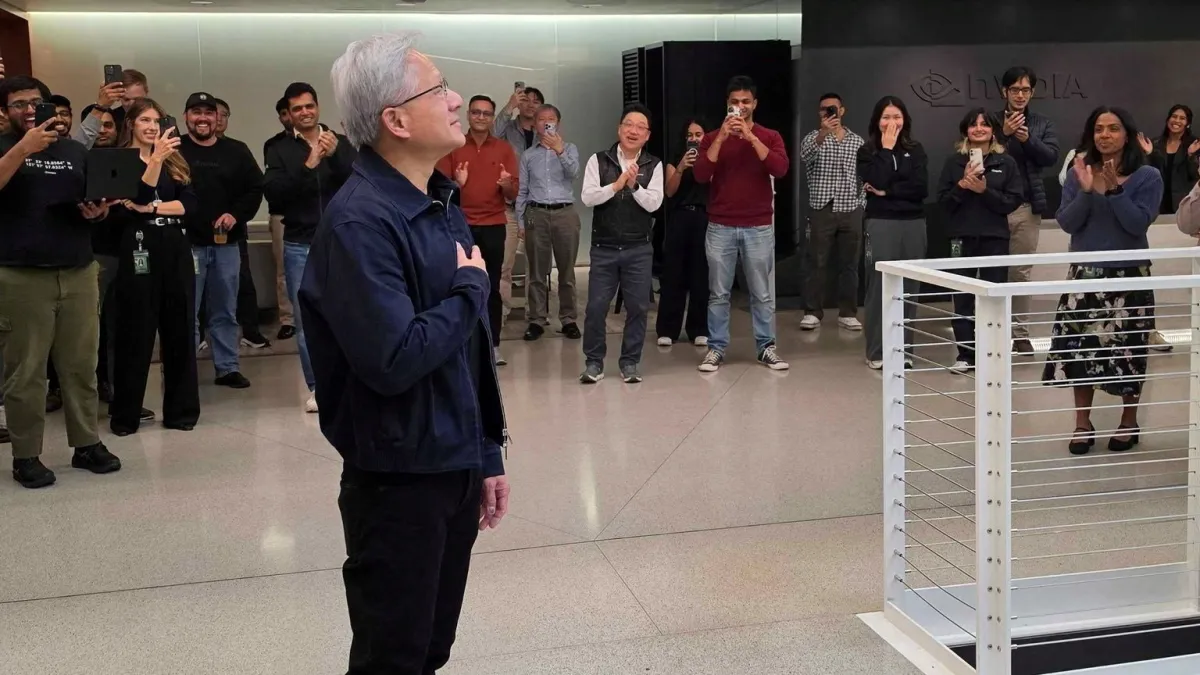
Nvidia co-founder Jensen Huang has returned to his post as chief executive less than two weeks after an abrupt departure that rattled global financial markets. His rapid reinstatement followed intense volatility across the technology sector and behind-the-scenes engagement from the Trump administration. The turnaround effectively ends one of the shortest executive absences at a trillion-dollar company in corporate history.
Huang had initially stepped aside following internal scrutiny and controversies that prompted Nvidia’s board of directors to seek new executive leadership. Unlike fellow Silicon Valley founders who maintain tight control through super-voting dual-class share structures, Huang holds standard voting shares representing roughly 3.6 percent of the firm. That standard structure left him formally vulnerable to board intervention despite his status as the company's defining visionary.
The board's initial decision immediately triggered severe fallout across international markets, erasing billions of dollars in market capitalization as investors confronted Nvidia’s acute key-person dependency. Huang has spent more than three decades building the company, personally managing dozens of direct engineering reports and dictating its long-term product roadmap. Analysts warned that attempting to replace such deeply entrenched technical authority in the middle of a global technology race was a perilous gamble.
Wall Street quickly recognized that removing Huang risked disrupting the entire commercial ecosystem underpinning generative artificial intelligence. Leading cloud providers and software developers rely almost exclusively on Nvidia’s graphics processors to train and deploy advanced machine learning models. Any prolonged disruption to Nvidia's delivery schedules or strategic focus threatened to stall multi-billion-dollar infrastructure initiatives across the wider tech economy.
The growing market distress swiftly caught the attention of Washington, where President Donald Trump and administration officials intervened to facilitate Huang's return. The White House framed Nvidia's stability as a critical component of American technological competitiveness and economic vitality. Federal officials expressed concern that leadership uncertainty at the nation’s premier chipmaker could weaken the country's position in global artificial intelligence development.
National security considerations and export control policies were central to discussions between government representatives and Nvidia’s board. As the United States enforces rigorous restrictions on semiconductor exports to international competitors, maintaining clear coordination between semiconductor leaders and the federal government is essential. Assurances from the administration that Huang’s reinstatement posed no national security liabilities helped clear the path for his immediate restoration.
Huang’s return sparked immediate relief across Wall Street and within Nvidia’s corporate headquarters, fueling a broad recovery in semiconductor stocks. Employees and industry partners welcomed the stability, noting that Huang's unique rapport with contract chip manufacturers and key hardware customers could not be easily duplicated. Even critics acknowledged that Nvidia’s operational machinery remains deeply tied to Huang’s personal management style and technical foresight.
Despite the market enthusiasm, the episode has ignited sharp debate among corporate governance specialists and legal observers over executive accountability. Governance experts argue that reinstating Huang so rapidly suggests that premier tech leaders may now be functionally immune from board discipline when their removal threatens broader market valuations. The precedent creates challenging questions about how public boards can maintain ethical oversight without triggering catastrophic shareholder losses.
The visible involvement of the White House in mediating the leadership dispute has also prompted scrutiny regarding political interference in private enterprise. While the administration characterized its actions as necessary to preserve market confidence, critics warn against normalizing political pressure on corporate directorates. Moving forward, Huang faces the dual task of navigating heightened regulatory scrutiny while convincing stakeholders that Nvidia can eventually institutionalize its leadership beyond his personal authority.
Primary source: Al Jazeera. Newzly rewrites and structures source reporting for clarity; verify critical details at the original.