Wind Gust of 84mph Recorded as Storm Boelo Brings Disruption Across UK
Storm Boelo battered the UK with gusts topping 85mph, leaving more than 500 homes without power and causing widespread flooding, road closures, and travel chaos across Scotland, Wales, and northern England.
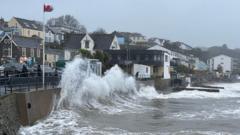
Storm Boelo struck the United Kingdom with fierce intensity, recording its highest wind gust of 85mph at Machrihanish near the Mull of Kintyre and matching that figure at the Needles on the Isle of Wight. Capel Curig in Conwy county, north Wales, registered an 84mph gust alongside 54.6mm of rainfall in a single day, while the Isle of Tiree recorded 82mph and Islay Port Ellen 81mph.
More than 555 homes in Rhayader, Powys, lost electricity during the height of the storm, with roughly 100 further properties across south Wales still without power on Sunday morning. SP Energy Networks logged 14 separate outages across north and mid Wales, while Scottish utility SSEN reported 57 unplanned outages concentrated in the Western Isles, the west Highlands, and Argyll and Bute.
Flooding and fallen trees closed or severely disrupted roads across Scotland and Wales. Trunk roads affected included the A82 at Bridge of Orchy, the A84 at Runacraig, the A87 at Breakish, and the A76 at Drumlanrig. The M74 at junctions 6 and 7 and the M8 at junction 18 eastbound in Glasgow were also closed, though both motorway stretches later reopened. In north Wales, significant debris blocked the A470 between the Black Cat Roundabout and Llanrwst, with police urging motorists to take care.
Rail travel was heavily disrupted. ScotRail said 21 of its 39 routes were affected, while Avanti West Coast advised passengers against travelling north of Preston. TransPennine Express called for essential travel only and LNER warned against journeys between Edinburgh and Aberdeen. Transport for Wales replaced multiple train services with buses following flooding across the network.
Nearly all CalMac ferry services on Scotland's west coast were cancelled, and NorthLink Ferries connecting the mainland to Orkney and Shetland were severely disrupted. The cancellations left island communities cut off and compounded logistics difficulties for businesses already dealing with storm damage.
Flood warnings multiplied as the storm moved through. Natural Resources Wales had four active warnings on the River Ely and one on the River Rhondda in Porth, Rhondda Cynon Taf, by Sunday morning. Scotland saw 35 flood warnings in place simultaneously, with coastal flooding reported in Largs and Saltcoats on the North Ayrshire coast. Parts of the country received up to 70mm of rain within 24 hours.
The Republic of Ireland and Northern Ireland also felt the storm's force. More than 1,000 homes in County Antrim and County Fermanagh lost power, with a further 1,600 properties affected across the Republic. Coastal communities bore the brunt of a combination of high winds and elevated seas.
Storm Boelo arrived directly behind Storm Austen, which had already saturated ground and raised river levels across Wales and Scotland over the preceding days. That back-to-back sequencing left drainage systems with little capacity to absorb fresh rainfall, accelerating surface water flooding and heightening the risk of river overtopping.
A yellow wind warning for parts of north Wales remained in place until 21:00 GMT on Sunday. Forecasters indicated that conditions were expected to ease through Sunday evening, though residual disruption to transport networks and ongoing power restoration work was anticipated to continue into the following day. Authorities urged residents in flood-affected areas to monitor guidance from their local councils and the relevant environment agencies.
Primary source: BBC Science. Newzly rewrites and structures source reporting for clarity; verify critical details at the original.