Life aboard Rosebank as workers await oil field decision
Workers aboard the Petrojarl Rosebank face an uncertain future as the UK weighs the oil field’s approval, bringing offshore livelihoods and the project’s climate impact into sharp focus.
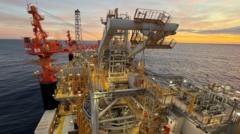
Workers aboard the Petrojarl Rosebank are continuing their offshore routines while awaiting a UK government decision on whether the oil field can begin production. A visit by BBC Scotland editor James Cook highlights the human stakes behind a project caught between competing arguments about employment, energy supplies and climate change.
The vessel sits roughly 130 kilometres north-west of Shetland, above an untapped field in the North Atlantic. It is a floating production, storage and offloading ship rather than a fixed platform, designed to process hydrocarbons brought up from subsea wells.
For helideck worker Nicola Boyd, offshore life combines varied responsibilities with extended periods away from home. She told the BBC she enjoys the work, describing a schedule of two weeks aboard followed by three weeks off. Workers interviewed during the visit also described missing family occasions and ordinary comforts ashore.
Those personal experiences give the political debate an immediate workplace dimension. The question is not simply whether equipment can be installed or crews can carry out their duties: the project still needs permission to produce. Development activity and a final production decision are separate parts of Rosebank’s progress.
The regulatory uncertainty follows the overturning of earlier consents. According to operator Adura’s project information, a Scottish court ruled on January 30, 2025, that Rosebank’s consents were no longer valid, although development work could continue while a fresh consenting process took place. Government records subsequently listed the environmental statement as under review.
That review extends beyond the emissions generated by offshore operations themselves. The government’s published project file includes an assessment of so-called scope 3 emissions, alongside assessments of other potential environmental effects. This makes the consequences of using the extracted fuel part of the scrutiny surrounding the development, rather than limiting attention to how it is produced.
Adura presents Rosebank as a substantial investment in employment and energy supply. Its published plans envisage subsea wells connected to the vessel, with oil transported by shuttle tanker and gas sent through the West of Shetland pipeline system. These arrangements describe how production would work if the necessary approvals are secured, not evidence that permission has already been granted.
The commercial case remains contested on climate grounds. Campaigner Tessa Khan told the BBC that the development would worsen climate damage while benefiting profitable energy companies. The disagreement places the expected economic benefits alongside the environmental consequences being examined through the renewed approval process.
Official documents show that the review has involved successive requests for additional information and opportunities for public representations. The government’s project page records further submissions and notices during 2026, underscoring that the decision involves an environmental assessment rather than an automatic continuation of the original approval.
Adura targets first oil in 2027, but that remains a development objective rather than a guaranteed outcome. For the crew aboard the Petrojarl Rosebank, the next decisive milestone is the consent decision: until then, daily work continues on a vessel whose production role remains unresolved.
Primary source: BBC Science. Newzly rewrites and structures source reporting for clarity; verify critical details at the original.