Zelensky Warns US Is Too Focused on Middle East, Urges Stronger Pressure on Russia
Ukrainian President Volodymyr Zelensky has voiced sharp frustration with Washington, warning that the United States is overly preoccupied with the Middle East. Speaking to the BBC, he urged Western partners to apply far tougher pressure against Russia.
In this piece
Ukrainian President Volodymyr Zelensky told the BBC that the United States is too focused on the Middle East and failing to push Russia hard enough. He also…
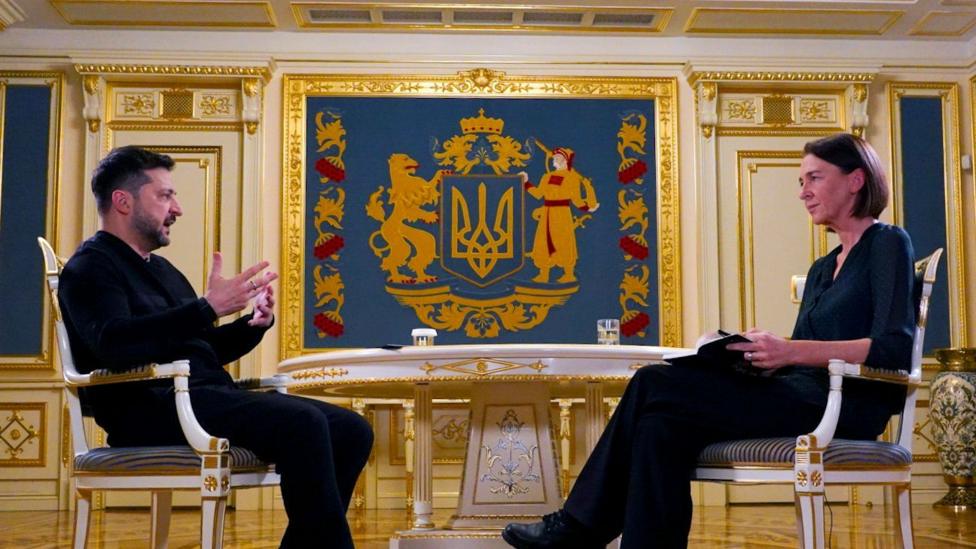
Ukrainian President Volodymyr Zelensky has voiced sharp frustration with Washington, warning that the United States is excessively focused on crises in the Middle East while failing to exert sufficient pressure on Russia. Speaking in an interview with the BBC, the Ukrainian leader argued that Western partners must take a far more aggressive stance to deter Moscow and hold the Kremlin accountable.
During the discussion, Zelensky also scrutinized American political rhetoric regarding the war, explicitly questioning past remarks made by Donald Trump. The Ukrainian president described it as strange that Trump has characterized Russian President Vladimir Putin as a friend, highlighting unease in Kyiv over shifting political currents within the United States.
The Ukrainian leader's comments reflect growing apprehension in Kyiv that expanding turmoil in the Middle East is overshadowing Europe's largest land conflict. As diplomatic energy, emergency funding, and defense manufacturing capabilities are split across multiple global hot spots, officials in Kyiv worry that sustained support for Ukraine could be gradually deprioritized.
Zelensky maintained that current international measures have not pushed Russia hard enough to alter the Kremlin's strategic calculus. Ukrainian leadership has consistently argued that half-measures and incremental policies allow Moscow to adapt economically and sustain its military operations along the front lines without facing decisive deterrent consequences.
The critique comes amid protracted discussions in Washington regarding the scale and future trajectory of American foreign assistance. Political divisions in the United States have repeatedly slowed or complicated aid packages, fostering anxiety among European allies who depend heavily on American leadership to anchor international coalitions.
By openly addressing Trump's past characterizations of Putin, Zelensky highlighted the delicate diplomatic path Ukraine must navigate across the American political spectrum. Securing durable, bipartisan backing in Washington remains a central objective for Kyiv, even as differing factions debate whether domestic resources should remain committed abroad.
The broader geopolitical stakes extend well beyond Ukraine's borders, as European allies closely monitor American resolve in the face of ongoing Russian aggression. Regional defense planners fear that any perceived reduction in American commitment to countering Moscow could weaken collective deterrence and embolden authoritarian regimes elsewhere.
On the battlefield, Ukrainian forces continue to face intense pressure, requiring consistent flows of advanced munitions, air defense systems, and intelligence sharing. Any distraction in Western capitals directly impacts the speed and scale of logistical assistance, reinforcing Kyiv's urgency in keeping global attention focused squarely on the war.
Moving forward, the Ukrainian government is likely to redouble its diplomatic efforts to ensure that countering Russia remains a paramount strategic priority for Washington. With competing international crises demanding immediate attention, Zelensky’s message to the BBC serves as a direct reminder that the outcome in Ukraine will define the stability of the international order for years to come.
Primary source: BBC World. Newzly rewrites and structures source reporting for clarity; verify critical details at the original.