world·Louisiana·Orleans Parish
All Rescued After Tanker Collides With Cruise Ship in New Orleans
All passengers and crew have been accounted for after an asphalt tanker collided with a docked river cruise ship on the Mississippi River in New Orleans, leaving 32 hospitalized with non-critical injuries.
In this piece
A major maritime collision on the Mississippi River in New Orleans has ended with no fatalities after an asphalt tanker struck a docked cruise ship. Thirty-two…
All passengers and crew members have been safely accounted for following a dramatic collision between an industrial tanker and a river cruise ship on the Mississippi River in New Orleans. The incident sent 32 people to local hospitals with non-critical injuries, but authorities confirmed that no lives were lost and no individuals remain missing.
The accident occurred when the asphalt and bitumen tanker Atlantic Asphalt reportedly suffered a sudden mechanical steering failure near the Port of New Orleans. The runaway vessel drifted off course and struck the docked riverboat American Heritage, which was carrying roughly 130 passengers and crew members at the time of the impact.
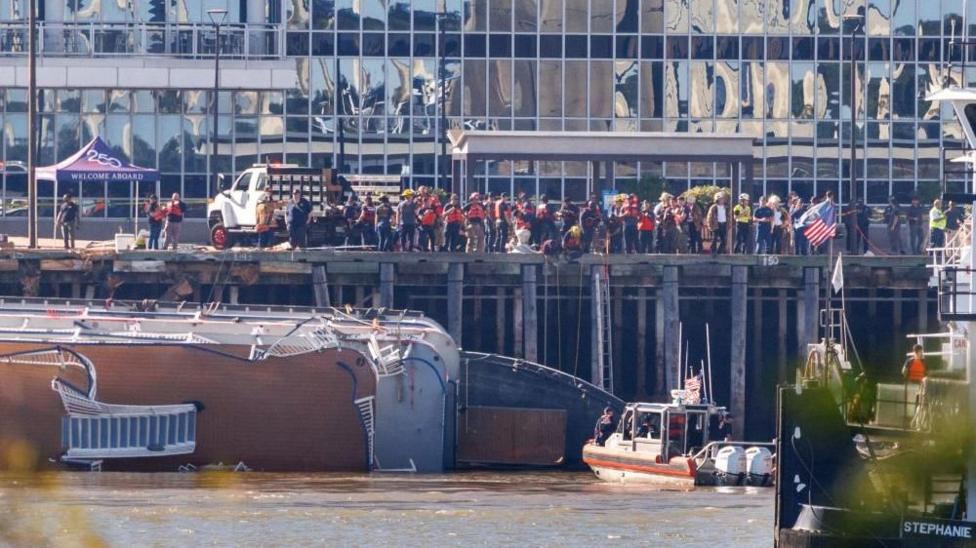
The force of the collision breached the riverboat's hull while travelers were in the process of disembarking at the conclusion of an eight-day river cruise. Water rapidly entered the compromised structure, causing the vessel to list sharply before rolling onto its side directly along the riverbank.
A massive multi-agency rescue mobilization swung into action within minutes of the crash. Firefighters, harbor police officers, commercial tugboat crews, and nearby civilian boaters rushed toward the sinking vessel, pulling passengers directly from the river currents and rescuing those trapped along the exposed side of the hull.
Civic leaders and state emergency coordinators quickly described the successful evacuation as a miracle on the Mississippi. Officials noted that river conditions, heavy currents, and the rapid speed of the capsizing could have easily produced a catastrophic mass-casualty disaster had emergency crews not reacted instantaneously.
Paramedics treated dozens of individuals at the scene for cuts, bruises, hypothermia, and shock before transporting 32 patients to nearby medical facilities. Health officials confirmed that all injuries treated at area hospitals remained non-life-threatening, with several patients discharged after receiving preliminary medical evaluations.
The collision took place along one of the busiest maritime corridors in the United States, where deep-draft cargo carriers routinely share congested waterways with domestic passenger vessels. The lower Mississippi River serves as a vital shipping conduit for global grain, petrochemical, and manufacturing supply chains, demanding rigorous navigational oversight and strict vessel management.
Port authorities and environmental containment teams quickly deployed floating absorbent booms around the partially submerged American Heritage to contain any potential fuel spills. Divers and marine salvage specialists were dispatched to conduct structural assessments on both vessels and ensure the stability of the industrial tanker.
The United States Coast Guard and federal transportation safety investigators have initiated a comprehensive inquiry into the steering system breakdown aboard the Atlantic Asphalt. Investigators are reviewing vessel tracking telemetry, communication logs, and mechanical maintenance records to establish the sequence of events that led to the collision.
While commercial shipping operations along the Mississippi River corridor experienced temporary delays, navigation channels are being monitored to ensure the safe movement of surrounding maritime traffic. Full salvage operations to raise and secure the damaged cruise ship are scheduled to proceed once safety inspectors complete their on-site assessments.
Primary source: BBC World. Newzly rewrites and structures source reporting for clarity; verify critical details at the original.