America’s Oldest Operating Lighthouse Still Shines on New York Harbor
The lighthouse on New Jersey’s Sandy Hook peninsula predates the American Revolution and remains in operation after more than 260 years, a lasting maritime landmark in an age of digital navigation.
In this piece
The country’s oldest operating lighthouse continues to shine on New York Harbor from New Jersey’s Sandy Hook peninsula, according to Smithsonian History. More…
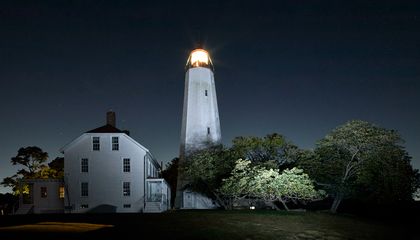
The country’s oldest operating lighthouse is still shining on New York Harbor more than 260 years after its beginnings, according to Smithsonian History. Standing on New Jersey’s Sandy Hook peninsula, the beacon predates the American Revolution and continues a working life that spans the country’s transformation from colonies to a modern nation.
Its distinction rests on more than age alone: it remains an operating lighthouse, rather than solely a monument to an earlier maritime era. That combination of longevity and continued use gives the Sandy Hook landmark a place in both the history of navigation and the present-day landscape of the harbor.
Smithsonian frames the lighthouse’s endurance against a broad technological shift. Radar and GPS have diminished the need for lighthouses, changing the relationship between mariners and the fixed lights that once played a more prominent role in helping them navigate. The beacon survives within that changed setting, not outside it.
That distinction matters when considering what its continued operation represents. An old lighthouse can retain a practical function without holding the same importance it did before electronic navigation. Its survival does not mean maritime technology has stood still; instead, it places an enduring physical landmark alongside newer ways of finding a course.
The lighthouse’s pre-Revolutionary origins also offer a different measure of American history. Its working life began before the nation itself, making its age more than an architectural curiosity. The light provides a tangible connection between a distant period and a harbor that can now be navigated with technologies its earliest users could not have known.
Yet Smithsonian’s account emphasizes an appeal that is not simply technical or chronological. Radar and GPS may have reduced the need for such beacons, but they do not attract the same romantic associations. A lighthouse gives navigation a visible form: a structure on the shore and a light directed across the water.
That emotional appeal helps explain why the Sandy Hook beacon is more than a story about equipment remaining in service. Its continuing presence brings together utility, memory and a recognizable coastal setting. The contrast with digital navigation is not necessarily a contest over which technology is better, but a reminder that function and cultural attachment are different things.
For now, the central fact is its continuity: after more than 260 years, the country’s oldest operating lighthouse still shines. Smithsonian’s framing leaves its significance in that meeting of past and present, as an increasingly technological world continues to make room for a maritime landmark older than the United States.
Primary source: Smithsonian History. Newzly rewrites and structures source reporting for clarity; verify critical details at the original.