New Homesteaders Give California’s Wonder Valley Another Try
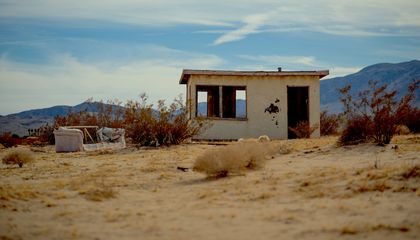
Newcomers are turning abandoned shacks into a community in California’s Wonder Valley, revisiting an earlier settlement effort in an arid landscape where cheap land alone proved insufficient.
In this piece
A new generation of homesteaders is reviving abandoned shacks in California’s Wonder Valley, according to Smithsonian History. The area once attracted settlers…
A new generation of homesteaders is turning abandoned shacks in California’s Wonder Valley into the foundations of a community, according to Smithsonian History. Their efforts revisit an earlier attempt to settle an arid landscape where inexpensive land did not necessarily make everyday life practical.
The state once sold tracts there at very low prices, offering an opportunity to people willing to establish themselves in the desert. But the account describes living conditions as too difficult without modern conveniences. The abandoned structures are a physical reminder of the gap between acquiring land and being able to remain on it.
Today’s arrivals are giving the region another try, although the financial circumstances have changed. Wonder Valley is no longer as inexpensive as it once was, according to the report. That makes the current effort more than a simple replay of the earlier bargain-land proposition: newcomers are returning to a place whose appeal and difficulties have already been tested.
The shacks connect the two periods of settlement. Buildings left behind by an earlier era are now part of an effort to create a community rather than remain scattered evidence of an unsuccessful venture. Smithsonian History frames that reuse as a defining feature of the new homesteading movement in Wonder Valley.
The history also points to a distinction between the price of property and the demands of inhabiting it. Cheap tracts offered an entry point, but they did not resolve the challenges of living in an arid setting without modern conveniences. The earlier experience suggests that affordability at purchase was only one part of the settlement equation.
For the present-day effort, the central question is whether renewed interest can translate into a lasting community. Reoccupying abandoned buildings gives the landscape a new chapter, but the supplied account does not establish how broadly that transformation extends. It also provides no figures for property prices or the number of people taking part.
Those limits matter when assessing what the revival represents. The account describes renewed commitment to a place previous settlers found difficult, not evidence that the underlying challenges have disappeared. Nor does the region’s higher cost, by itself, establish whether today’s homesteaders will have a more durable foothold than their predecessors.
For now, Wonder Valley’s story is one of return and reuse rather than a completed transformation. Smithsonian History presents newcomers as building community among the remnants of an earlier settlement era. Whether that effort endures will depend on turning the decision to arrive into a workable way to stay—the challenge that low land prices alone could not solve before.
Primary source: Smithsonian History. Newzly rewrites and structures source reporting for clarity; verify critical details at the original.