In a Berlin Square, a Bronze Statue of Artist Käthe Kollwitz Watches Over Children at Play
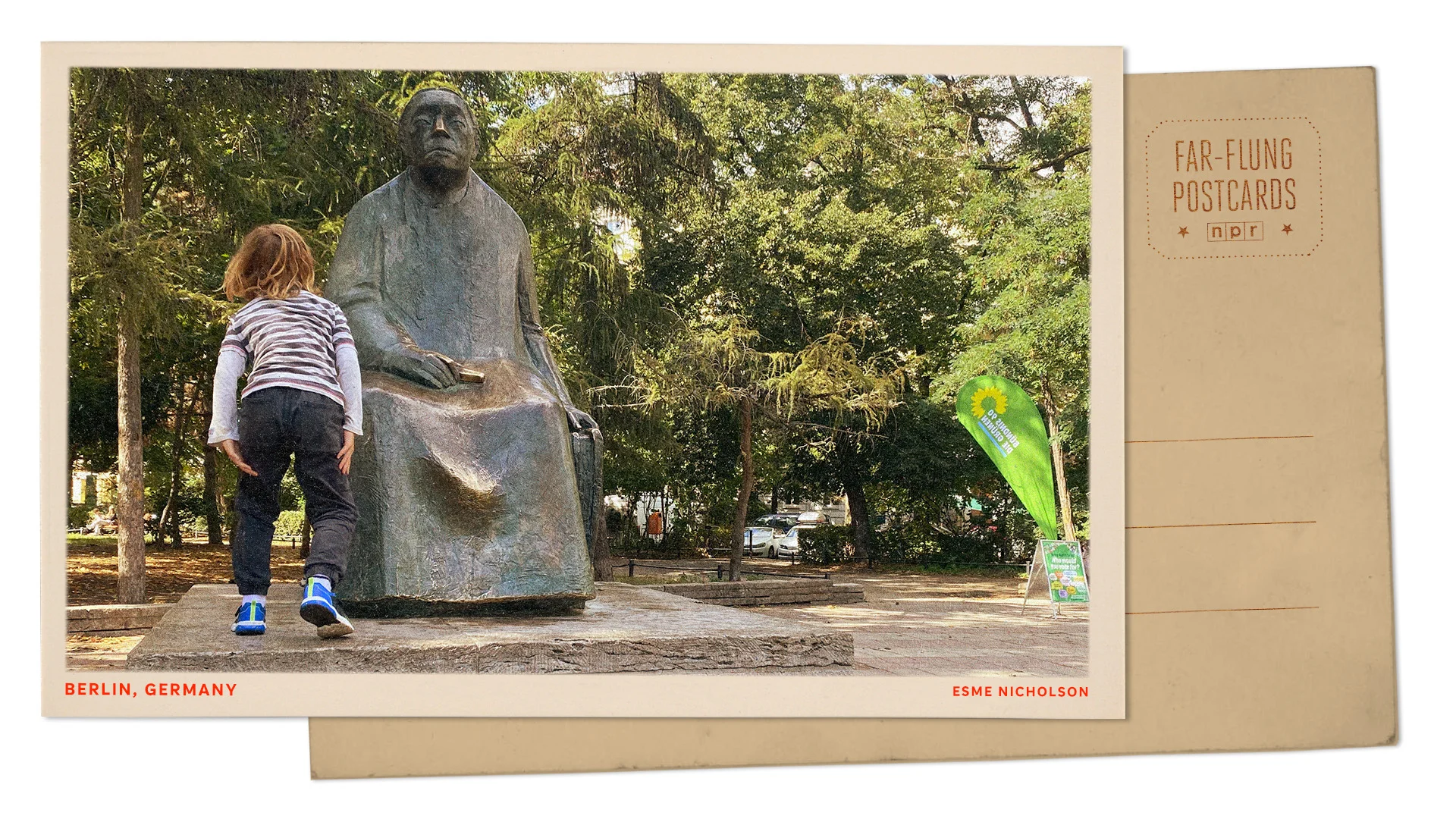
In a Berlin square named after Käthe Kollwitz, children gather to play under the calm gaze of the German artist's bronze statue, recalling her historic work depicting youth in the aftermath of World War I.
In this piece
A calm bronze statue of German artist Käthe Kollwitz watches over playing children in a Berlin square that bears her name. The setting creates a poignant…
In a bustling public square in Berlin, the bronze likeness of German artist Käthe Kollwitz sits in quiet contemplation while neighborhood children play in the open air around her. The memorial sculpture serves as a prominent focal point for the civic plaza that bears her name, creating a striking contrast between historical remembrance and the vibrant vitality of daily life. For local families and passersby, the site has evolved into a beloved meeting ground where history and everyday recreation naturally intersect.
Cast in bronze, the monument presents Kollwitz with an ever-watchful and calm demeanor that overlooks the active courtyard. On any given afternoon, children frolic within arm's reach of the heavy plinth, their games unfolding against the stillness of the metallic figure. The statue’s measured, introspective expression provides an anchor of tranquility amidst the unpredictable movement of urban play.
The physical juxtaposition between the youthful atmosphere and the monument carries deep historical resonance given the defining themes of Kollwitz’s artistic life. As a renowned German printmaker, draughtswoman, and sculptor, her body of work is widely celebrated for its profound engagement with social reality and collective loss. Much of her creative output was shaped by the immense toll of early twentieth-century conflicts, particularly the widespread suffering following World War I.
Children occupied a central place across Kollwitz’s most celebrated artistic works, frequently portrayed in moments of vulnerability, hunger, and grief alongside protective mothers. Her visceral woodcuts, etchings, and sculptures offered unflinching examinations of civilian survival during periods of severe economic distress and wartime upheaval. That deliberate focus on safeguarding youth cemented her reputation as one of Germany’s most empathetic visual chroniclers of human tragedy.
Decades later, that poignant legacy exists in direct dialogue with the contemporary reality of the square. Rather than standing isolated behind protective barriers or confined within institutional walls, Kollwitz’s likeness is seamlessly woven into the neighborhood environment. The sounds of laughter and youthful exuberance create an atmosphere that feels distinctly revitalizing against the solemn historical weight associated with her art.
Public art installations in Berlin frequently serve double duty as educational touchstones and community focal points across varied neighborhoods. By embedding tributes to figures like Kollwitz directly into active parks and pedestrian plazas, the city preserves cultural memory in a manner that remains accessible to ordinary citizens. Observers often view these shared civic settings as critical spaces where historical awareness can be absorbed casually during ordinary daily routines.
For regular visitors, the sculpture also provides an opportunity to reflect on the lasting influence of an artist who challenged conventions and championed peace through her craft. The enduring dignity captured in the bronze casting invites quiet contemplation even in the middle of a lively gathering area. It serves as a reminder of the historical responsibilities carried by past generations to foster a safer, more humane world for the young.
As municipalities worldwide evaluate the role of public monuments in twenty-first-century urban spaces, the Berlin square stands as an example of commemorative art that remains vital and loved. The quiet guardian of the square continues to preside over community life, ensuring that Kollwitz’s artistic voice and social consciousness remain part of the public sphere. For as long as children gather to play beneath her watchful gaze, the memorial remains a living testament to memory, art, and resilience.
Primary source: NPR Arts & Life. Newzly rewrites and structures source reporting for clarity; verify critical details at the original.