U.S. Army Cleared to Detonate Volatile Lead Explosives in Iowa
The U.S. Army is moving forward with a controlled detonation of unstable lead azide in southeastern Iowa after a federal court lifted a temporary stay, despite outcry over toxic fallout.
In this piece
The U.S. Army is preparing to detonate nearly 10,000 pounds of degraded lead azide at the Iowa Army Ammunition Plant following a federal appeals court ruling.…
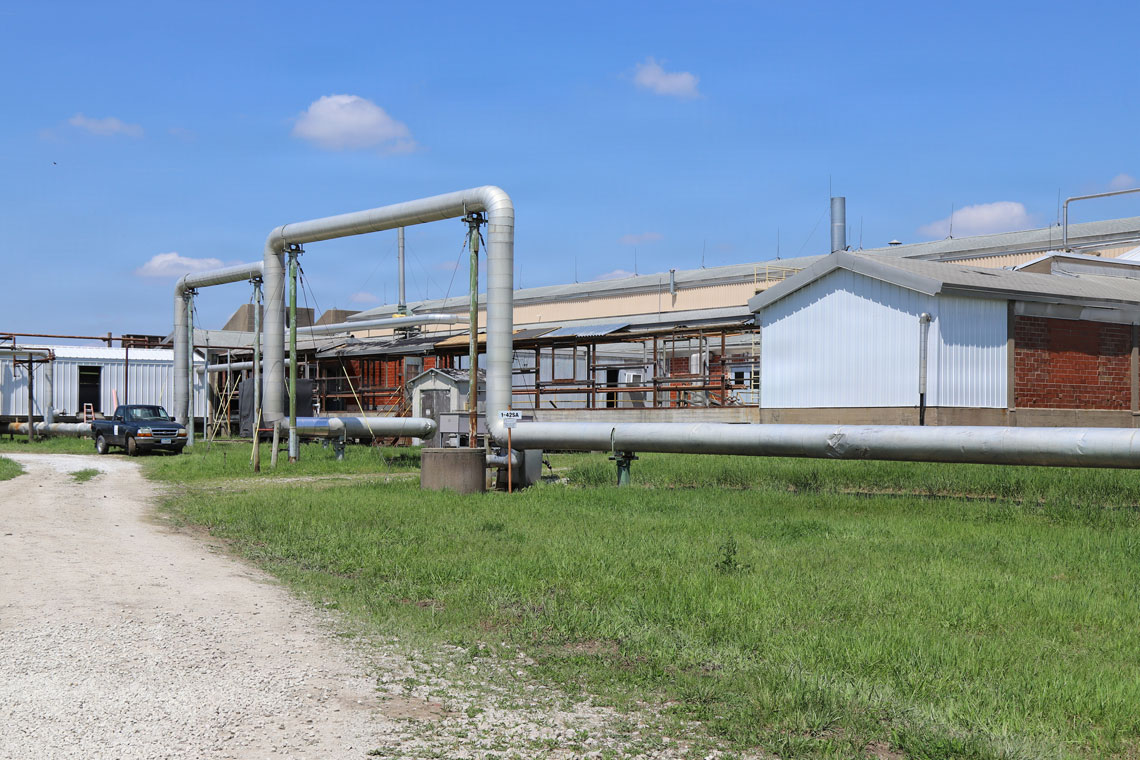
The U.S. Army is preparing to conduct an open detonation of nearly five tons of degraded lead azide at the Iowa Army Ammunition Plant in Middletown, Iowa, following weeks of legal challenges and growing environmental objections. Federal officials contend that destroying the volatile stockpile under controlled conditions is necessary to prevent an accidental explosion, while neighboring communities across Iowa and western Illinois brace for potential airborne contamination.
The material slated for destruction consists of 68 barrels containing approximately 9,700 pounds of lead azide, a primary explosive compound widely used in military detonators. Decades of storage inside bunkers have caused the compound to degrade into unstable crystalline structures that are acutely sensitive to shock, friction, and shifting temperatures.
Defense officials and the U.S. Environmental Protection Agency maintain that the barrels cannot be transported safely to another facility without posing severe hazards to workers and transit corridors. Federal attorneys argued in court filings that delaying the operation into freezing winter weather drastically increases the likelihood of a spontaneous, uncontrolled catastrophe, leaving open detonation as the only viable disposal method.
Public health advocates and environmental organizations, including the Sierra Club and the Iowa Environmental Council, have voiced sharp opposition to the planned blast. Experts warn that detonating the stockpile in an open-air pit will unleash a dense plume carrying microscopic lead particles that could drift across agricultural lands and reach communities up to 100 miles downwind.
Lead is a potent neurotoxin that presents severe health consequences, particularly for infants, young children, and pregnant women, with medical consensus holding that no safe blood level exists. Regional residents and farm operators fear that toxic fallout could settle into topsoil, infiltrate local waterways, and compromise crops and livestock across the agricultural heartland.
Downwind communities in western Illinois have raised particular alarm, as atmospheric modeling suggests dust from the detonation could cross the Mississippi River into adjacent counties. State officials and lawmakers in Illinois have demanded enhanced monitoring and criticized the perceived lack of timely communication and comprehensive mitigation measures ahead of the operation.
The controversy triggered urgent legal action, culminating in a lawsuit by conservation groups seeking an emergency injunction against the EPA permit authorizing the blast. While the U.S. Court of Appeals for the 8th Circuit initially issued a temporary administrative stay to review the petitions, the court ultimately dissolved the halt, concluding that federal agencies had enacted sufficient risk mitigation protocols given the imminent danger of inaction.
The dispute also sparked high-level political reactions, with bipartisan lawmakers urging military leaders to reconsider alternate destruction technologies. President Donald Trump weighed in publicly on social media, initially calling for a delay to allow judicial scrutiny and regional leadership review before appellate judges cleared the legal path forward.
In preparation for the detonation, environmental regulators and military personnel have established perimeter monitoring stations to track air quality and particle dispersion in real time. Officials plan to execute the blast only when specific atmospheric conditions, such as wind direction and low cloud cover, align to minimize residential exposure.
State and local health departments continue to advise vulnerable residents in the projected path to stay informed and take basic precautions during and immediately following the event. As the military moves ahead, environmental watchdogs have pledged to scrutinize post-detonation air sampling data to evaluate the blast's lasting footprint across the region.
Primary source: Google News Iowa. Newzly rewrites and structures source reporting for clarity; verify critical details at the original.