Asus ProArt P16 Review Showcases the Rise of On-Device Local AI
A review of the Asus ProArt P16 reveals how unified memory and specialized silicon enable heavy artificial intelligence models to run locally, offering power users an early glimpse of server-free computing.
In this piece
The Asus ProArt P16 demonstrates the growing viability of running demanding artificial intelligence models directly on portable workstations without relying on…
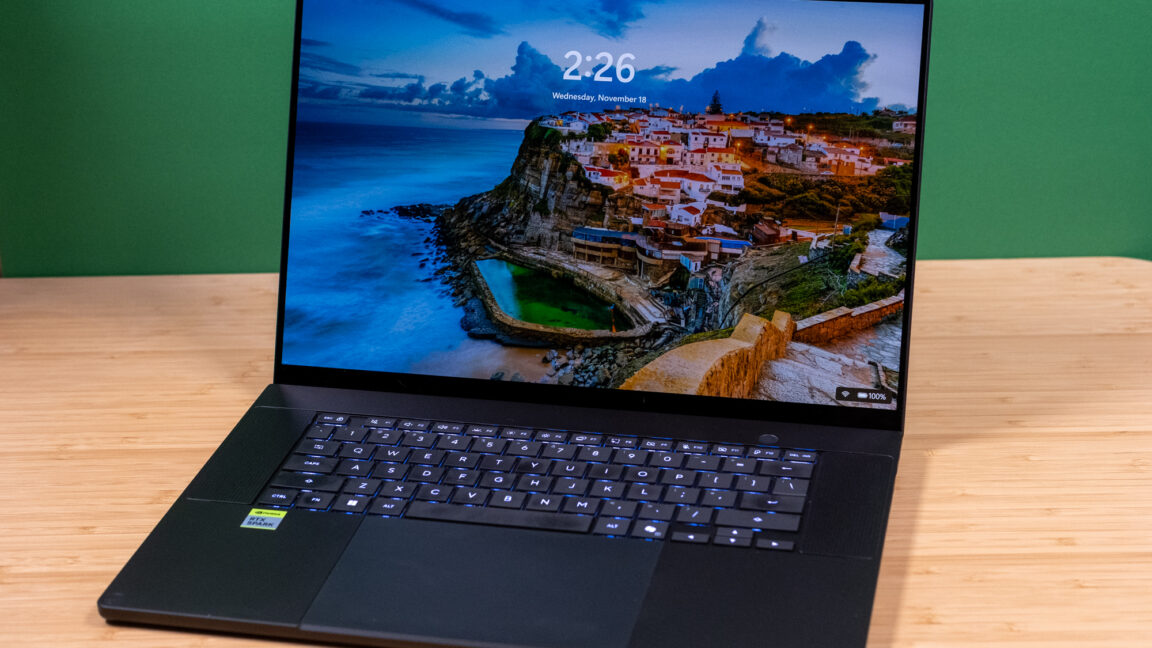
A recent hardware assessment of the Asus ProArt P16 illustrates how portable computing is beginning to pivot toward on-device artificial intelligence processing. Evaluated by technology publication Ars Technica, the high-performance workstation showcases how localized silicon can shoulder demanding computational tasks that previously required dedicated cloud servers. The machine highlights a growing industry ambition to give creators and developers autonomous machine learning environments on the move.
Central to the workstation's appeal is an architecture engineered to overcome the severe memory bottlenecks that typically hinder mobile devices. By pairing specialized processing silicon with unified memory configurations scaling up to 128 gigabytes, the system allows memory-intensive neural network models to reside entirely in shared high-bandwidth memory. This setup circumvents the strict video memory limits that historically restricted local machine learning to desktop workstations.
In practical evaluation tests, the review demonstrated the system running sizable open-weight models, including Meta's 70-billion-parameter Llama model, directly on device through open-source inference frameworks. The laptop maintained steady local token generation without transmitting data to remote external servers. While processing speeds were measured at modest rates compared to industrial data center clusters, the test validated that massive model weights can function reliably on portable hardware.
The breakthrough carries practical significance for privacy-conscious developers and digital creators. Running large language models locally guarantees that confidential project data, sensitive prompts, and proprietary codebases remain completely private and isolated from third-party networks. It also provides complete operational reliability, ensuring advanced generative workflows remain functional even during complete network outages.
Beyond its artificial intelligence credentials, the ProArt P16 incorporates traditional high-end mobile workstation hardware intended for creative professionals. The machine features a high-resolution 4K Lumina OLED display, precision input tools, and specialized creator applications tailored for multimedia rendering and design. Asus has positioned the system as a versatile bridge between conventional digital content creation and emerging generative design pipelines.
However, the evaluation also pointed out that local artificial intelligence computing still faces substantial friction on the software front. Setting up specialized container runtimes, custom drivers, and tailored acceleration libraries frequently demands technical troubleshooting and manual tuning. For creators used to seamless commercial applications, navigating early software ecosystems remains a noticeable barrier to entry.
Cost presents an equally formidable obstacle to widespread adoption. Top-tier configurations equipped with maximum memory and storage capacity command premium price points reaching thousands of dollars, largely driven by the high expense of specialized unified memory. As a result, the device remains firmly targeted at well-funded enterprise developers, boutique creative studios, and specialized technical professionals rather than general consumers.
Despite these economic and technical headwinds, the system represents an important transitional milestone in modern personal computing. Shifting computationally intensive workloads away from remote server farms reduces recurring cloud subscription costs and eliminates round-trip latency. It also gives individual operators unprecedented agency over their computational tools and personal data.
Looking ahead, industry analysts expect that as client-side software frameworks mature and silicon manufacturers refine integrated neural processing units, on-device intelligence will gradually permeate more affordable laptop categories. For the moment, high-end workstations like the ProArt P16 provide an informative glimpse into a future where portable computers handle sophisticated artificial intelligence tasks autonomously.
Primary source: Ars Technica. Newzly rewrites and structures source reporting for clarity; verify critical details at the original.