world·Gujarat·Banaskantha District
Banaskantha Farmers Demand Drought Declaration as Borewells Run Dry
Farmers in Gujarat's Banaskantha district are demanding an official drought declaration and emergency cattle shelters as dried-up borewells and acute water shortages threaten agriculture and rural livestock.
In this piece
Farmers in Gujarat's Banaskantha district have staged protests urging authorities to declare the region drought-hit amid severe groundwater depletion and…
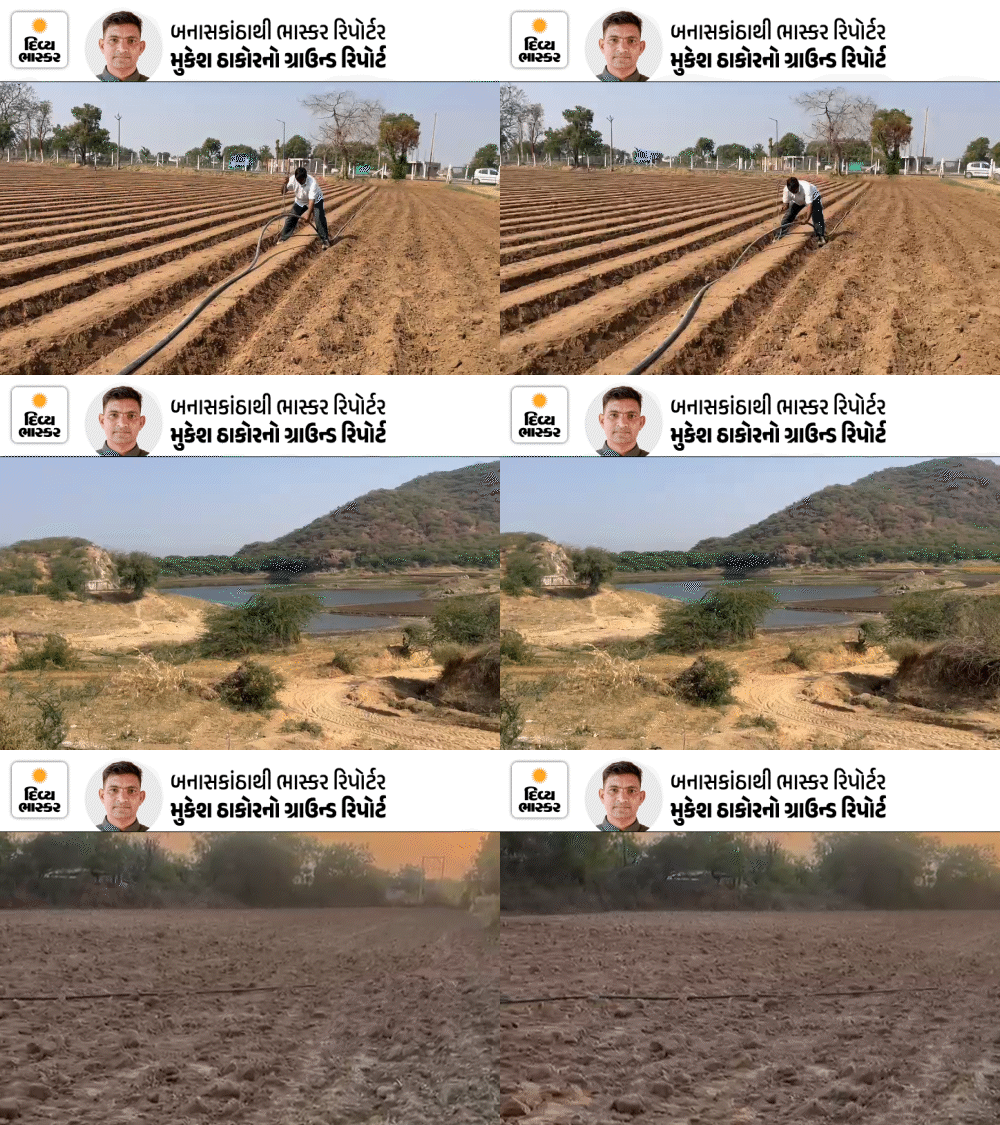
Farmers across Gujarat's Banaskantha district are urging the state government to formally declare the region drought-affected, pointing to rapidly depleting groundwater reserves and failing borewells. The worsening water shortage has sparked emotional demonstrations among local cultivators, who warn that vanishing irrigation supplies now imperil both their standing crops and their livestock.
Demonstrators and local agricultural advocates have sharply criticized administrative inaction, contrasting the current response with historical drought relief operations. Protesters noted that forty years ago, a previous administration successfully operated organized cattle shelters for eight months, questioning why the present government has delayed sanctioning comparable emergency measures.
Groundwater tables across North Gujarat have dropped to critical depths, leaving numerous agricultural borewells completely depleted or unable to pump usable water. For agrarian households that depend primarily on deep tube wells for sustained cultivation, the sudden failure of local borewells has triggered an immediate crisis for ongoing farm operations and rural livelihoods.
The intensifying water deficit has also placed immense stress on the district's extensive cattle population, which underpins the regional rural economy and dairy supply chains. Without reliable access to borewell water, smallholder farmers report increasing difficulty in securing basic drinking water and affordable fodder to sustain their herds.
Farmer delegations stress that an official drought declaration is urgently required to unlock statutory disaster relief and mobilize targeted financial support. Such an administrative classification would enable local authorities to establish subsidized cattle shelters, deploy emergency water tankers, and temporarily defer agricultural credit collections across distressed talukas.
Geographically situated in a semi-arid zone, Banaskantha has long contended with variable seasonal rainfall and persistent groundwater depletion driven by intensive agricultural pumping. While regional water transfer and canal schemes have improved access in certain belts, peripheral farming clusters remain acutely vulnerable to severe water distress whenever annual precipitation proves inadequate.
Agricultural analysts emphasize that prolonged water shortages threaten to disrupt the broader rural economy, particularly the network of local dairy cooperatives that rely on daily milk collection. A failure to safeguard milch cattle during severe water deficits risks undermining household incomes and destabilizing livestock herds for several seasons to come.
The developing situation has also amplified political pressure on the state leadership, with local representatives and farm unions demanding immediate ground-level reviews. Opposition figures and agricultural advocates have pressed authorities to dispatch inspection teams immediately to assess crop loss, evaluate borewell failures, and document village-level distress.
Community leaders argue that swift administrative intervention is essential before rising seasonal temperatures intensify water deficits across rural settlements. They maintain that setting up government-supported cattle shelters and emergency water distribution remains the only viable way to prevent distress livestock sales and protect agrarian families.
With protests continuing across affected pockets of Banaskantha, rural communities are watching closely for official announcements regarding relief allocations. Whether state authorities will approve a formal drought notification and initiate emergency cattle camps in the immediate future remains the decisive question for the district's farming population.
Primary source: Divya Bhaskar Gujarat. Newzly rewrites and structures source reporting for clarity; verify critical details at the original.