Behind the Tumultuous Effort to Resurrect Brazil's Famed Spix's Macaw
Decades after vanishing from the wild, Brazil's iconic blue Spix's macaw was poised for a historic return. Instead, the high-profile reintroduction project has descended into institutional infighting, regulatory clashes, and global controversy.
In this piece
The Spix's macaw, the rare blue parrot that inspired the animated film Rio, disappeared from South American skies more than three decades ago. While an…
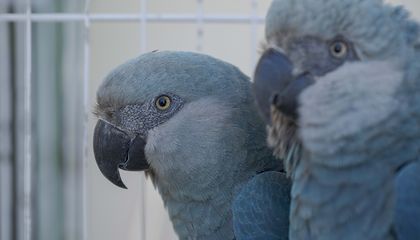
An ambitious global initiative to resurrect Brazil's Spix's macaw—the vivid blue parrot that captured international attention as the inspiration for the animated film "Rio"—has unraveled into institutional conflict and bitter dispute. More than three decades after the species disappeared from the wild in South America, conservationists and environmental officials are clashing over the management, breeding, and custody of the remaining captive population.
The Spix's macaw was native to the semi-arid Caatinga scrublands of northeastern Brazil, where its population suffered catastrophic declines through the late twentieth century. Decades of habitat destruction combined with relentless poaching for the international black-market pet trade depleted the species, leading to its functional disappearance from the wild around the year 2000. For years, the survival of the entire species rested exclusively in captive-breeding facilities spread across several countries.
Global awareness surged after the 2011 release of "Rio," which dramatized the desperate scramble to locate remaining birds and breed them in captivity. Behind the silver-screen optimism, an intricate and fragile network of scientists, private aviculturists, and government bodies undertook painstaking genetic management. The goal was singular: stabilize the captive population and prepare a new generation of birds to repopulate their ancestral Brazilian home.
The effort reached a milestone when captive-bred birds were transferred to specialized release facilities in Bahia, Brazil, paving the way for releases into native territory. Early flights of macaws back over Brazilian skies were initially hailed as a conservation breakthrough, offering tangible hope that modern science and cross-border cooperation could reverse an extinction event. However, the collaborative foundation supporting the project soon began to erode under escalating operational and ideological tensions.
At the center of the dispute is the Germany-based Association for the Conservation of Threatened Parrots, which held and bred a substantial share of the global captive population. Friction mounted between the private organization and Brazilian environmental authorities, particularly the Chico Mendes Institute for Biodiversity Conservation. Disagreements escalated over governance protocols, institutional transparency, and differing approaches to flock management and disease monitoring.
Tensions were further compounded by health concerns, including documented risks of viral exposure in holding environments, which heightened anxieties among wildlife officials. As Brazilian regulators sought firmer oversight and compliance with official species-recovery frameworks, relations between the German breeding entity and government agencies grew increasingly strained. The rift ultimately fractured the public-private partnership that had once driven the reintroduction program forward.
The friction widened into international diplomacy following controversial transfers of captive macaws outside the established recovery network. Brazilian wildlife authorities raised sharp formal objections through international bodies, questioning whether private transfers conformed to multilateral conservation agreements. These disputed movements prompted regulatory reviews and underscored the vulnerabilities of decentralized, privately financed conservation programs managing critically endangered wildlife.
The unraveling of the Spix's macaw initiative highlights broader dilemmas confronting contemporary conservation biology. While private wealth and specialized facilities can provide critical breeding infrastructure, the absence of unified regulatory control often leaves high-stakes recovery programs vulnerable to commercial interests and governance disputes. When institutional trust collapses, the species hanging in the balance inevitably bears the highest risk.
According to investigative reporting by Smithsonian Magazine, the breakdown has transformed what was intended as a conservation triumph into a sobering cautionary tale. Biologists and international wildlife monitors continue to advocate for transparent, multilateral oversight to safeguard the remaining macaws in both captivity and local release zones. For now, the dream of seeing thriving flocks of blue macaws permanently restored to Brazil's skies remains constrained by the unresolved drama on the ground.
Primary source: Smithsonian Magazine. Newzly rewrites and structures source reporting for clarity; verify critical details at the original.