Brut Offers a Look Inside Kejriwal’s Former Delhi Home Called “Sheesh Mahal”
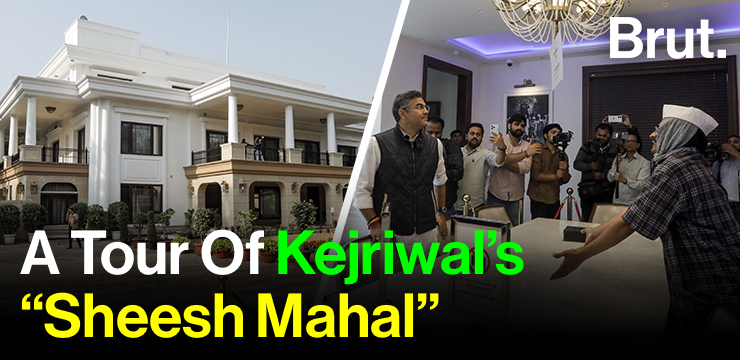
A Brut feature turns to the official bungalow Arvind Kejriwal once occupied in Delhi, long nicknamed “Sheesh Mahal” in a political fight over how a chief minister should live.
In this piece
Brut has published a look at Arvind Kejriwal’s former official residence in Delhi, widely called “Sheesh Mahal.” The nickname grew out of a dispute over…
Brut has released a feature asking what is inside the Delhi bungalow long tagged “Sheesh Mahal,” the former official residence of Arvind Kejriwal. The item, carried on Google News under a Delhi listing, frames the piece as a look at the house rather than a fresh policy announcement.
The notice available here is thin. It names Kejriwal, the residence, and Brut, and it uses the glass-palace nickname in quotation marks. It does not include a room-by-room description, a cost figure, a date of filming, or comments from Kejriwal or the current Delhi government.
Kejriwal, founder of the Aam Aadmi Party, served as chief minister of Delhi and lived in the official bungalow set aside for that office. “Sheesh Mahal,” a colloquial jab rather than the building’s formal name, entered political speech as critics argued the home had been refurbished in a style at odds with the party’s simplicity pitch.
The argument has two familiar sides. Opponents have treated the renovation as a symbol of excess. Kejriwal and his party have treated the spending dispute as a political attack on an official house that any chief minister would occupy, and they have disputed how the work and its price were portrayed. This article does not assign a verified total, because none appears in the source item.
Official residences in India often become shorthand in campaigns. Furniture, paint, and security upgrades that would be routine facilities work can be recast as personal luxury once a nickname sticks. “Sheesh Mahal” did that work in Delhi: it turned a government bungalow into a talking point that outlasted any single budget line.
Calling the house his former residence also marks a change in who holds the office. Kejriwal is no longer the occupant. Whatever a camera shows now is the building after his tenure, not a live tour of a sitting chief minister’s private rooms. Public-interest questions about an official house are fair; treating a later walkthrough as a complete record of how the home looked during his years in office would go beyond what this listing establishes.
Brut’s format is short-form video aimed at social audiences. A “what’s inside” frame invites viewers to judge the interiors for themselves. Without the video’s narration or on-screen captions reproduced in the feed, it is not possible to say which spaces are shown, whether guides speak on camera, or whether the piece presents government records alongside images.
That limit matters because the political charge depends on specifics: what was built, who approved it, what it cost, and what portion was security or maintenance rather than décor. Images of marble, wood, or a large room can confirm a visual impression and still leave those questions open. A wire account should not fill the gap with invented fittings or quotations.
The story remains locally rooted in Delhi. The residence is an official address tied to the chief minister’s post in the national capital, which is why the nickname circulated in city and national politics at once. No district is identified in the source item, and none is added here.
What happens next is mostly editorial and political, not procedural. Viewers can watch Brut’s piece and compare it with earlier claims about the bungalow. Parties will likely keep using or rejecting the “Sheesh Mahal” label in campaign language. Any settled account of the renovation still depends on records and reporting that this headline alone does not supply.
Until those details are on the record in the same report, the fair reading is narrow: Brut is showing audiences the former official residence that Delhi politics nicknamed “Sheesh Mahal,” and the listing confirms the subject without confirming a new set of facts about its contents.
Primary source: Google News Delhi. Newzly rewrites and structures source reporting for clarity; verify critical details at the original.