California Coast Battered by Record High Tides and Massive Swells
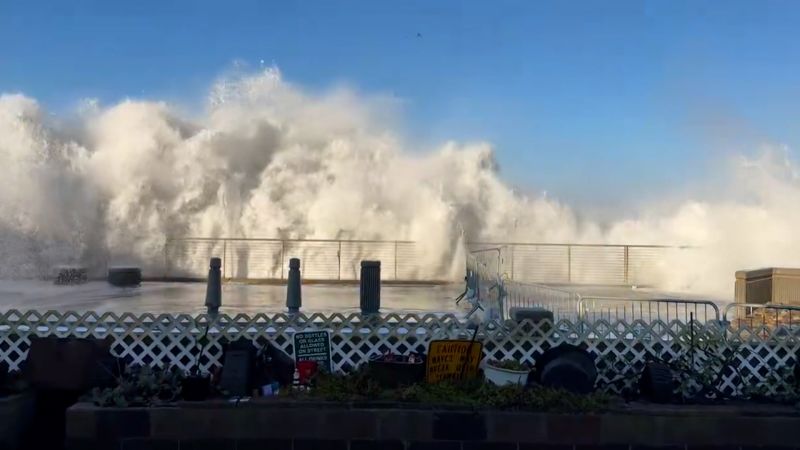
A potent combination of record-breaking king tides and towering ocean swells has battered California's coastline, triggering widespread coastal flooding, damaging seaside infrastructure, and forcing emergency officials to shut down beaches and damaged piers.
In this piece
California's coastline is reeling after record high tides and massive waves battered shoreline communities from the Bay Area to Southern California. The severe…
A powerful convergence of record high tides and massive ocean swells has battered coastal California, inundating shoreline communities and inflicting notable structural damage along the Pacific coast. The severe ocean conditions prompted emergency managers and forecasters to issue widespread coastal flood and high surf warnings stretching from Northern California through Southern California beaches.
Enormous breaking waves, in some areas surging between 20 and 30 feet, violently pounded seaside infrastructure and coastal seawalls. In the Bay Area community of Pacifica, located south of San Francisco, the ferocious surf caused a significant portion of the city's historic municipal pier to collapse directly into the churning waters.
The dangerous conditions were intensified by seasonal astronomical tides, known colloquially as king tides, which occur when the gravitational alignment of the sun and the moon pulls ocean waters to their highest levels of the year. Several monitoring stations along the California coastline reported water levels tying or eclipsing long-standing high-water marks, further exacerbating the reach of the oncoming swell.
As water surged past beachfront barriers and defensive sandbagging, seawater washed across low-lying roads, parking facilities, and coastal neighborhoods. Communities in both Northern and Southern California experienced localized inundation, with saltwater pooling across streets and encroaching on vulnerable residential properties situated along the immediate shoreline.
Meteorologists noted that the event was fueled by deep low-pressure systems churning across the open Pacific Ocean, with broad atmospheric dynamics amplifying the energy carried by incoming swells. When intense offshore storm energy intersects with peak astronomical tides, the resulting storm surge can override standard natural and artificial shoreline protections with devastating force.
Public safety agencies and local authorities across affected coastal jurisdictions moved quickly to close beaches, harbors, and public piers to prevent bystanders and sightseers from entering dangerous surf zones. Lifeguards and emergency personnel issued urgent reminders regarding the threat of rogue sneaker waves and intense rip currents, which can swiftly sweep unsuspecting beachgoers into frigid and turbulent waters.
The severe battering highlights the escalating vulnerability of California's coastal communities to compound weather hazards. While king tides represent a recurring natural phenomenon, the combination of rising sea levels, intense winter storms, and aging maritime infrastructure presents a persistent challenge for municipal planners and emergency services statewide.
Local public works departments and coastal protection agencies have initiated preliminary damage inspections along battered seawalls, walkways, and piers once conditions permitted safe access. Community officials are weighing both immediate structural repairs and longer-term reinforcement strategies to protect coastal public access points from future high-energy wave impacts.
Forecasters with the National Weather Service indicated that while ocean swells are projected to gradually subside over the coming days, elevated surf and high tidal cycles will continue to pose hazards through the remainder of the weather cycle. Officials urge residents and visitors in coastal regions to monitor local marine bulletins, remain vigilant near the shoreline, and heed all barricades and posted closures.
Primary source: Google News California. Newzly rewrites and structures source reporting for clarity; verify critical details at the original.