Capsized Tanker Carrying 7,000 Tonnes of Diesel to Be Towed from Ibiza
Spanish maritime authorities are preparing to tow a capsized tanker carrying 7,000 tonnes of diesel away from Ibiza, after inspections confirmed the vessel's fuel tanks remain intact despite severe environmental risks.
In this piece
A Malta-flagged tanker carrying 7,000 tonnes of diesel capsized off the coast of Ibiza, prompting an emergency response to avert an environmental disaster.…
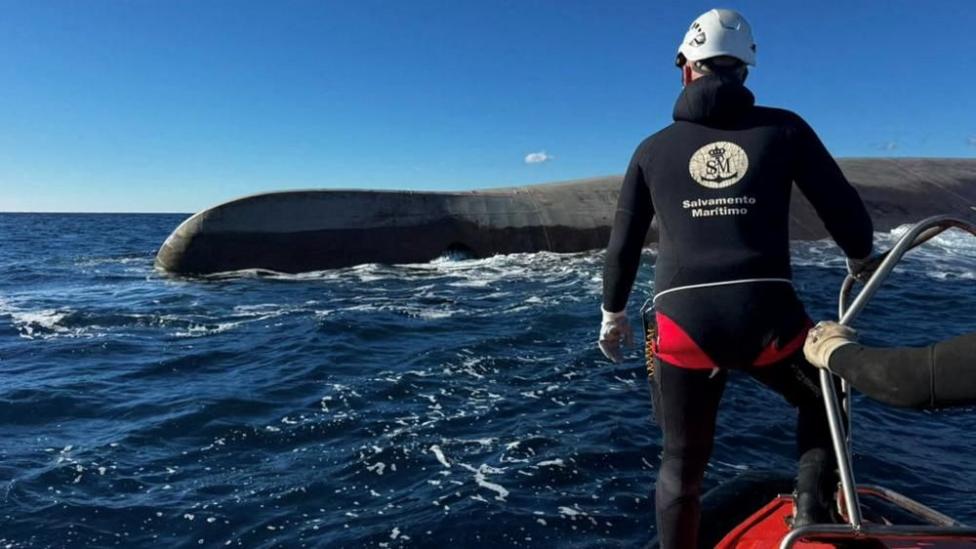
Spanish maritime authorities have launched a complex salvage operation to tow an overturned fuel tanker away from the coast of Ibiza after the vessel capsized while carrying thousands of tonnes of refined oil. The Malta-flagged chemical and product tanker Med Emre overturned roughly 25 to 30 nautical miles northwest of the Balearic island, triggering an immediate emergency response to prevent a catastrophic leak in the Mediterranean.
Salvage crews and coast guard officials confirmed that the vessel is currently floating upside down, with its keel exposed at the water's surface rather than resting on the seabed. Initial underwater inspections indicated that the ship's reinforced cargo tanks remain structurally intact, offering a vital window of opportunity for responders. Marine salvage specialists are now attaching high-strength towing lines to stabilize the hull before carefully moving it to a designated safe port.
The vessel was transporting approximately 7,000 tonnes of gasoil, a light diesel fuel, from the southern port of Algeciras toward Barcelona when it encountered severe trouble in open water. Authorities are examining the sequence of events that led to the sudden loss of stability during the voyage. The scale of the fuel cargo raised immediate alarms across the region, where coastal economies depend heavily on clean waters and thriving marine tourism.
A swift search-and-rescue mission coordinated by Spanish maritime services successfully evacuated all 17 crew members from the stricken tanker. Responders deployed rescue helicopters and maritime vessels to pull the crew from the water amid challenging conditions. One crew member later succumbed to injuries after being rushed to a hospital on Ibiza, while several other survivors were treated for hypothermia and minor injuries.
In response to the potential environmental threat, the Spanish government activated Level 2 of its National Maritime Pollution Contingency Plan. This protocol allows federal and regional agencies to mobilize specialized anti-pollution resources, aircraft, and ocean-going tugs across the Western Mediterranean. Specialized pollution-response ships, including the emergency support vessel Clara Campoamor, were dispatched directly to the staging area to monitor the hull and contain any potential discharge.
The capsizing occurred within an ecologically fragile maritime passage known as the Mediterranean Cetacean Migration Corridor, situated in the Ibiza Channel. This marine expanse serves as a protected migratory route and feeding ground for fin whales, sperm whales, bottlenose dolphins, and various marine turtle species. Conservationists warned that any widespread release of refined diesel could disperse quickly across sensitive coastal habitats, causing severe harm to marine wildlife and local shorelines.
Emergency teams established a continuous perimeter around the overturned hull, deploying containment booms and specialized sensors to detect the slightest trace of petroleum seepage. Aerial surveillance flights are passing regularly over the perimeter to track water conditions and verify the integrity of the slick-free buffer zone. Spanish environmental officials noted that while gasoil evaporates faster than heavy crude oil, a concentrated release in open waters would still pose acute toxicity risks to marine life.
Towing an inverted vessel laden with thousands of tonnes of liquid cargo presents immense engineering challenges for salvage contractors. Naval architects and salvage masters are calculating hydrodynamic resistance and hull stresses to prevent the ship from rolling further or breaking apart under the strain of deep-sea cables. The towing convoy must maintain a precise, slow speed across the Ibiza Channel to minimize hydraulic pressure against submerged compartments.
Spanish transport authorities have initiated a comprehensive maritime inquiry to determine whether structural failure, shifting cargo, mechanical breakdown, or adverse sea conditions caused the sudden capsizing. For now, the primary focus remains on completing the delicate tow without rupturing the sealed fuel reservoirs. Salvage teams plan to bring the vessel into a sheltered harbor or anchorage where naval engineers can safely pump out the remaining diesel and secure the hull permanently.
Primary source: BBC Science. Newzly rewrites and structures source reporting for clarity; verify critical details at the original.