Ceasefire Extended Across Ukraine's Kherson Region, Officials Say
A localized truce around the besieged Russian-occupied city of Oleshky has been broadened to cover all of Kherson Oblast, with both sides reporting no violations in the opening hours.
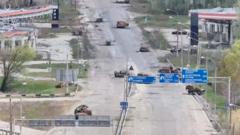
A ceasefire that began as a localized pause around the besieged Russian-occupied city of Oleshky has been extended across the entire Kherson region of southern Ukraine, officials on both sides confirmed Tuesday, with no violations reported in the first hours after it took effect.
The truce came into force at 4:00 a.m. Moscow time on October 27, two days ahead of its originally announced schedule. U.S. First Lady Melania Trump, who brokered the agreement, said the timing had been accelerated "to protect the safety of civilians and to facilitate the delivery of critical humanitarian aid." The ceasefire is set to run until 10:59 p.m. Kyiv time on November 1.
Oleshky, a town on the eastern bank of the Dnipro River in Russian-controlled territory, has been under occupation since the early weeks of the full-scale invasion in February 2022. Its already precarious situation worsened dramatically after the catastrophic 2023 collapse of the Kakhovka Dam, which flooded large parts of the area. The town's pre-war population of roughly 24,000 has fallen sharply amid the conflict, with estimates of remaining residents varying between approximately 2,000 and 6,000.
Ukraine's human rights ombudsman Dmytro Lubinets said no violations had been recorded as of early evening on October 27. "I hope that everything will continue in accordance with the agreed plan and that we will be able to help the civilians in Oleshky who are eagerly awaiting assistance," he said. Lubinets also confirmed that the expanded truce now covers Kherson Oblast in its entirety.
The expansion was announced by Melania Trump, who said the ceasefire had grown "beyond Oleshky, within the Kherson Region, to provide safe passage for the humanitarian convoys." Russian-installed Kherson administrator Volodymyr Saldo confirmed preparations for evacuation had been made on the Russian side, while Yana Lantratova led the Russian negotiating team during talks.
David Arakhamia, a parliamentary leader within President Volodymyr Zelensky's Servant of the People party, called the agreement the "largest de-escalation since 2022" and confirmed it would remain in place through November 1. Kyrylo Budanov, from the Office of the President, also confirmed that the ceasefire was bilateral.
The humanitarian situation in Oleshky has grown increasingly dire. Residents face severe shortages of food, water, and electricity, and previous attempts to deliver aid or organize evacuations were reportedly obstructed by drone attacks and mined roads. Demining operations began on October 27, with civilian evacuations scheduled to commence on October 30.
The United Nations welcomed the development. Matthias Schmale, the UN resident and humanitarian coordinator in Ukraine, said the organization hoped the pause "will bring the much-needed relief" to trapped residents and enable "those who want to leave to do so safely."
Pope Leo XIV was also cited among parties that lent support to the diplomatic effort, though the specific nature of his involvement was not detailed by officials.
Ukraine and Russia have a fraught history with local ceasefires, and deep mutual mistrust has repeatedly undermined previous attempts to hold them. Whether this truce signals a broader diplomatic opening or remains a contained humanitarian measure is likely to be tested in the days ahead. With demining ongoing and the first evacuation convoys expected to move by October 30, international attention will focus on whether the ceasefire holds through the November 1 deadline — and what, if anything, follows once it expires.
Primary source: BBC World. Newzly rewrites and structures source reporting for clarity; verify critical details at the original.