Chhath Puja Fasting Nears Conclusion as Devotees Offer Evening Arghya to Setting Sun
Devotees across India gather at riverbanks to offer evening prayers to the setting sun during Chhath Puja, with the demanding four-day festival set to conclude following tomorrow morning's dawn Arghya.
In this piece
Chhath Puja devotees are presenting Sandhya Arghya to the setting sun today as the four-day festival reaches its third day. The observance will conclude…
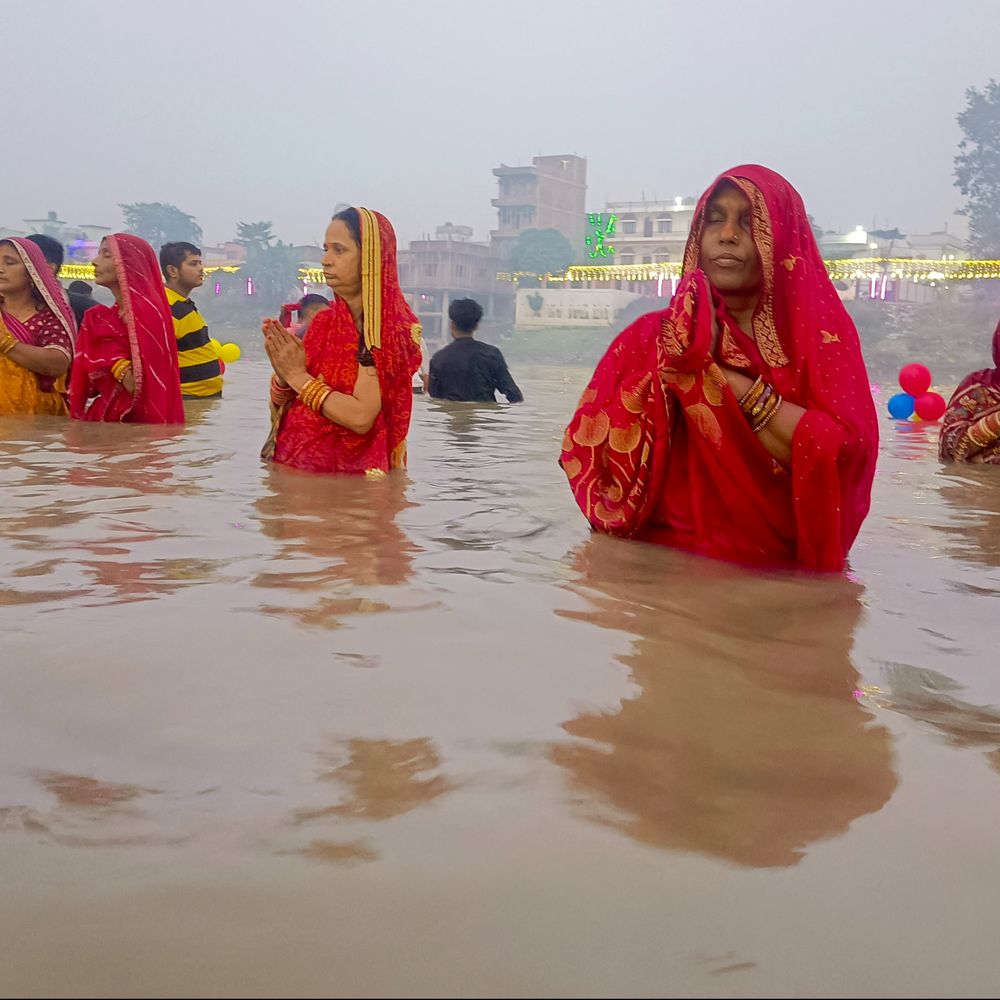
Devotees across India and diaspora communities are offering the traditional Sandhya Arghya to the setting sun today as the four-day festival of Chhath Puja enters its penultimate stage. The evening rituals mark the third day of the sacred observance, bringing millions of fasting worshippers to rivers, lakes, and specially prepared water ghats to perform ceremonial prayers.
The festival will officially conclude tomorrow morning when devotees assemble once again at the water's edge to present the final Arghya to the rising sun. Upon completing the dawn offerings, worshippers will conclude their rigorous thirty-six-hour nirjala fast through the traditional Paran ritual, sharing ceremonial offerings with their families and communities.
Offering prayers to the setting sun represents a unique philosophical element within traditional solar worship. While many religious customs focus solely on the dawn, Chhath Puja specifically begins its arghya ceremonies by paying homage to the departing sun, symbolizing deep respect for completion, life cycles, and gratitude for sustained vitality throughout the day.
The festival centers around the worship of Surya, the Sun God, alongside Chhathi Maiya, revered in cultural traditions as the deity who protects children and bestows familial prosperity. Devotees observe the demanding fasting rules to pray for health, longevity, family progress, and spiritual purity, drawing upon beliefs that date back several centuries.
Preparations for the evening prayers involve extensive culinary and ritual care, with families assembling offerings in traditional bamboo baskets known as soop and daura. These baskets contain seasonal produce, including sugarcane, coconuts, citrus fruits, and the signature prasad called thekua, all prepared under strict guidelines of cleanliness and devotion.
Worshippers typically stand waist-deep in water for prolonged periods while holding the decorated baskets and chanting traditional folk hymns. The immersion in natural water bodies serves as a direct communion with nature, emphasizing humility and the vital connection between water, solar radiation, and agriculture.
Cultural scholars and observers frequently note that Chhath Puja remains distinguished by its lack of priestly mediation, making it an inherently egalitarian tradition. People from diverse social and economic backgrounds gather at the same ghats without hierarchy, sharing the riverbanks and participating equally in the collective spiritual duties.
Civic authorities and local volunteer committees in major cities and towns have deployed extensive arrangements along riverfronts, setting up lighting, barricades, and medical assistance posts. Temporary ponds and artificial tanks have also been constructed in residential areas to ensure devotees can complete their rituals safely close to home.
The culmination of the festival tomorrow morning will bring a festive conclusion to days of intense spiritual discipline and family coordination. Once the morning Arghya is offered to the rising sun, families will distribute prasad widely among friends and neighbors, celebrating the successful completion of the annual observance.
Primary source: Divya Bhaskar Dharm Darshan. Newzly rewrites and structures source reporting for clarity; verify critical details at the original.