world·Chhattisgarh·Jashpur District
Chhattisgarh Villages Ban Christian Preachers and Erect Warning Signboards
Village councils in Chhattisgarh's Jashpur district have installed signboards barring Christian preachers and pastors from entering, invoking tribal self-rule laws to prevent conversions and sparking constitutional objections from minority groups.
In this piece
Gram Sabhas in Chhattisgarh’s tribal-dominated Jashpur district have passed resolutions banning Christian pastors and preachers, erecting signboards at village…
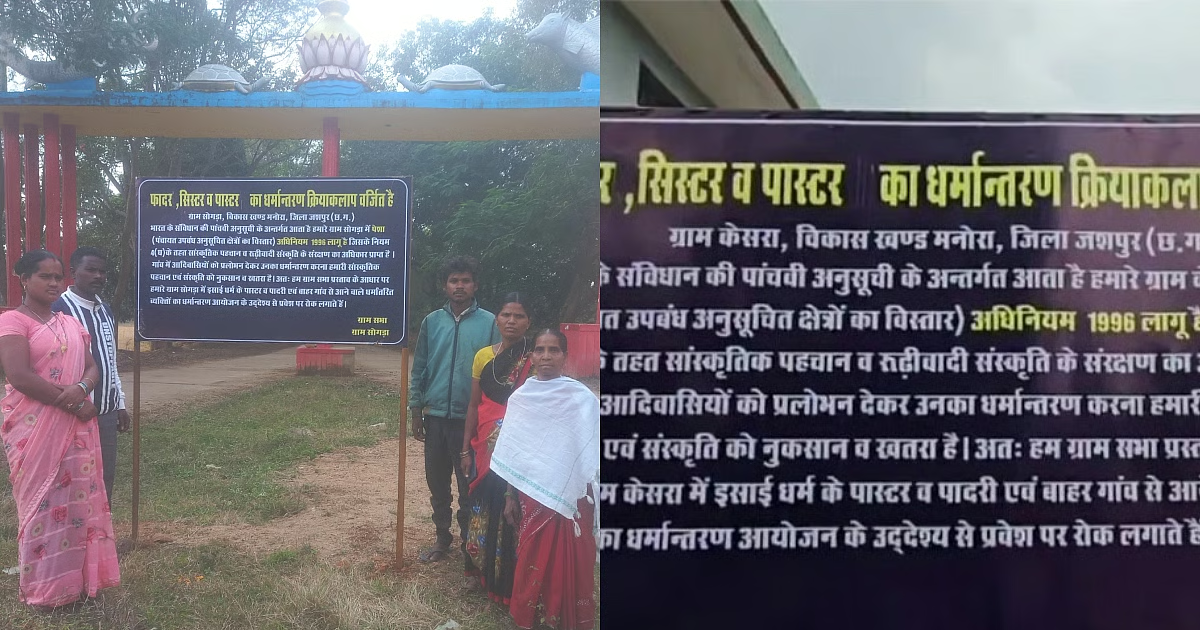
Gram Sabhas in several tribal-majority villages across Chhattisgarh’s Jashpur district have passed formal resolutions prohibiting the entry of Christian pastors, priests, nuns, and religious preachers. The local village assemblies have installed prominent notice boards and hoardings at primary entry points to formally announce the restrictions.
The signboards have been erected at the borders of villages including Sogda, Chadiya, Dumartoli, Kesra, and Tempu. The public notices explicitly declare bans on religious proselytization, outside preaching, and the organization of unapproved prayer assemblies within the revenue limits of each panchayat.
Local village bodies justified the prohibitions by citing the Panchayats (Extension to Scheduled Areas) Act of 1996, commonly known as PESA, alongside provisions of the Fifth Schedule of the Indian Constitution. Community leaders maintain that statutory self-governance powers grant tribal assemblies the authority to safeguard indigenous heritage, customs, and traditional rituals from external disruption.
Proponents of the resolutions argue that unmonitored religious conversions have fueled friction among families and altered customary village practices. Local representatives contended that individuals adopting new faiths frequently abandon sacred groves and community worship ceremonies, leading to internal divisions within tribal habitations.
The campaign has garnered visible backing from regional political leaders, with local Bharatiya Janata Party MLA Raimuni Bhagat attending the installation ceremonies for several of the signboards. Supporters at the gatherings reiterated their calls for stringent monitoring of religious missionaries and visitors entering scheduled tribal settlements.
The resolutions have drawn intense criticism from Christian groups, led prominently by the Christian Adivasi Mahasabha. Anil Kispotta, the organization's state president, emphasized that village-level entry prohibitions violate core constitutional guarantees, including freedom of movement and religious liberty.
Christian organizations have formally submitted memorandums to senior district officials, including the District Collector and the Senior Superintendent of Police, urging immediate administrative intervention to dismantle the signboards. The petitions assert that exclusionary banners contravene fundamental protections guaranteed under Articles 14, 15, 19, and 25 of the Indian Constitution.
The tension in Jashpur mirrors similar socio-religious disputes across Chhattisgarh's tribal corridors. Analogous resolutions and notice boards restricting visiting preachers have previously surfaced in southern tribal pockets, including Bastar and Sukma districts, highlighting ongoing friction over religious identity and indigenous governance.
District administrative authorities and sub-divisional magistrates have initiated field verifications after receiving formal complaints from affected community members. Officials face the challenge of reconciling the autonomous self-rule provisions granted to scheduled areas under PESA with overarching national legal protections that safeguard the movement of all citizens.
Local authorities continue to monitor sensitive pockets across Jashpur district to maintain public order while legal reviews of the village resolutions proceed. Community stakeholders on both sides have called for administrative clarity to resolve disputes without disrupting regional communal harmony.
Primary source: Google News Chhattisgarh. Newzly rewrites and structures source reporting for clarity; verify critical details at the original.