world·Delhi·New Delhi District
INDIA Bloc Decides to Oppose Delimitation Bill, Warning of Democratic Erosion
Leaders of the opposition INDIA bloc have resolved to oppose the central government's proposed delimitation legislation, alleging it undermines representation for marginalized communities and serves to entrench ruling party power.
In this piece
The opposition INDIA alliance announced it will jointly oppose the central government's proposed delimitation legislation ahead of upcoming parliamentary…
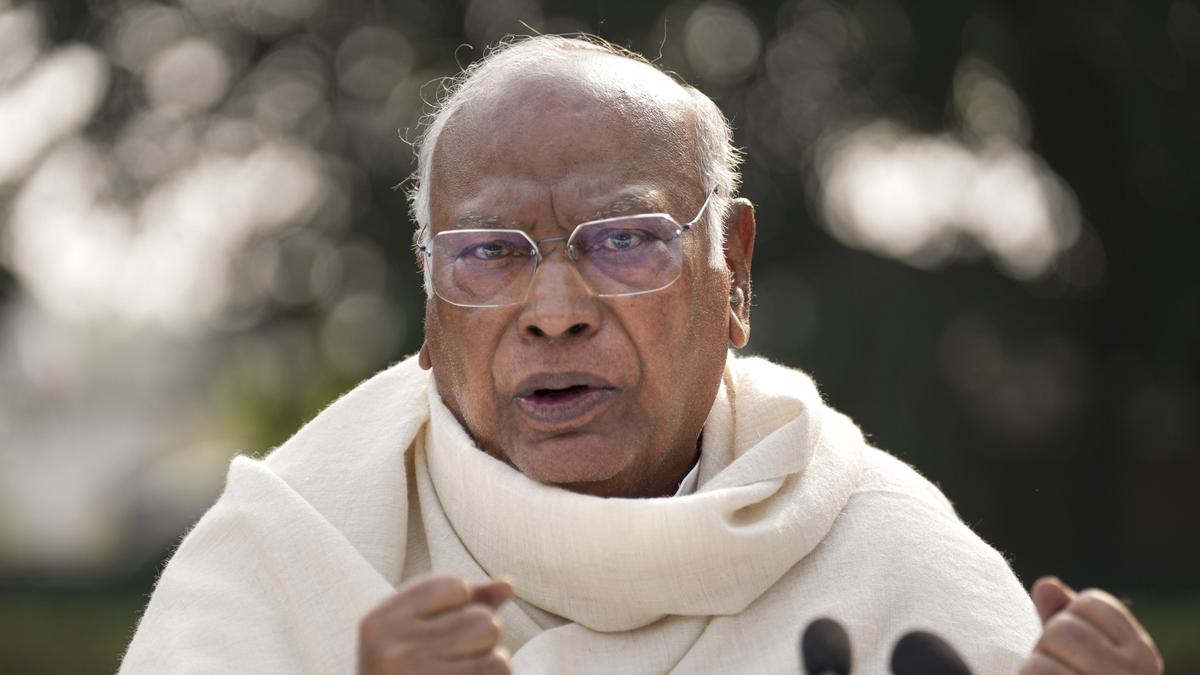
Leaders of the opposition INDIA bloc have formally decided to jointly oppose the central government's proposed delimitation legislation, describing the measure as an existential threat to democratic institutions. The announcement was made by Congress President and Leader of the Opposition in the Rajya Sabha Mallikarjun Kharge following a strategy meeting of alliance floor leaders at his residence in New Delhi.
Speaking after the meeting, Kharge warned that the bill would be leveraged by the ruling establishment to entrench executive power indefinitely. "Once the power goes into their hands, they will do anything to use this bill as a weapon to remain in power permanently," Kharge said, confirming that the opposition coalition would vigorously contest the measure in Parliament.
A central pillar of the opposition's resistance centers on the potential repercussions for Scheduled Castes and Scheduled Tribes. Alliance leaders argued that redrawing parliamentary constituencies under the proposed framework could compromise proportional representation guaranteed under Article 330 of the Constitution, leaving marginalized groups with diminished legislative influence relative to demographic shifts.
Kharge also addressed broader anxieties regarding the prospective expansion of parliamentary constituencies, linking the legislation to ambitions of securing an overwhelming legislative majority. Referencing past campaign slogans, the Congress chief alleged that expanding the total number of Lok Sabha seats beyond 800 represents an effort to centralize authority and reshape constitutional structures without sufficient federal consensus.
The coalition specifically criticized provisions that tie the implementation of the women's reservation quota to a comprehensive post-census delimitation process. Opposition leaders contended that reserving parliamentary and assembly seats for women should be implemented immediately based on current legislative seat allocations, rather than being delayed until the completion of contentious redrawing exercises.
To avert regional imbalances and political friction, the INDIA alliance formulated three primary legislative demands regarding parliamentary representation. Foremost among them is maintaining the existing numerical strength of the Lok Sabha and freezing the inter-state allocation of parliamentary seats for another 25 years to protect states that have successfully managed population stabilization.
The debate over delimitation touches on long-standing regional sensitivities across India, particularly among southern states that fear losing parliamentary clout to more populous northern regions. Coalition members maintain that any unilateral redrawing based strictly on updated demographic counts risks penalizing states that have invested heavily in social development, education, and family planning programs.
The unified stance marks a significant consolidation of strategy among opposition parties ahead of upcoming parliamentary debates. By framing the delimitation issue around federalism, caste representation, and constitutional preservation, the alliance seeks to build broader public resistance against the government's legislative agenda.
With the opposition hardening its position, the stage is set for intense confrontations on the floor of both houses of Parliament during forthcoming sessions. Coalition floor leaders plan to coordinate with regional parties and civil society organizations to demand comprehensive parliamentary scrutiny and an immediate decoupling of women's representation from redistricting timelines.
Primary source: The Hindu. Newzly rewrites and structures source reporting for clarity; verify critical details at the original.