Chinese Military Aircraft Reportedly Violates Indian Airspace Over Sikkim
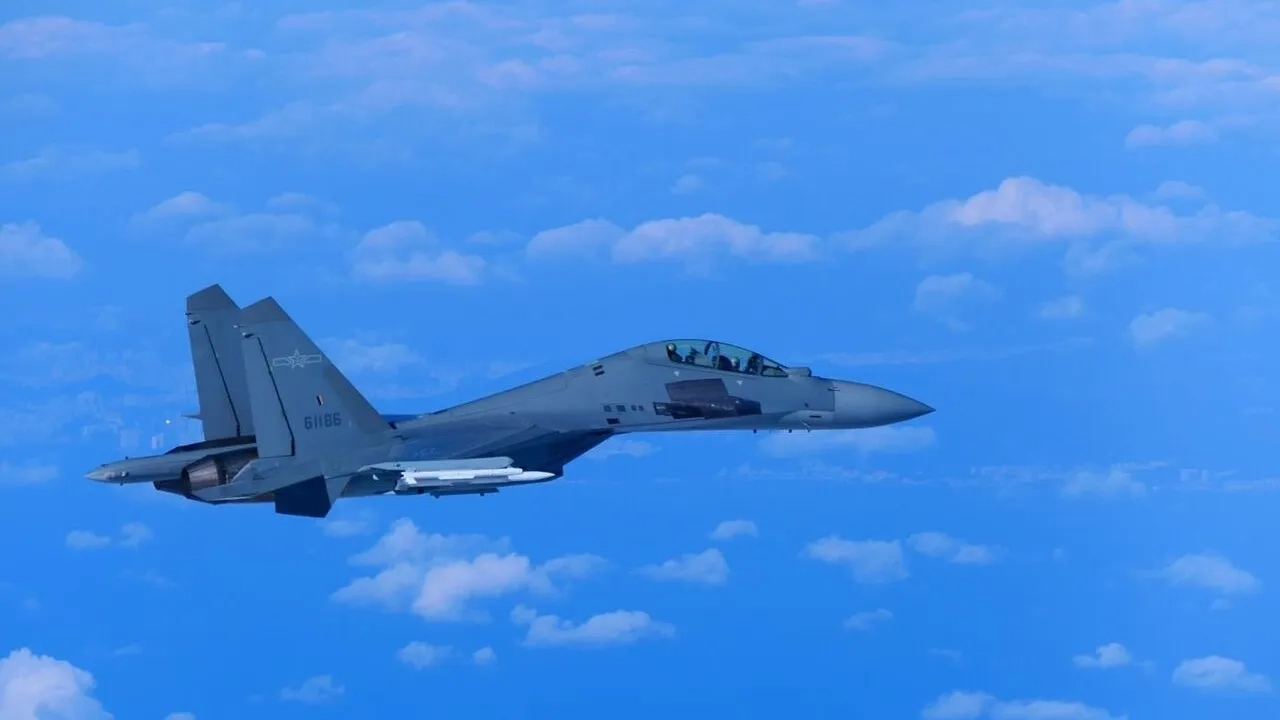
A Chinese military aircraft allegedly breached Indian airspace over Sikkim and lingered for over twenty minutes despite repeated radio warnings from the Indian Air Force, according to defence and media reports.
In this piece
A Chinese military aircraft reportedly entered Indian airspace over Sikkim, remaining for up to 25 minutes despite repeated radio warnings from the Indian Air…
A Chinese military aircraft reportedly violated Indian airspace over the northeastern border state of Sikkim, according to emerging defence and media reports. The aircraft allegedly crossed the Line of Actual Control during morning hours, prompting Indian air defence radar systems to track the contact immediately. The reported intrusion has sparked concern among strategic observers tracking activity along the sensitive frontier.
According to reports cited by defence platforms and national media, the intruding aircraft was detected cruising at an altitude of approximately 25,000 feet. The aircraft reportedly remained inside sovereign Indian airspace for an estimated 20 to 25 minutes. Rather than making a brief accidental drift over the crest, the aircraft was observed conducting sustained movements over the sector.
Upon tracking the unauthorized aerial presence, the Indian Air Force initiated standard response protocols and issued repeated radio warnings instructing the aircraft to reverse course. Sources indicated that the aircraft ignored the initial radio warnings and persisted on its flight path for several minutes before ultimately turning back. The aircraft subsequently departed Indian territory and returned across the border into Chinese airspace.
As of mid-November, neither the Indian Air Force nor the Ministry of Defence has released an official public statement confirming the incident. Details regarding the exact classification of the aircraft—including whether it was a combat jet, an intelligence-gathering surveillance platform, or a medium-altitude drone—remain unverified by official channels. Indian military officials routinely maintain confidentiality regarding operational telemetry pending internal reviews.
The reported incident took place along an internationally sensitive sector of the Line of Actual Control that is governed by bilateral confidence-building measures. Under existing bilateral agreements between New Delhi and Beijing, combat aircraft are strictly barred from flying within ten kilometers of the frontier without prior diplomatic and operational notification. Adherence to these aerial safety mechanisms has been a cornerstone of maintaining stability in high-altitude zones.
The geographical sector where the violation was reported carries immense strategic significance for India's regional defence posture. Airspace in Sikkim directly overlooks the Siliguri Corridor, a narrow 20-to-22-kilometer strip of land often referred to as the Chicken's Neck that connects India's northeastern states to the rest of the mainland. Maintaining complete aerial dominance and domain awareness in this corridor is regarded as an absolute operational priority for Indian armed forces.
The area is also located near the Doklam plateau, where Indian and Chinese troops engaged in an intense 73-day military standoff in 2017. That previous standoff underscored how quickly tactical activities in the tri-junction area can escalate into major diplomatic confrontations. Any unauthorized aerial operation near these high-altitude vantage points inevitably triggers high alert among Indian border observation formations.
Over recent years, both nations have heavily fortified their respective frontiers across the Himalayas with enhanced radar infrastructure, forward airstrips, and long-range surface-to-air missile systems. While recent bilateral diplomatic dialogues have sought to defuse border tensions and restore regular patrol routines, persistent military buildups maintain an underlying level of mutual suspicion. Aerial reconnaissance and airspace probes have frequently emerged as contentious points during border assessments.
Indian defence authorities are expected to scrutinize detailed radar logs, flight trajectory records, and signal data before deciding on formal countermeasures. If the breach is corroborated by comprehensive military analysis, New Delhi is likely to lodge a formal diplomatic protest through existing bilateral border mechanisms. Observers will also be watching whether the issue is tabled during upcoming border personnel meetings or bilateral security dialogues.
Primary source: Google News Sikkim. Newzly rewrites and structures source reporting for clarity; verify critical details at the original.