Death Toll Rises in Ukraine After Strikes Hit Hospital, Hospice, and Aid Centre
Russian strikes on a Ukrainian hospital, hospice, and aid centre have killed at least 38 people in 24 hours, with President Volodymyr Zelensky warning dozens more could remain trapped under rubble.
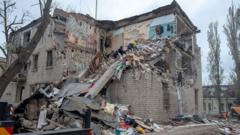
At least 38 people have been killed across Ukraine in a 24-hour span following intense Russian strikes that hit humanitarian and medical infrastructure, according to reports compiled by international monitors. The bombardment struck a humanitarian aid distribution centre, a hospice, and a hospital, marking one of the most devastating single-day casualty tolls reported in recent months.
Ukrainian President Volodymyr Zelensky confirmed the rising casualty count and issued an urgent warning that the number of dead could climb further. Zelensky stated that emergency personnel feared dozens more individuals remained trapped beneath concrete debris and collapsed structures at the damaged sites.
Emergency responders and rescue crews immediately deployed to the targeted locations to sift through shattered building fragments and search for signs of life. Specialist rescue units equipped with heavy machinery and acoustic detection tools worked through the wreckage of the medical and care facilities in an effort to reach survivors buried under fallen slabs.
The strikes against healthcare and humanitarian installations have renewed widespread international concern over the vulnerability of civilian infrastructure. Striking a hospice and a hospital places patients, medical workers, and elderly residents in direct peril, particularly those with limited mobility who cannot evacuate quickly during air alerts.
Humanitarian aid centers represent crucial survival lifelines in regions affected by conflict, serving as distribution points for food, clean drinking water, medicines, and essential relief provisions. When such hubs are struck, local relief networks suffer severe disruption, leaving displaced families and vulnerable residents without access to immediate basic necessities.
Under established principles of international humanitarian law, hospitals, medical facilities, and humanitarian relief personnel are granted protected status during armed conflicts. Attacks directed against care homes, medical centres, and relief hubs have drawn repeated condemnation from international legal monitors, who stress that civilian infrastructure must never be made the target of military operations.
The deadly wave of strikes underscores the persistent hazards facing civilian populations across Ukrainian territory. While ground combat remains concentrated along active front lines, aerial strikes and long-range bombardments continue to impact civilian life deep inside populated communities, placing immense strain on emergency response teams and municipal health networks.
Rescue operations at the blast locations remain fraught with danger due to severe structural instability and the risk of further collapse. First responders face complex operational challenges as shattered roofs, unstable walls, and severed utility connections slow the pace of clearing heavy rubble.
The full human and physical toll of the attacks remains under active assessment as emergency teams continue their delicate search through the ruins. Ukrainian authorities and reporting networks indicate that the final casualty figures will depend heavily on whether search-and-rescue teams can locate survivors before time runs out at the devastated sites.
Primary source: BBC World. Newzly rewrites and structures source reporting for clarity; verify critical details at the original.