Thousands of European Troops to Rehearse Ukraine Deployment in Event of Peace
Thousands of European soldiers will stage joint exercises in Poland to prepare for a potential post-war mission in Ukraine, Western officials said, underscoring that any deployment would strictly avoid frontline combat or offensive operations.
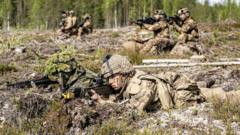
Thousands of European soldiers are set to participate in joint military exercises in Poland to prepare for a potential post-war deployment to Ukraine, according to Western officials familiar with the planning. The multinational drills, organized under the exercise name Koalicja, aim to establish operational readiness in the event that a lasting ceasefire or peace settlement is brokered.
The exercise will assemble roughly 2,800 troops drawn from a coalition of 12 European nations, spearheaded by Britain and France alongside partners including Germany, Poland, and Sweden. Staged in eastern Poland near the Ukrainian border, the maneuvers will test logistics, command coordination, and rapid mobilization procedures. Western officials emphasized that the force is being organized independently and will not operate directly under NATO command structures.
Officials have been deliberate in delineating the operational boundaries of any future contingent, stressing that troops would not take part in offensive actions or frontline engagements. Western planners noted that the force would also avoid direct ceasefire line monitoring or active combat confrontation with Russian forces. Instead, the contingent would operate strictly within secure rear zones to minimize risks of escalation.
Should diplomatic conditions permit an eventual mission, the proposed Multinational Force-Ukraine would focus on critical reconstruction and support tasks requested by Kyiv. Key responsibilities are expected to include helping clear landmines and naval mines across vulnerable transport routes, notably in the Black Sea region. Foreign personnel would also assist in rebuilding Ukrainian defense institutions, training domestic units, and bolstering airspace protection.
The planning initiative has taken shape among a grouping often described as a coalition of the willing, designed to circumvent political deadlock within broader international institutions. By coordinating as sovereign partners rather than through a formal alliance consensus, participating European capitals hope to provide flexible, credible security commitments that can be rapidly enacted once hostilities pause.
The preparatory maneuvers carry significant political and strategic weight as European governments seek to demonstrate durable, long-term backing for Ukraine's sovereignty. Analysts suggest that visible contingency planning serves as a deterrent signal, reassuring Kyiv that international support will endure well beyond active hostilities. It also reflects a broader shift across European capitals toward assuming greater independent responsibility for continental security and stability.
Despite the advance planning, Western officials underscored that deployment remains entirely conditional upon a formal cessation of hostilities and an explicit invitation from the Ukrainian government. Without an internationally recognized truce and stable security parameters, deploying foreign service members onto Ukrainian soil would pose profound diplomatic and military hazards. Planners have therefore characterized the Polish exercises as prudent preparation rather than an imminent operational mobilization.
Significant diplomatic and geopolitical hurdles continue to cloud the timing and feasibility of any actual mission. Intense fighting continues along the front lines, and comprehensive peace negotiations remain distant amid deeply conflicting territorial and political demands between Kyiv and Moscow. European policymakers acknowledge that establishing an enduring framework will require rigorous diplomatic coordination and sustained consensus among participating capitals.
For now, military leaders from participating European nations will proceed with scheduled command and tactical exercises across training grounds in Poland. Western officials maintain that having an established operational blueprint will allow European governments to act decisively whenever diplomatic breakthroughs create an opening for an enduring peace.
Primary source: BBC World. Newzly rewrites and structures source reporting for clarity; verify critical details at the original.