Russian Strikes Cut Power to Thousands in Ukraine as Kherson Ceasefire Ends
Russian strikes knocked out electricity for thousands across Ukraine after a rare humanitarian ceasefire ended, cutting short a brief evacuation window for residents in the Russian-occupied city of Oleshky.
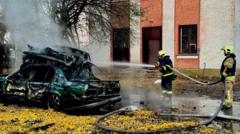
Russian military strikes have severed electricity to thousands of residents across parts of Ukraine, marking an abrupt return to acute infrastructure distress following the expiration of a localized pause in fighting. The widespread blackouts hit municipal networks shortly after a rare humanitarian ceasefire concluded in the southern region of Kherson. Emergency services and local officials reported that key distribution lines suffered damage, cutting power to civilian neighborhoods.
The brief lull had been arranged to enable vulnerable non-combatants to evacuate the Russian-occupied city of Oleshky, situated in the Kherson sector. Such pauses have occurred only infrequently throughout the full-scale conflict, offering an uncommon window of relief for civilians caught near active frontlines. Aid organizers and observers noted that the temporary safe corridor provided an essential but fleeting opportunity for residents to escape combat conditions.
As soon as the scheduled humanitarian window elapsed, renewed bombardments struck the area, swiftly compromising energy installations and utility conduits. The resulting outages left thousands of people without reliable electricity, threatening basic domestic services and emergency communication channels. The rapid transition from an evacuation pause back to active bombardment underscored the extreme volatility facing civilian populations near the line of contact.
The Kherson territory has remained one of the most contested areas of the war, characterized by intense artillery duels, drone surveillance, and divided territorial control across geographic barriers. Settlements such as Oleshky have endured prolonged occupation, leaving remaining populations dependent on fragile local infrastructure and sporadic access to external assistance. The persistent proximity of military operations has continually jeopardized municipal upkeep and standard civilian logistics.
Targeting energy grids and civilian power infrastructure has formed a recurring feature of the war in Ukraine, repeatedly leaving large swathes of the country without dependable electricity. Energy facilities remain particularly vulnerable during transition periods between military maneuvers, forcing utility operators to work under precarious conditions. Power providers across Ukraine have consistently had to implement emergency repair schedules and manage rolling blackouts to stabilize regional networks.
For households in the affected areas, the loss of electrical power compounds an already severe humanitarian situation. Power outages frequently cascade into broader municipal failures, halting water distribution, disrupting heating systems, and disabling local medical clinics that lack robust generator backups. Community advocates emphasize that even brief disruptions present acute risks to the elderly and vulnerable residents who remain unable to evacuate.
The execution of the evacuation corridor in Oleshky highlighted both the necessity and the fragility of temporary battlefield truces. While the pause successfully allowed a contingent of residents to leave the occupied city, the lack of an extended cessation of hostilities meant safety guarantees dissipated immediately upon the deadline. Such arrangements illustrate how narrow humanitarian exemptions remain in the absence of comprehensive diplomatic mechanisms.
Official assessments regarding the exact timeline for full grid repairs and the complete scale of infrastructural damage remained preliminary in early reports. Energy technicians and emergency response units began assessing damaged feeder lines, though lingering security hazards in frontline sectors complicate immediate recovery operations. Independent verification of the full extent of the electrical destruction remains difficult due to restricted access along active battle zones.
Looking ahead, the swift resumption of strikes signals continuing pressure on Ukraine's energy network and an uncertain outlook for further evacuation efforts in the region. Humanitarian agencies continue to monitor the status of displaced residents who departed Oleshky, while local authorities focus on preventing prolonged regional blackouts. Without enduring safety accords, frontline communities across the Kherson area remain exposed to ongoing utility crises and intermittent combat.
Primary source: BBC World. Newzly rewrites and structures source reporting for clarity; verify critical details at the original.