Effort to Resurrect Brazil's Iconic Spix's Macaw Plunges Into Turmoil
An ambitious international campaign to reintroduce Brazil's iconic Spix's macaw into its native habitat has descended into fierce institutional conflict, stalling hopes for the rare blue parrot made famous by the movie 'Rio.'
In this piece
Decades after vanishing from South American skies, the Spix's macaw was slated for a historic comeback through a captive-breeding and rewilding initiative.…
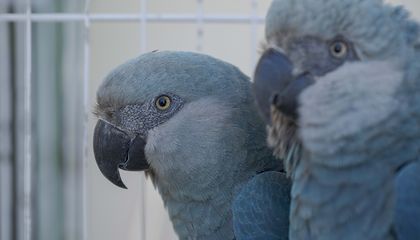
A multimillion-dollar international effort to resurrect Brazil's rare Spix's macaw has unraveled into institutional conflict and controversy decades after the vibrant blue parrot vanished from the wild. The species, which gained worldwide fame as the inspiration behind the animated blockbuster movie "Rio," was once declared extinct in South American skies, prompting years of captive breeding aimed at reintroducing it to its native habitat.
The Spix's macaw naturally inhabited the arid Caatinga region of northeastern Brazil, where deforestation and intense poaching devastated wild populations throughout the twentieth century. By the year 2000, the last known wild individual disappeared, leaving the species completely reliant on captive breeding facilities scattered across several countries. Its sudden absence transformed the bird into an enduring international symbol of the global biodiversity crisis.
For decades, conservationists and government officials sought to assemble a viable captive gene pool in hopes of one day re-establishing a self-sustaining wild population. Brazil's environmental agency, the Chico Mendes Institute for Biodiversity Conservation, formed partnerships with foreign institutions and private holders, most notably the German organization Association for the Conservation of Threatened Parrots.
Under the collaborative program, dozens of captive-bred macaws were transferred from European facilities to specialized breeding and release centers built in the state of Bahia. In 2022, conservationists celebrated what appeared to be a historic milestone when the first group of captive-reared Spix's macaws was released into the Brazilian wild, briefly raising hopes that the species could reclaim its historic territory.
The triumph soon gave way to bitter discord between Brazilian conservation authorities and their European partners. Disagreements erupted over governance of the breeding registry, transparency, and legal compliance surrounding the transfer and ownership of the birds. Federal regulators in Brazil questioned the terms of the cross-border agreements and the long-term stewardship of the captive flock.
Complications deepened as veterinary authorities raised alarms regarding disease risks, including potential exposure to avian pathogens that could threaten both the released birds and local wildlife populations. Brazilian environmental officials subsequently launched formal reviews into management practices and transactions associated with facilities housing the rare parrots. The growing mistrust stalled planned future releases and isolated key stakeholders.
The collapse of the collaboration highlights the fraught complexities of modern rewilding initiatives that depend on private collectors and international consortia. With only a few hundred individuals in existence, every single macaw is critical to the survival and genetic diversity of the entire species, leaving no margin for administrative dysfunction or health oversights.
For conservation biologists worldwide, the project stands as a cautionary case study of how high-stakes species recovery can falter when legal, veterinary, and institutional alignments break down. While animated films popularized the macaw's plight as a straightforward rescue adventure, the reality underscores that habitat restoration and release are often overshadowed by human disputes and bureaucratic deadlock.
Brazilian wildlife authorities and international conservation bodies face mounting pressure to stabilize the surviving wild flock and salvage the remaining captive breeding program. Environmental scientists emphasize that safeguarding the Spix's macaw will ultimately require unified global oversight, transparent governance, and stringent sanitary safeguards if the iconic blue bird is ever to thrive in Brazil's skies again.
Primary source: Smithsonian Magazine. Newzly rewrites and structures source reporting for clarity; verify critical details at the original.