NASA Seeks Partners to Design First Nuclear Reactor for the Moon
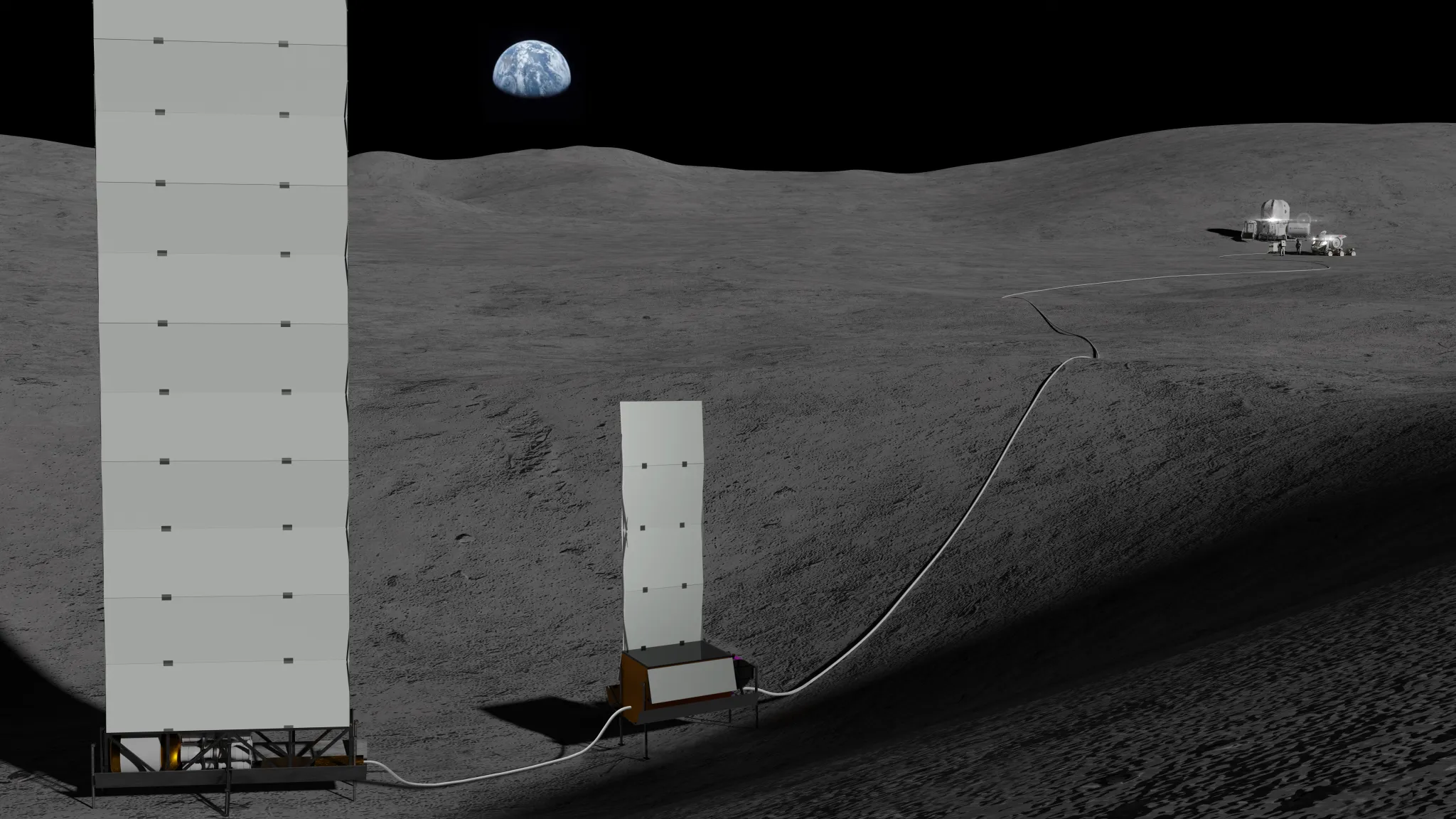
NASA is calling on commercial industry partners to develop Lunar Reactor-1, a compact 20-kilowatt nuclear fission system intended to supply continuous electricity for future long-duration human missions on the Moon.
In this piece
NASA has invited industry partners to design and build Lunar Reactor-1, the first nuclear fission reactor intended for the Moon. The 20-kilowatt system is…
NASA has officially launched a search for commercial industry partners to design, develop, and test the first nuclear reactor engineered to provide electricity on the Moon. Known as Lunar Reactor-1, the project marks a significant milestone in efforts to establish an enduring human presence on the lunar surface. The agency is soliciting proposals from the private sector to turn advanced fission power concepts into flight-ready hardware.
The planned system, designated LR-1, will be a compact fission reactor capable of generating 20 kilowatts of continuous electricity. That amount of power is roughly equivalent to the electricity needed to support approximately 16 average households on Earth. Packing that much energy generation into a transportable space system represents an essential leap in extraterrestrial utility design.
Power generation remains one of the primary hurdles for long-duration lunar exploration. Traditional solar panels, while effective for brief orbital missions and equatorial landers, face severe limitations during the lunar night, which lasts approximately fourteen Earth days. During these two-week stretches of total darkness, temperatures drop drastically, and solar power generation ceases entirely.
A nuclear fission system provides a reliable alternative that does not depend on sunlight or atmospheric conditions. By harnessing nuclear reactions, Lunar Reactor-1 can supply continuous electrical energy regardless of local terrain or illumination. This constant output makes fission power particularly vital for missions exploring permanently shadowed craters near the lunar south pole.
The development of LR-1 forms a critical cornerstone of broader international efforts to sustain human crews beyond low Earth orbit. A permanent surface base will require abundant electricity to operate environmental life-support systems, heat and pressurize living quarters, and run scientific instrumentation. Without a dependable baseline power source, prolonged habitation on the Moon would be practically impossible.
Beyond routine base operations, continuous electricity will also be required for lunar resource extraction and in-situ manufacturing. Future missions plan to process lunar soil to extract water ice, which can subsequently be converted into drinking water, breathable oxygen, and liquid hydrogen propellant. These heavy industrial tasks demand far more sustained energy than deployable batteries or solar panels can provide alone.
Engineering a reactor for the lunar environment requires addressing complex technical and safety specifications. The system must be lightweight enough to fit aboard commercial launch vehicles yet rugged enough to withstand launch vibrations, landing forces, and space radiation. Additionally, designers must integrate robust shielding and autonomous safety mechanisms to protect astronauts and sensitive equipment.
NASA is turning to commercial aerospace and nuclear energy companies to accelerate the development cycle and contain program costs. By engaging the private sector, the agency aims to foster competition and draw upon cutting-edge innovations in compact reactor engineering. Partnering companies will be expected to mature system architectures while adhering to rigorous federal safety standards.
Looking ahead, the selection of industry partners will initiate detailed design phases, component prototyping, and extensive ground testing. Lessons learned from the Lunar Reactor-1 demonstration are anticipated to inform future space power systems for decades to come. Success on the lunar surface could ultimately serve as a stepping stone toward nuclear-powered human expeditions to Mars.
Primary source: NASA Breaking News. Newzly rewrites and structures source reporting for clarity; verify critical details at the original.