Efforts to Resurrect Brazil’s Iconic Spix’s Macaw Plunge Into Turmoil
Decades after vanishing from the wild in South America, an ambitious campaign to resurrect Brazil’s famous Spix’s macaw has unraveled amid sharp controversy, clouding the future of one of conservation’s most prominent recovery initiatives.
In this piece
More than three decades after the Spix’s macaw vanished from South American skies, efforts to bring the iconic blue bird back have collapsed into dispute and…
An ambitious international campaign to bring the Spix’s macaw back from the brink of extinction has fractured amid deepening controversy and administrative confusion. Decades after the vibrant blue parrot vanished from its native Brazilian habitat, efforts to restore the captive population to the wild face unprecedented turmoil, according to reporting from Smithsonian Magazine. The setback has disrupted what was long envisioned as a signature triumph for modern endangered species recovery.
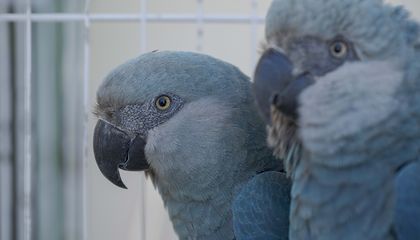
The Spix’s macaw disappeared from South American skies more than thirty years ago, driven to absence by habitat degradation, poaching, and intense pressure on wild bird populations. With no confirmed breeding pairs surviving in the wild, the species became a haunting emblem of biodiversity loss. Its plight captured worldwide attention when the animated film Rio spotlighted the quest to preserve the rare blue bird, transforming the parrot into a globally recognizable symbol of avian conservation.
In the decades following its disappearance, conservationists and institutions assembled a fragile captive safeguard to keep the lineage alive. The endeavor required complex coordination across international borders, scientific disciplines, and specialized breeding programs aimed at preserving genetic viability. For years, the overarching goal remained clear: rebuild numbers in controlled environments until birds could safely return to South American landscapes.
That long-standing ambition has now unraveled into discord, leaving the restoration initiative paralyzed by conflicting priorities and procedural disputes. While full operational details remain disputed among participants, the fallout reflects the intricate friction inherent in multi-party wildlife interventions. Managing rare wildlife across distinct legal, organizational, and national frameworks frequently generates tension when strategic oversight breaks down.
The disruption carries profound implications for the preservation of critically endangered species. When reintroduction efforts stall, precious breeding momentum and conservation resources are inevitably compromised. For a bird with such limited numbers, administrative gridlock and organizational divergence pose an existential threat that can outpace biological challenges in the field.
Beyond the immediate fate of the macaw, the controversy highlights systemic vulnerabilities in global conservation governance. High-profile captive recovery programs rely heavily on international cooperation, transparent data sharing, and mutual accountability among custodians. When institutional relationships fray into public acrimony, donor confidence and public trust in de-extinction and reintroduction programs face collateral damage.
Returning a species that has been absent from nature for over three decades presents steep ecological and logistical hurdles under the best circumstances. Captive-bred individuals must adapt to foraging, predator avoidance, and environmental fluctuations in landscapes altered since their ancestors roamed. When institutional infighting supersedes scientific fieldwork, the delicate transition from captivity to natural ecosystems becomes far harder to navigate.
Significant uncertainty now surrounds how the disparate parties involved in the macaw's custody will reconcile their differences. Reports indicate that unresolved governance questions and disputes over stewardship have left observers and scientists questioning the path forward. Without a unified management strategy, the roadmap for future releases and cooperative breeding remains effectively on hold.
Moving forward, revitalizing the recovery program will require resolving core administrative disagreements and establishing transparent, enforceable benchmarks for the species’ welfare. Wildlife experts cited in broader discussions emphasize that successful reintroduction demands uncompromised scientific focus over institutional friction. For the Spix’s macaw to truly reclaim its rightful place in South American skies, conservation stakeholders must bridge their divides before precious time runs out.
Primary source: Smithsonian Magazine. Newzly rewrites and structures source reporting for clarity; verify critical details at the original.