Ethiopian Prime Minister Enrolls Cabinet Ministers in Military Training
Ethiopia's prime minister has placed cabinet ministers through military training, reinforcing a leadership doctrine that views defense preparedness as central to the government's strategic objectives.
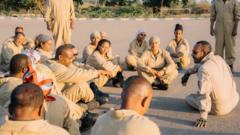
Ethiopia's prime minister has ordered cabinet ministers to undergo military training, initiating an unusual program aimed at instilling physical discipline and defense awareness across the highest ranks of government. The development comes as the federal administration continues to position national defense readiness as a central pillar of its long-term strategic ambitions. The directive signals an effort to ensure high-ranking officials share a direct understanding of military service.
According to reporting on the directive, the prime minister has previously emphasized military preparedness as vital to the country's national direction and institutional stability. While detailed itineraries for the exercises were not fully detailed in initial reports, the move highlights a clear executive priority of aligning political leadership with defense values. The administration has steadily framed national resilience as a shared responsibility across civil and military spheres.
Under the arrangement, civilian government officials take part in specialized drills and physical conditioning regimens that are standard for armed service members but rare for executive policymakers. Observers note that introducing cabinet ministers to regimented training routines is an exceptional measure intended to build collective stamina and institutional camaraderie. The exercise underscores an expectation that civilian leadership maintain the same operational focus expected of security personnel.
The program illustrates a broader governance approach where civilian bureaucratic administration and state security priorities are closely connected. In recent official rhetoric, state authorities have frequently linked effective public administration to the organizational rigor and tactical discipline commonly found in military institutions. By integrating these elements into leadership culture, the administration seeks to cultivate decisive execution across federal agencies.
Symbolically, requiring senior politicians to participate in military training sends a pronounced signal across public departments and to the wider population. The measure reflects an official desire to present a unified, disciplined front capable of confronting internal and external challenges facing the nation. It also serves to remind departmental leaders that national defense considerations remain paramount across all areas of executive planning.
The training initiative has also prompted debate among governance observers regarding the evolving relationship between civilian political life and military norms. While advocates view the sessions as a practical means to enhance teamwork, mental resilience, and mutual trust among cabinet colleagues, analysts often monitor how militarized practices affect standard civil service procedures. Maintaining clear distinctions between civil policy formulation and martial structure remains a central discussion point.
Broader regional and security considerations have continued to shape the Ethiopian government's public focus on institutional preparedness and defense capabilities. In that broader context, the federal leadership has sought to ensure that top officials maintain an active consciousness of national security realities alongside routine economic and social duties. The government has portrayed this dual focus as necessary for safeguarding stability during a demanding period for the state.
Publicly available reporting on the ministers' training has remained succinct, leaving several operational facets unconfirmed by independent observers. Details regarding the exact duration of the exercises, the location of the instructional facilities, and the precise daily curriculum have not been made available. Furthermore, authorities have not stated whether similar training requirements will eventually apply to lower-ranking administrative personnel.
As the participating ministers conclude their training requirements, attention will focus on how the physical drills translate into everyday cabinet dynamics and executive governance. The long-term implications of the program will likely depend on whether such military training becomes an ongoing prerequisite for senior public servants or stands as a one-off measure. In the meantime, the initiative reaffirms the prime minister's determined emphasis on defense readiness as an anchor of national governance.
Primary source: BBC World. Newzly rewrites and structures source reporting for clarity; verify critical details at the original.