Spain Train Disaster Clouds Pedro Sánchez's Chances of Re-Election
A deadly high-speed rail collision in Toledo province has shaken Spain, imperiling Prime Minister Pedro Sánchez’s re-election campaign just weeks before voters head to the polls in a snap general election.
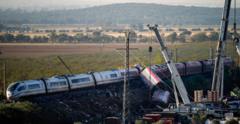
A catastrophic high-speed rail collision in central Spain has plunged Prime Minister Pedro Sánchez’s government into a severe political crisis, threatening his re-election campaign just weeks ahead of a snap general election. The deadly crash occurred in Toledo province along the Madrid–Andalucía corridor when a state-operated Renfe passenger train rear-ended a stationary private Iryo train. The disaster left dozens of passengers dead and scores injured, triggering national mourning and widespread outrage across the country.
Prime Minister Sánchez traveled immediately to the disaster coordination center near the municipality of Urda, where emergency crews worked among derailed carriages. Addressing reporters, Sánchez acknowledged that public trust in Spain’s celebrated high-speed railway network had been broken. The prime minister declared three days of official national mourning and pledged an exhaustive, transparent inquiry into the operational and technical failures behind the tragedy.
Public anger has intensified because the collision marks the second fatal high-speed rail incident in Spain within a single calendar year, following a deadly crash in Adamuz in Córdoba province earlier in the year. Railway unions and transport safety advocates had repeatedly warned of compounding strain across the network, pointing to maintenance shortfalls, signaling vulnerabilities, and rising traffic following market liberalization. Critics argue that safety protocols failed to keep pace with the aggressive expansion of high-speed passenger routes.
The disaster strikes at an exceptionally delicate moment for Sánchez, who called a snap general election scheduled for late November. The prime minister had sought to harness political momentum after public demonstrations and legislative battles centered on housing affordability and tenant protections. Instead, the sudden tragedy has upended the ruling Socialist Workers' Party's strategic messaging and placed governmental competence under an intense spotlight.
Conservative and right-wing opposition parties swiftly launched blistering critiques, accusing the Sánchez administration of systemic mismanagement and failing to ensure basic infrastructure safety. Opposition leaders called for emergency parliamentary hearings and demanded immediate political accountability, including the resignation of top transport officials. Opponents contend that the government neglected long-term infrastructure maintenance while prioritizing partisan announcements ahead of the vote.
Spain boasts one of the most extensive high-speed rail networks in the world, long viewed as a showcase of national engineering prowess and public investment. However, the recent opening of passenger corridors to private operators like Iryo has substantially increased train frequencies on legacy trunk lines. The involvement of two competing operators in a fatal rear-end collision on the same track has prompted sharp scrutiny of traffic management, emergency braking systems, and dispatcher coordination.
For ordinary Spaniards, the collision has transformed an election campaign previously dominated by social policy and political alliances into a referendum on public safety and administrative oversight. Commuter associations and regional leaders expressed alarm over routine transit safety, creating an atmosphere of vulnerability that complicates the prime minister's efforts to present a narrative of national progress. Analysts suggest that undecided voters may now place core public management ahead of ideological considerations.
Judicial investigators and Spain's rail accident investigation commission have launched concurrent probes to determine why signaling fail-safes did not halt the following train. Investigators are examining black box recorders, radio communication logs between drivers and traffic controllers, and the automated trackside safety mechanisms. Officials emphasized that determining whether the incident stemmed from human error, equipment malfunction, or signaling lag is critical to restoring commuter confidence.
As election day approaches, Sánchez faces the dual challenge of managing the administrative aftermath of the crash while defending his political record on the campaign trail. His re-election prospects now hinge significantly on how swiftly his administration provides transparent answers and implements credible safety guarantees across the rail network. With political rivals seizing on the issue, Spain’s high-speed rail tragedy is set to remain at the absolute center of the national debate.
Primary source: BBC World. Newzly rewrites and structures source reporting for clarity; verify critical details at the original.