FAA Lifts Nationwide Ground Stop After Four-Hour Flight Halt
The Federal Aviation Administration has lifted a sweeping nationwide ground stop that halted commercial departures across the United States for more than four hours on Friday, citing extraordinary circumstances and safety reasons.
In this piece
The FAA lifted a nationwide ground stop on Friday night after halting flight departures across the United States for more than four hours. Regulators enacted…
The Federal Aviation Administration has lifted a nationwide ground stop that halted commercial airline departures across the United States for more than four hours on Friday evening. Federal officials announced the end of the sweeping order at 8:15 p.m. Eastern Time, confirming that flights would be permitted to resume operations following the extensive freeze.
The unprecedented pause took effect earlier in the afternoon at 3:44 p.m. Eastern Time, bringing takeoffs at domestic airports to an abrupt standstill. In its directive, the federal regulatory agency stated that the nationwide order was enacted due to extraordinary circumstances and for reasons of safety, without immediately detailing the specific root cause.
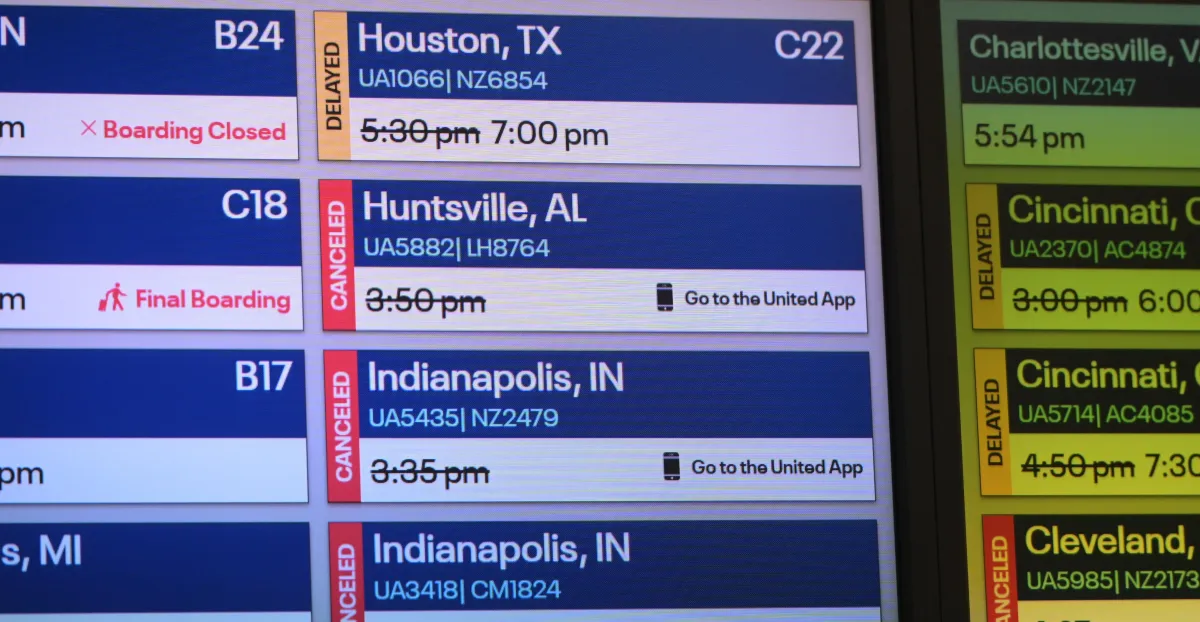
The sudden halt left scheduled commercial flights held on taxiways and at departure gates across the country as airline operations scrambled to respond. Because the federal restriction applied broadly across the entire national airspace system, outbound domestic air traffic remained largely paralyzed throughout the late afternoon and early evening hours.
A ground stop of this scope represents one of the most severe tactical measures available to federal aviation regulators to safeguard airspace integrity. Under standard operating protocols, ground stops are typically isolated to specific airports or regional corridors dealing with localized weather conditions, radar anomalies, or facility infrastructure issues.
Enacting a blanket order that halts outbound air traffic nationwide is exceptionally rare and indicates a situation demanding an immediate, system-wide operational pause. While inbound aircraft already airborne were managed through active air traffic control procedures to land safely, ground departures faced indefinite holds pending resolution.
The prolonged disruption triggered widespread schedule complications that are expected to ripple through airline networks well beyond the formal lifting of the order. Aircraft and flight crews were displaced from their planned rotations, creating cascading logistical bottlenecks for carriers attempting to reposition equipment and personnel.
Travelers nationwide faced mounting departure delays, gate holds, and uncertainty as airlines worked to adjust schedules under federal guidance. Industry analysts note that clearing the accumulated backlog of delayed departures and rescheduled itineraries often takes commercial carriers hours or even days following a multi-hour system pause.
Aviation officials have not yet publicly clarified the exact technical or operational breakdown that prompted the emergency safety directive. Questions remain regarding the specific nature of the extraordinary circumstances cited by regulators and whether the issue stemmed from internal communication networks, digital systems, or external factors.
Federal authorities and commercial airlines are continuing to assess the full operational impact of the four-hour shutdown across domestic terminals. For passengers traveling in the wake of the order, carriers and consumer advocates advise monitoring individual flight statuses closely as the national air transit system works to restore normal scheduling.
Primary source: The Verge. Newzly rewrites and structures source reporting for clarity; verify critical details at the original.