FAA Lifts Nationwide Ground Stop as Hawaii Travelers Face Lingering Delays
Federal aviation officials have lifted an order halting domestic airline departures nationwide, but passengers traveling through Hawaii airports are being urged to verify flight statuses as carriers work through widespread scheduling backlogs.
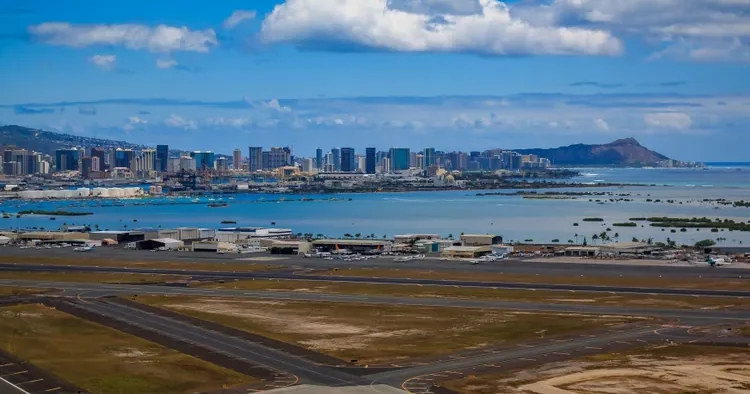
In this piece
The Federal Aviation Administration has lifted a nationwide ground stop prompted by a telecommunications and data processing issue. Transportation authorities…
The Federal Aviation Administration has lifted a nationwide ground stop that temporarily halted domestic aircraft departures across the United States. Following the agency's decision to reopen the national airspace system, aviation authorities and commercial airlines warned that the resumption of scheduled service would take hours to stabilize. The temporary order grounded thousands of scheduled flights from coast to coast while safety regulators addressed systemic technical issues.
In Hawaii, state transportation officials and airport administrators are strongly urging all outbound and incoming passengers to confirm flight details directly with their airlines before traveling to terminal facilities. Department representatives emphasized that although runways and concourses remain open, individual airline schedules are still recovering from the forced pause in departures. Travelers have been cautioned to prepare for extended wait times and sudden gate changes throughout the day.
The federal ground stop was triggered earlier after air traffic personnel encountered widespread telecommunications and data processing disruptions across regional traffic control centers. Federal regulators reported that a severe data bottleneck impacted message exchanges between control facilities, prompting the agency to pause departures out of an abundance of caution to ensure aircraft separation and safety. The sudden halt affected regional carriers and major network airlines alike as flight plans could not be validated.
Officials from the Department of Transportation clarified that preliminary assessments found no evidence of a malicious cyberattack or external breach behind the outage. Instead, the failure stemmed from internal technical infrastructure and communications networks responsible for processing essential flight routing and airspace coordination data. Technical teams worked to isolate the communication fault, restart critical systems, and verify operational stability before allowing departures to proceed.
For Hawaii, the nationwide stoppage presented distinct logistical challenges due to the island state's geographic isolation and heavy reliance on transpacific air corridors. Interisland routes and long-haul flights originating from the West Coast faced substantial schedule adjustments, requiring dispatchers to coordinate rerouting and revised departure slots as mainland hubs struggled with congested gates. Even short hops between neighboring islands experienced intermittent delays as ground crews managed shifting gate assignments.
Even with the ground stop officially terminated, the displacement of aircraft and flight crews is expected to create widespread operational friction for hours. Commercial airliners held at mainland origins could not reposition to island gateways on time, creating a domino effect that disrupted incoming turnarounds and departure queues. Airlines must also manage strict federal duty-time limits for pilots and flight attendants, which can trigger additional staffing constraints following protracted ground delays.
Major commercial carriers serving the islands have instructed passengers to monitor airline mobile applications and automated text alerts for real-time gate and boarding updates. Several airlines announced flexible rebooking policies and fee waivers, allowing affected passengers to adjust their itineraries without penalty where disruptions were severe. Customer service teams advised travelers whose flights were canceled to reschedule online rather than waiting in long ticket counter lines at airports.
Airport staff across Honolulu, Kahului, Kona, and Lihue continue to assist travelers navigating crowded waiting areas and delayed departure queues. Ground personnel and customer assistance counters have deployed additional staff to manage inquiries, oversee baggage transfers, and help stranded passengers secure new connections. Terminal announcements across the islands repeatedly reminded passengers that flight boards may fluctuate as mainland air traffic controllers meter arrivals.
Aviation analysts and federal officials project that while flight departures are steadily climbing, full network recovery will take significant time and could extend into the following morning. The backlog of aircraft waiting for takeoff clearance at major mainland transit hubs continues to slow operations across connecting routes to the Pacific. Travelers are advised to verify flight status before leaving home, arrive at airports with ample buffer time, and remain prepared for lingering delays as national air traffic patterns return to normal.
Primary source: Google News Hawaii. Newzly rewrites and structures source reporting for clarity; verify critical details at the original.