Fossilised Red Blood Cells and Heme Found in 115M-Year-Old Dinosaur Bone
Scientists examining the hind leg bones of an Aratasaurus in Brazil have identified fossilised red blood cells and traces of heme, the oxygen-carrying compound that gives blood its crimson color.
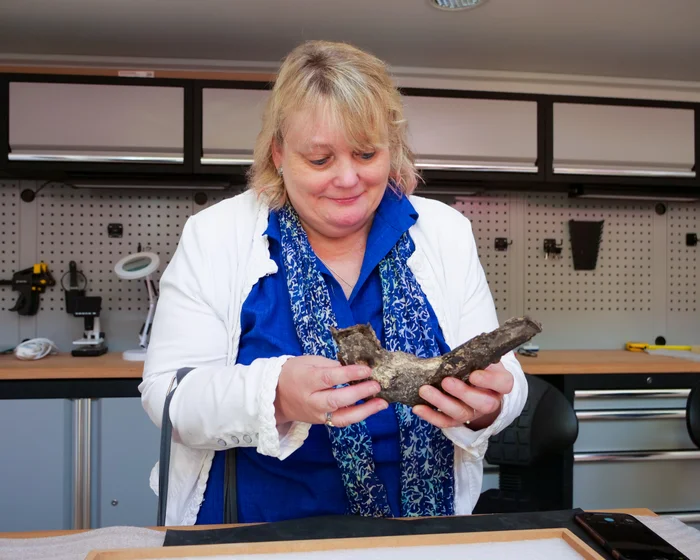
Researchers analyzing the fossilized remains of an Aratasaurus have identified what appear to be preserved red blood cells and traces of heme inside the animal's bones. The biological remnants were detected during chemical and structural examinations of hind leg bones belonging to a small, meat-eating dinosaur that lived roughly 115 million years ago.
According to the researchers, sophisticated chemical tests on the skeletal fragments revealed the distinctive presence of heme, the organic compound that enables hemoglobin in blood to transport oxygen throughout the body. The discovery highlights traces of the very molecule responsible for giving blood its familiar crimson hue, surviving across deep geological time.
The fossil originates from north-eastern Brazil, where the predatory dinosaur roamed and died during the Cretaceous period. The identification of cellular structures within the limb bone represents an unusually rare glimpse into the organic preservation of prehistoric theropods from the South American fossil record.
For decades, standard paleontological understanding held that organic matter, proteins, and delicate cellular components degraded completely during the fossilization process. Fossilization was long treated almost exclusively as mineral replacement, wherein geological materials slowly displace all original soft tissues over spans of millions of years.
However, modern analytical techniques have steadily uncovered microstructures and molecular signatures that appear to withstand far more time than previously thought possible. When microscopic features resembling blood cells endure over 115 million years, they present scientists with unprecedented opportunities to study ancient biology directly rather than relying solely on mineral casts.
The identification of heme is especially significant because of the compound's fundamental biological role across vertebrate life. In living animals, heme complexes serve as the iron-bearing functional centers of hemoglobin, allowing circulatory systems to deliver essential oxygen to muscles, vital organs, and tissues.
To confirm that the structures were authentic remnants rather than mineral artefacts or microbial contamination, the research team relied on rigorous chemical analysis. Confirming the molecular signature of heme provides crucial analytical support for the claim that ancient cellular remains survived encased within the dense matrix of the dinosaur bone.
The findings are expected to prompt broader inquiries into the specific environmental and chemical conditions that enabled such fragile biological molecules to endure in north-eastern Brazil. Paleontologists and geochemists will likely examine how local burial environments and rapid mineral sealing might shield organic compounds from oxidation, bacterial breakdown, and thermal degradation.
Moving forward, researchers aim to conduct further testing on the specimen to deepen scientific understanding of Cretaceous soft-tissue preservation. As analytical tools continue to advance, the study adds to an expanding scientific debate regarding the longevity of organic molecules and what ancient bone chemistry can reveal about prehistoric life.
Primary source: The Guardian World. Newzly rewrites and structures source reporting for clarity; verify critical details at the original.