world·Lakshadweep·Lakshadweep District
GoodWe Powers Over 1,000 Homes in Lakshadweep to Secure 74% Residential Solar Share
Solar inverter manufacturer GoodWe has secured a 74 percent market share in Lakshadweep's residential solar segment, powering over 1,000 households across nine islands through an installation partnership with Moopens Solar.
In this piece
GoodWe has captured a 74 percent share of Lakshadweep's residential rooftop solar market, equipping 1,037 homes across nine islands with solar inverter systems.…
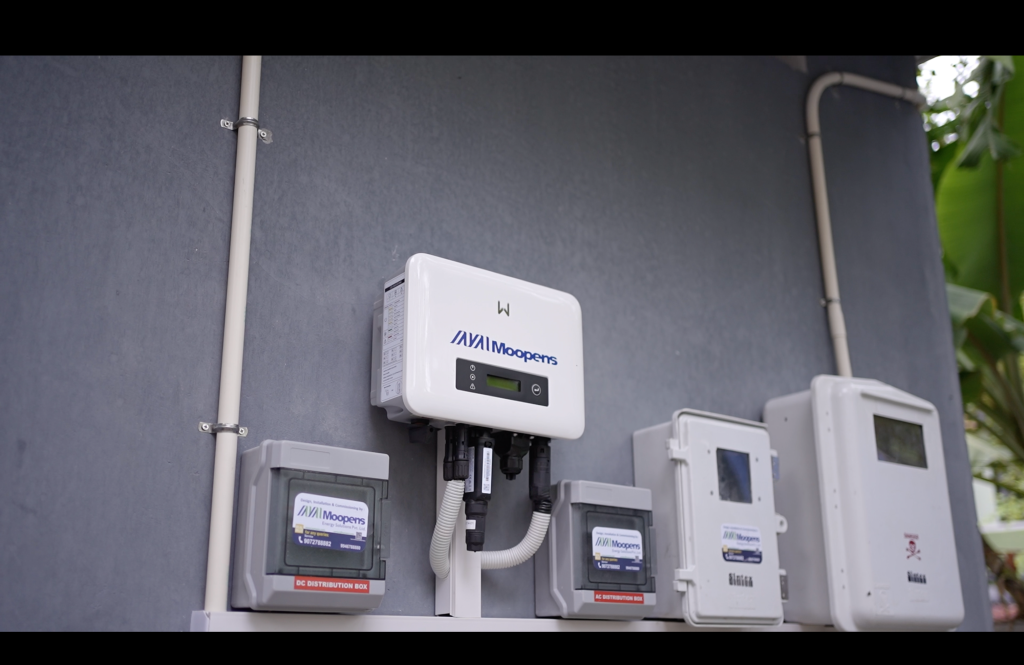
Solar inverter manufacturer GoodWe has reached a key milestone in India's island territory of Lakshadweep, powering more than 1,000 households and capturing roughly 74 percent of the local residential solar market. The company reported that its systems now operate in 1,037 homes out of a total 1,397 residential installations tracked across the archipelago. The deployments span nine distinct islands, marking a significant footprint in one of the country's most isolated regions.
The widespread adoption was achieved in close collaboration with regional engineering partner Moopens Solar, which spearheaded on-the-ground execution and technical deployment. Operating in an archipelago requires careful logistical planning, as equipment must be transported by sea across separated island communities. Together, the companies established localized installation workflows to ensure residential systems could be commissioned efficiently despite geographic fragmentation.
Installing electronic power equipment across Lakshadweep presents unique operational hurdles due to the intense marine climate. Inverters and electrical components on the islands face persistent exposure to heavy saline sea air, extreme humidity, and high coastal wind speeds. Solar hardware in such environments must withstand rapid corrosion and moisture ingress to deliver uninterrupted power over long operational lifespans.
GoodWe's residential inverters deployed in the archipelago were selected specifically to handle these demanding coastal weather conditions. The technology emphasizes robust casing, thermal management, and electrical protection designed to resist salt spray and heavy monsoon downpours. Demonstrating resilience under these conditions has been central to maintaining high customer confidence and system uptime across the participating households.
The transition to rooftop solar holds outsized importance for Lakshadweep, an ecologically fragile coral archipelago located off India's southwestern coast. Historically, the islands have depended heavily on imported diesel fuel to run local power generators, creating substantial carbon footprints and logistical vulnerabilities. Transporting fuel by sea remains expensive, weather-dependent, and prone to environmental hazards in marine sanctuaries.
Expanding residential solar capacity directly alleviates the burden on island diesel microgrids while supporting India's broader renewable energy goals. By generating electricity on residential rooftops, island households help reduce daily fuel consumption and stabilize community distribution networks. The installations also empower homeowners with greater energy autonomy and shield communities from seasonal fuel transport disruptions.
The achievement reflects accelerating decentralization within India's renewable energy push, which emphasizes rooftop solar adoption across both urban centers and isolated frontiers. Government initiatives aimed at solarizing domestic rooftops have incentivized consumers to adopt clean power alternatives across states and union territories. GoodWe's dominant market share in Lakshadweep demonstrates how targeted localized execution can translate national clean energy priorities into reality even in logistically intricate geographies.
Industry observers note that maintaining a high market share in island environments sets a precedent for microgrid modernization in other coastal and off-grid areas. As the installed base grows, ongoing local operations will center on long-term performance monitoring, component durability, and servicing across the nine inhabited atolls. Continued success in Lakshadweep could serve as a model for sustainable power delivery across remote island chains seeking to phase out conventional diesel generation.
Moving forward, regional clean energy stakeholders are expected to build upon the residential momentum by exploring energy storage and hybrid microgrid integrations. Enhancing battery storage alongside existing solar arrays would allow island communities to store excess generation during peak daylight hours for nighttime utilization. For GoodWe and its local partners, the milestone marks a robust foundation for continued clean energy expansion across India's remote maritime regions.
Primary source: Google News Lakshadweep. Newzly rewrites and structures source reporting for clarity; verify critical details at the original.