world·Dadra and Nagar Haveli and Daman and Diu·New Delhi District
Government Map Projects 816 Lok Sabha Seats Under Proposed Delimitation Plan
A projected delimitation map released by the Union government outlines an expansion of the Lok Sabha to 816 seats, applying an approximate 50 percent increase while aiming to protect inter-state representation balance.
In this piece
The central government has unveiled a projected seat allocation framework for the Lok Sabha following delimitation, expanding the lower house from 543 to 816…
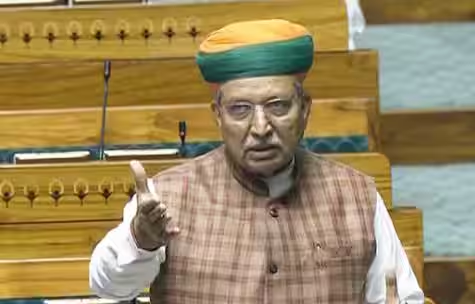
The Union government has outlined a projected state-wise seat allocation framework for the Lok Sabha following parliamentary delimitation, proposing to expand the lower house from 543 to 816 seats. Under the projected map shared by Union Law Minister Arjun Ram Meghwal, parliamentary constituencies across states and Union Territories would see an approximate uniform increase of 50 percent.
According to the official projections, Uttar Pradesh, the country's most populous state, would see its parliamentary strength climb from 80 seats to 120. Tamil Nadu's representation would increase from 39 to 59 seats, with fractional increases resulting from the 50 percent formula rounded up to the nearest whole integer.
The proposed reallocation extends across major states, elevating Maharashtra's representation from 48 to 72 members and Bihar's quota from 40 to 60 seats. West Bengal would see its tally rise from 42 to 63 constituencies, maintaining proportionate distribution under the standardized multiplier across major political regions.
For states and territories with odd-numbered baseline delegations where a 50 percent hike produces a half-seat fraction, the proposed map rounds up to ensure no state loses parliamentary ground. In addition to Tamil Nadu, states such as Andhra Pradesh, Punjab, and Telangana would also receive rounded-up allocations under the published calculations.
Delimitation in India has remained tied to the 1971 census under a constitutional freeze designed to avoid penalizing states that successfully pursued family planning and population control policies. That moratorium, enacted through previous constitutional amendments, was slated to remain in place until the publication of the first census conducted after 2026.
Southern states have frequently voiced concern that a purely population-based redrawing of electoral boundaries would disproportionately favor fast-growing northern states, eroding southern political leverage in Parliament. By applying a uniform proportional increase rather than an unweighted per-capita formula, the framework seeks to preserve relative inter-state weight and ease federal friction.
The proposal also incorporates a mechanism to freeze inter-state seat shares until 2051, ensuring that relative political representation between regions remains stable for the next generation. This approach aims to provide reassurance to states with lower fertility rates while still expanding seat counts to reduce constituency population burdens.
The physical capacity to accommodate an enlarged Parliament is already in place following the inauguration of the new Parliament building in New Delhi. The new Lok Sabha chamber was deliberately designed with 888 seats to host a substantially expanded house once delimitation takes effect.
Implementing the delimitation roadmap will require legislative approvals, constitutional amendments, and the completion of the pending decennial census. Any final adjustments are expected to prompt detailed parliamentary debates among regional parties and national leaders as the formal legislative framework advances.
Primary source: Google News Dadra and Nagar Haveli and Daman and Diu. Newzly rewrites and structures source reporting for clarity; verify critical details at the original.