Hammersmith Bridge Gridlock Exposes Deepening Cracks in London Infrastructure
Years of paralysis over Hammersmith Bridge and fresh river crossing closures have plunged south London into severe congestion, underscoring broader administrative deadlock across the capital's public services and planning systems.
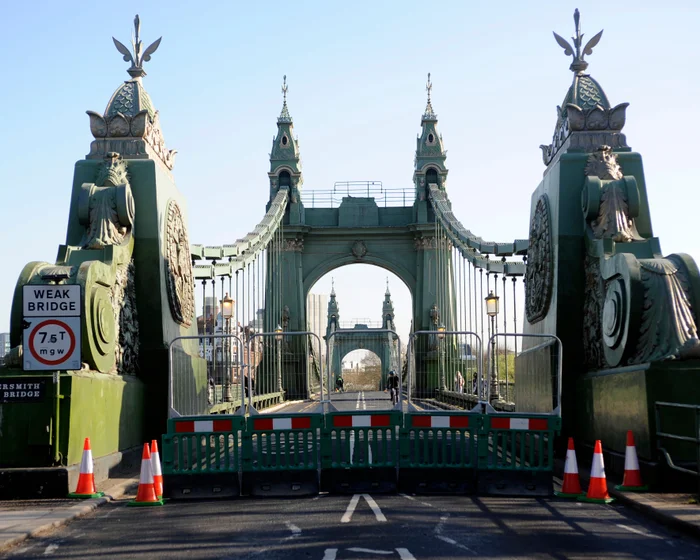
The protracted closure of London's Hammersmith Bridge has re-emerged as a sharp symbol of public sector paralysis, as mounting traffic pressures expose the strain on the capital's transport network. Closed to motor vehicles for seven years, the crossing remains inert on a prominent bend of the River Thames. The prolonged standoff has highlighted structural friction among the multiple tiers of administration responsible for maintaining critical urban links.
Disruption has intensified following the temporary closure of the nearby Albert Bridge for repair work. The loss of another key crossing has diverted an estimated 37,000 vehicles daily toward alternative routes across the Thames. The sudden displacement of traffic has brought substantial corridors of south London close to perpetual gridlock.
Critics argue the situation reflects a systemic breakdown in municipal and national coordination rather than a mere technical maintenance delay. Writing in The Guardian, columnist Simon Jenkins noted that while financial resources exist in principle, joined-up governance among authorities remains notably absent. The result is a heavily guarded, barricaded landmark unable to serve the commuters and public transit routes that once relied upon it.
Road congestion has created severe knock-on effects across the city's broader surface transit system. Surface bus routes have faced worsening journey times as arterial roads absorb displaced private and commercial vehicles. The logistical friction adds to everyday travel costs and operational headaches for local businesses and transport operators across neighboring boroughs.
The crossing crisis unfolds against wider strains visible throughout London's public services and civic infrastructure. Persistent delays have affected patient waiting times in hospitals, while local services continue to grapple with a rising prevalence of homelessness. Observers suggest that despite London's status as a leading economic hub, day-to-day administrative management frequently struggles to deliver basic urban efficiency.
Strategic planning indecision has further compounded these local transit bottlenecks. Longstanding uncertainty has clouded major national projects, including whether a definitive London terminus will proceed for the HS2 high-speed rail line and whether expansion plans will advance for an additional Heathrow runway. The absence of clear, sustained consensus has left key logistical corridors operating under persistent ambiguity.
Tensions between central government and local boroughs have also surfaced in urban development policy. Whitehall planning formulas have sharply escalated housebuilding requirements across several inner-city authorities. In the Royal Borough of Kensington and Chelsea, revised algorithms raised the annual housing target to 5,107 homes, up substantially from a previous baseline of 1,381 properties.
Local authorities face the challenge of reconciling these aggressive development mandates with strained surface transport capacity. Adding dense residential developments without expanding or repairing river crossings risks worsening congestion across already overburdened corridors. Without unified fiscal commitments and synchronized planning, bridge repairs and urban growth targets remain on divergent tracks.
For now, motorists and bus passengers in south London face continued detours with no immediate resolution in sight for the river's shuttered crossings. Resolving the gridlock will require concerted alignment among central departments, regional transport officials, and local councils. Until those authorities establish a unified operational framework, key crossings like Hammersmith Bridge stand as static monuments to institutional inertia.
Primary source: The Guardian Business. Newzly rewrites and structures source reporting for clarity; verify critical details at the original.