Hawaii Program Expands Shipbuilding and Defense Manufacturing Training
A Pentagon-backed workforce initiative at Honolulu Community College is training local machinists to support naval shipbuilding and repair, bolstering defense manufacturing capabilities and supply chain resilience in the Pacific.
In this piece
A Department of Defense initiative backed by over $7 million in federal funding is expanding advanced manufacturing and shipbuilding education in Hawaii. Based…
A Pentagon-backed workforce initiative is accelerating efforts to develop advanced defense manufacturing and shipbuilding capabilities in Hawaii, addressing critical maritime sustainment demands across the Pacific. The program focuses on establishing a permanent pipeline of skilled machinists and trade workers situated near strategic military installations. Officials view the effort as a vital step in reinforcing the regional defense industrial base.
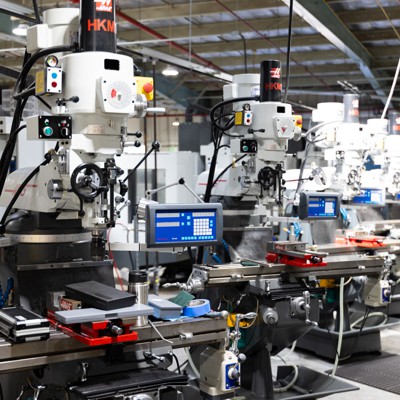
The training endeavor is anchored at Honolulu Community College, where a specialized advanced manufacturing suite has been equipped with modern industrial machinery. Backed by more than $7 million from the Department of Defense's Industrial Base Analysis and Sustainment program, the facility provides heavy equipment and modern toolsets. The campus site serves as an operational hub connecting academic coursework with practical naval engineering standards.
The project operates as a broad collaborative initiative involving the Pentagon's sustainment office, the University of Hawaiʻi System, training provider BG Workforce, and Kuʻi Hao, a statewide workforce campaign whose name translates to "to forge." The coalition works closely with local industry organizations, including the Chamber of Commerce Hawaiʻi’s Military Affairs Council and the Hawaiʻi Defense Alliance. Together, these entities coordinate curriculum standards to meet urgent shipyard labor needs.
Training inside the Honolulu warehouse facility prioritizes hands-on shop experience, with participants spending approximately 80 percent of their time working directly on machine tools. Students learn how to interpret complex technical schematics, execute precise manual measurements, and operate advanced computer-numerical-control machinery. Instructors emphasize rigorous quality control procedures mirroring the requirements of active defense contractors.
To demonstrate their practical competence before completing the course, students fabricate precision parts and assemble a scale model submarine dubbed the "USS Aloha." The project requires trainees to meet exacting engineering tolerances across several mechanical disciplines. Successfully completing the model demonstrates readiness for demanding maintenance assignments at regional naval facilities.
Federal defense planners have increasingly prioritized decentralized manufacturing and logistics resilience across the Indo-Pacific theater. Hawaii's geographic position thousands of miles from the U.S. mainland makes shipping replacement parts or flying in specialized technicians costly and vulnerable to disruption. Developing local fabrication capabilities helps reduce dependence on vulnerable trans-Pacific supply chains during crises.
Expanding technical capacity on Oahu directly supports the readiness requirements of the U.S. Pacific Fleet and the nearby Pearl Harbor Naval Shipyard. The naval facility frequently requires rapid repairs, structural overhauls, and routine maintenance for nuclear-powered submarines and surface combatants. Localized machine shops can quickly fabricate critical replacement components without awaiting shipments from continental shipyards.
The Honolulu Community College program complements several other defense innovation and rapid-prototyping initiatives across the island, including The Forge at Schofield Barracks. These complementary endeavors collectively form an emerging Pacific manufacturing ecosystem capable of troubleshooting military supply bottlenecks locally. Military leaders view this distributed network as an essential component of operational agility in contested environments.
In addition to strategic defense considerations, community leaders highlight the initiative as a substantial economic boost for local workers and families. The program offers residents access to high-demand, high-wage technical careers in maritime repair and precision manufacturing. By creating attractive vocational opportunities at home, the initiative also helps stem the outmigration of skilled technical talent from Hawaii.
Looking ahead, program organizers and military stakeholders intend to expand class sizes and introduce advanced coursework covering emerging defense technologies. As security requirements across the Pacific continue to evolve, the Honolulu facility is designed to serve as an enduring foundation for local defense sustainment. The long-term goal remains maintaining a fully trained, agile workforce capable of keeping naval vessels mission-ready.
Primary source: Google News Hawaii. Newzly rewrites and structures source reporting for clarity; verify critical details at the original.