High-speed train crash kills at least 68 people in Spain
A Renfe train travelling from Madrid to Seville struck a stationary Iryo train in Toledo province after a control system failure led to an "inexplicable" order to resume at full speed.
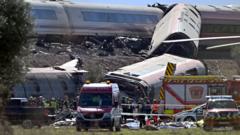
At least 68 people were killed and more than 100 injured on Wednesday morning when two high-speed trains collided in the Toledo province of central Spain, in what the country's transport minister called an "inexplicable" operational error. The crash occurred at 8:53 a.m. local time near the town of Urda, between Madrid and Seville, and sent two carriages off the tracks and down an embankment.
The Renfe train, operated by Spain's state-owned rail company and carrying 397 passengers, struck the rear of a stationary Iryo train that had 147 passengers aboard. Both services were travelling the same Madrid-to-Seville corridor when the collision happened. The impact is believed to have occurred at speeds approaching 200 kilometres per hour.
Transport Minister Óscar Puente told reporters in Madrid that a security system covering a 63-kilometre stretch of track failed at around 8:30 a.m., automatically stopping all trains in the area. Central command then issued an order for the Renfe train to resume its journey, even though a stop signal remained active along the line. "The train should never have been told to start moving again," Puente said, adding that he was not attributing personal responsibility but simply laying out the sequence of events.
At least 68 people were confirmed dead by late Wednesday, with 58 receiving hospital treatment. Rescue workers, including firefighters, emergency medical personnel and military units, worked for hours at the scene to reach passengers trapped in derailed carriages. Officials warned that the death toll could rise as recovery operations continued.
Prime Minister Pedro Sánchez declared three days of national mourning and visited the site of the crash. "It is unacceptable for a country like Spain to suffer two high-speed rail accidents in the same year," Sánchez said in a nationally televised address. He pledged a full investigation and promised accountability for whoever gave the order to restart the train.
King Felipe VI and Queen Letizia also travelled to the crash site on Wednesday to meet survivors and emergency workers. European Commission President Ursula von der Leyen conveyed her condolences to the Spanish government and said Brussels stood ready to assist with any investigation into railway safety. Spain's football federation postponed all 24 Copa del Rey matches scheduled for the day as a mark of respect.
The investigation will focus on how a central operations command could have cleared the Renfe service to proceed while a stop order was still in force across the same corridor. Rail safety experts noted that modern high-speed systems carry multiple redundant safeguards precisely to prevent this type of human-override error, making the sequence of events highly unusual.
Wednesday's disaster is the second major high-speed rail accident in Spain within a single year. A collision in January 2026 killed 45 people and prompted calls for a review of safety protocols on the country's expanding AVE network. Critics noted that both crashes occurred on the same Madrid-Seville high-speed corridor, one of Europe's busiest.
Spain has operated high-speed trains since 1992 and runs one of the longest AVE networks in Europe. The introduction of private operators such as Iryo alongside the state-owned Renfe has increased the number of trains sharing the same infrastructure, raising questions among safety advocates about coordination between competing services under a single control system.
Authorities said a formal investigation had been opened and that the operator responsible for issuing the restart instruction had been identified and would be interviewed. Puente confirmed no mechanical fault had been found with either train, pointing clearly to a human or procedural failure in the operations centre as the proximate cause of the crash.
Primary source: BBC World. Newzly rewrites and structures source reporting for clarity; verify critical details at the original.