How 18th-Century Prophet Kimpa Vita Became the Kongolese Joan of Arc
More than three centuries after her execution, 18th-century Kongolese prophet Dona Beatriz Kimpa Vita is celebrated for uniting her fractured realm and pioneering an Indigenous African Christian movement.
In this piece
Burned at the stake 320 years ago for heresy, Kongolese prophet Dona Beatriz Kimpa Vita led the early 18th-century Antonian movement to reunify a fractured…
More than three centuries after she was condemned for heresy and executed at the stake, 18th-century Kongolese prophet Dona Beatriz Kimpa Vita is increasingly recognized as a pioneer of African religious self-determination and anticolonial defiance. Known widely as the "Kongolese Joan of Arc," Kimpa Vita led a popular spiritual and political awakening across the Kingdom of Kongo during the early 1700s. Today, historians and cultural scholars are revisiting her brief, transformative life to understand how an Indigenous reimagining of Christianity challenged foreign imperial influence.
Born into the Kongolese nobility around 1684, Kimpa Vita came of age in an empire fractured by internal strife. Decades of civil war, intensified by Portuguese military interventions and the expanding transatlantic slave trade, had devastated the once-flourishing realm. Its historic royal capital, São Salvador, lay in ruins and largely abandoned as rival royal factions fought for dynastic control.
Around 1704, amidst this profound social breakdown, the young noblewoman experienced a severe illness that culminated in a spiritual transformation. Kimpa Vita declared that she had died and was reborn through the spirit of Saint Anthony of Padua, a patron revered in Kongolese Catholic traditions. She quickly gathered thousands of followers, inaugurating what chroniclers and scholars identify as the Antonian movement.
Central to Kimpa Vita's teachings was a radical, localized expression of the Christian faith that directly resonated with ordinary peasants. She preached that Jesus, the Virgin Mary, and the apostles were Kongolese and situated sacred biblical events within the geographical and cultural landscape of Central Africa. By rejecting European iconography and asserting an African heritage for Christian spirituality, she dismantled the colonial narrative perpetuated by European clergy.
Kimpa Vita's crusade was not merely theological; it carried profound political ambitions for restoration and unity. She called for the reunification of the fractured kingdom and led followers back into the abandoned capital of São Salvador to rebuild it. Her message of spiritual renewal and social peace offered common people an alternative to the endless wars orchestrated by self-interested warlords.
The burgeoning Antonian movement quickly alarmed European missionaries and entrenched political elites. Italian Capuchin priests operating in the kingdom viewed her popular localized theology as dangerous heresy that undermined Catholic orthodoxy and missionary control. At the same time, rival Kongolese claimants to the crown, particularly King Pedro IV, perceived her immense grassroots authority as an existential threat to monarchical stability.
In 1706, royal forces loyal to Pedro IV captured Kimpa Vita along with her companion and their newborn child. Under pressure from Capuchin friars, the royal court conducted a trial for heresy and treason. On July 2, 1706, at roughly twenty-two years of age, she was condemned and burned at the stake in the town of Evolulu.
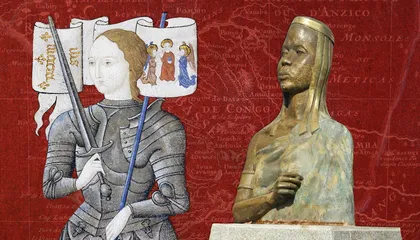
The parallels between Kimpa Vita and France's Joan of Arc extend beyond their young ages, charismatic spiritual leadership, and fiery executions. Both women emerged during devastating wars to rally their divided peoples around a vision of divine liberation and territorial unity. For modern African scholars, Kimpa Vita represents an early and courageous forerunner of African liberation theology and organized resistance against foreign subjugation.
Today, Kimpa Vita's legacy continues to reverberate across the Democratic Republic of Congo, Angola, and the wider African diaspora. A major university in Uíge, Angola, bears her name, and contemporary artists, writers, and theologians frequently celebrate her memory. As international historians re-examine her record, Kimpa Vita stands not as a heretic of colonial records, but as an enduring symbol of African sovereignty and spiritual autonomy.
Primary source: Smithsonian History. Newzly rewrites and structures source reporting for clarity; verify critical details at the original.