How Rachel Reeves Mapped Out the Economic Agenda for Andy Burnham’s Government
Despite sacking Rachel Reeves as chancellor, Prime Minister Andy Burnham is pursuing an economic strategy on Brexit, devolution, and investment that closely mirrors the policy roadmap she established.
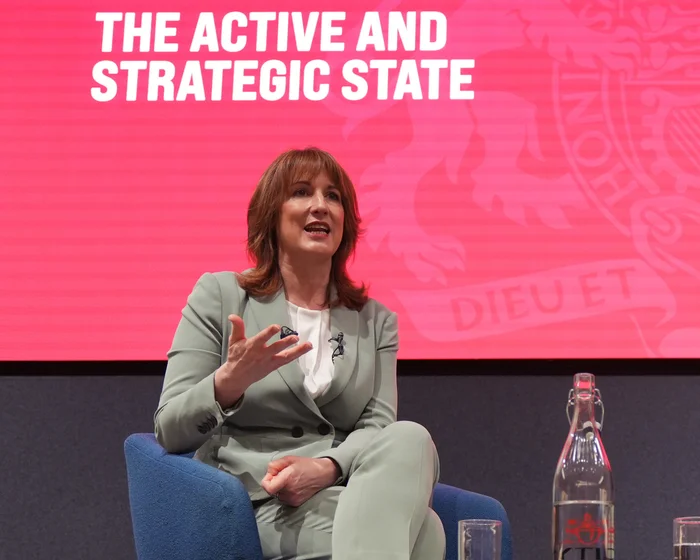
Prime Minister Andy Burnham’s economic agenda is drawing renewed scrutiny for its striking alignment with the policies championed by Rachel Reeves, the former chancellor he dismissed from office. An analysis by The Guardian details how the current government’s approach to European relations, devolution, and long-term investment closely resembles Reeves’s conceptual roadmap.
The policy convergence presents a notable political paradox at the center of the British government. Despite Burnham’s decision to remove Reeves from her post as chancellor, the strategic framework guiding his administration appears to draw heavily on the economic foundation she articulated prior to her departure.
Central to this shared direction is the administration's stance toward the European Union. Burnham has emerged as a prominent figure advocating for fresh thinking on Brexit since becoming prime minister, positioning his premiership around a willingness to re-examine Britain's post-exit economic settlement.
Yet the ideological basis for that reassessment had already been laid out by Reeves months earlier. In a Mais Lecture delivered six months ago, the former chancellor explicitly argued that "Brexit did deep damage" to the economy, anticipating Burnham’s later public posture.
During that address, Reeves maintained that the government seeks "not to turn back the clock but to look toward a new and stable, future relationship" with European neighbors. She has further contended that the UK’s long-term future remains tied to the EU, an outlook that continues to inform current political discussions.
Beyond European policy, the alignment between Burnham and his former chancellor extends into structural domestic priorities. Both politicians have focused extensively on regional devolution and capital investment as key drivers of national growth, pointing to a core set of economic objectives that survived the ministerial shakeup.
That philosophical continuity highlights lingering questions regarding the political reasoning behind Reeves’s dismissal. While major cabinet reshuffles typically signal an intentional break with past strategies, Burnham’s governance model continues to rely on the specific economic architecture developed during Reeves’s tenure at the Treasury.
For economic observers and policymakers, the persistent common ground offers important context on the direction of British statecraft. The substantive overlap suggests that the administration's overarching focus on regional empowerment, investment, and rebuilt European ties may be far more durable than recent personnel decisions suggested.
What remains unresolved is how Burnham will manage the implementation of this economic vision alongside the political fallout of replacing his chancellor. As his government attempts to carry these priorities forward, observers will watch closely to see whether Downing Street diverges from or remains anchored to Reeves’s original design.
Primary source: The Guardian Business. Newzly rewrites and structures source reporting for clarity; verify critical details at the original.